-

Nowadays, batteries are hardly meeting the normal consumer’s demand regarding their capacity and lifetime. Complaints about laptops whose charge lasts too little, or about electric cars not being able to charge as quick and last as long as gasoline are frequent. Amprius, a US-based company, addresses these issues and develops abattery that they say it can hold double the charge of regular lithium ion batteries.
-

Even though wind energy is a clean and cost-effective source of energy, it does have one slight drawback: no one can control when the wind blows. This occasionally leads to difficulties in matching consumers’ demand for energy with the available supply.
-

When you think of electric cars, you generally mean two terms in which they exist: autonomy vs charging infrastructure. These two words compete with each other to a certain point, because higher autonomy means less infrastructure needed, hence faster adoption by the market.
-

This could very well be the magic formula for future power generation. Yes, scientists are busy crafting what is now called as “solid organic electric battery based upon treated potatoes.” These are absolutely eco-friendly batteries – based on the hidden powers of potatoes – which will be an economical answer to the growing power needs of developing and developed countries.
-

Japan's Toshiba said Friday it was working with Mitsubishi Motors to develop batteries for electric vehicles, as the race intensifies among automakers and technology giants to make emission-free cars. Toshiba, which spans electronic components, appliances and nuclear power plants has developed a fast-charging long life lithium-ion battery called SCiB (Super Charge ion Battery), which it plans to adapt for cars.
-

First Solar has contacted Ho Chi Minh City Hi-tech Park, Tan Phu Trung Industrial Park and Phong Phu Industrial Zone to build a factory on an area of 72 hectares. First Solar’s products include the first photovoltaic thin panel battery. However, due to requirement of large area, the High-tech Park will no longer be suitable, therefore, First Solar must find venue in two other locations.
-

But now Sanyo’s lithium-ion battery technology has made it possible for Mira EV to travel 1003.184 km without a recharge. Traveling for 27.5 hours, at 40 km/h average speed, from May 22 to May 23, 2010, the trail run by Mira EV was powered by putting together 8320 cylindrical lithium-ion 18650-type batteries.
-

Millions of heart patients worldwide have benefited from the implantable cardiac defibrillators powered by Takeuchi's silver vanadium oxide battery. With funding from the National Institutes of Health, she is developing new cathode materials for improved implantable cardiac defibrillator batteries, with her latest advances on this project recently published in the Journal of Power Sources.
-

“Consumers crave laptops that offer style and performance, and the new 2010 Intel® Core™ Ultra-Low Voltage processors for ultra-thin laptops delivers both, in one sleek design,” said Mooly Eden, vice president and general manager of the PC Client Group at Intel. “Intel’s leadership in 32nm high-k metal gate process technology, combined with breakthrough architecture and design has enabled thinner, lighter and faster notebooks than previous models, with terrific battery life. ”
-

Công ty TNHH Bán dẫn Việt Nam vừa đưa ra thị trường sản phẩm “Chip quản lý năng lượng” (Chip VS8801A). Chip VS8801A được thiết kế để quản lý toàn bộ năng lượng của một thiết bị di động. Từ một nguồn Battery tiêu chuẩn 3.0V đến 5.5 VDC, Chip sẽ nhận năng lượng từ một Battery tiêu chuẩn, sau đó chuyển đổi thành 8 nguồn DC riêng biệt có mức điện áp khác nhau (từ 1.2VDC đến 15VDC hoặc -10VDC) với giá trị ổn định, có khả năng đáp ứng tốt các yêu cầu của các khối chức năng của thiết bị.





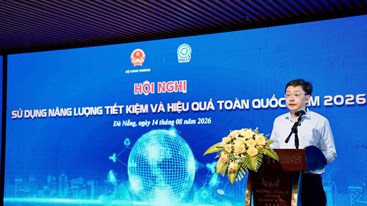 Conference on Energy Efficiency and Conservation in 2026
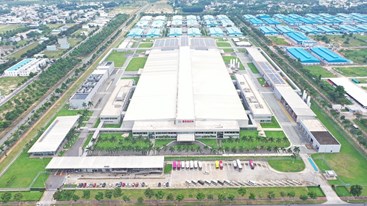 Bosch Vietnam Optimizes Energy to Advance Sustainable Manufacturing
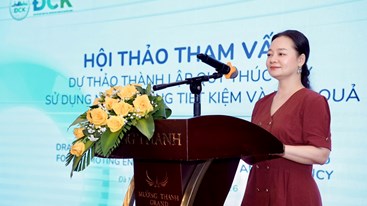 Consultation on the Draft of the Vietnam Energy Efficiency Fund Establishment
 Contract Award Notice - Notice for Contracts award for Finalize VNEEF (Vietnam National Energy Efficiency Fund) model (Package C2.2.14)
 Contract Award Notice - Review and update for current Energy Efficiency Benchmarking for 2 Sub-Industrial sectors
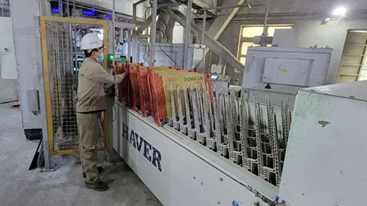 Dong Lam Cement Promotes Energy Efficiency to Enhance Sustainable Production
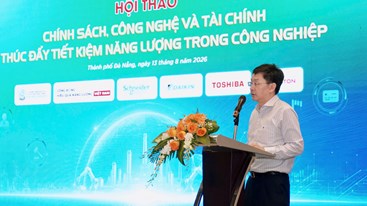 Policies, Technology and Finance Driving Energy Efficiency in the Industrial Sector