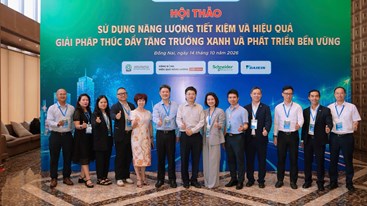
As the mining industry undergoes modernization, the application of science and technology is playing an increasingly important role in optimizing operations, reducing costs, and improving energy efficiency. In particular, appropriate technological solutions can contribute to more efficient use of resources, higher productivity, and the development of a modern and sustainable mining industry.
Dual Pressures on Energy Costs in the Mining Industry
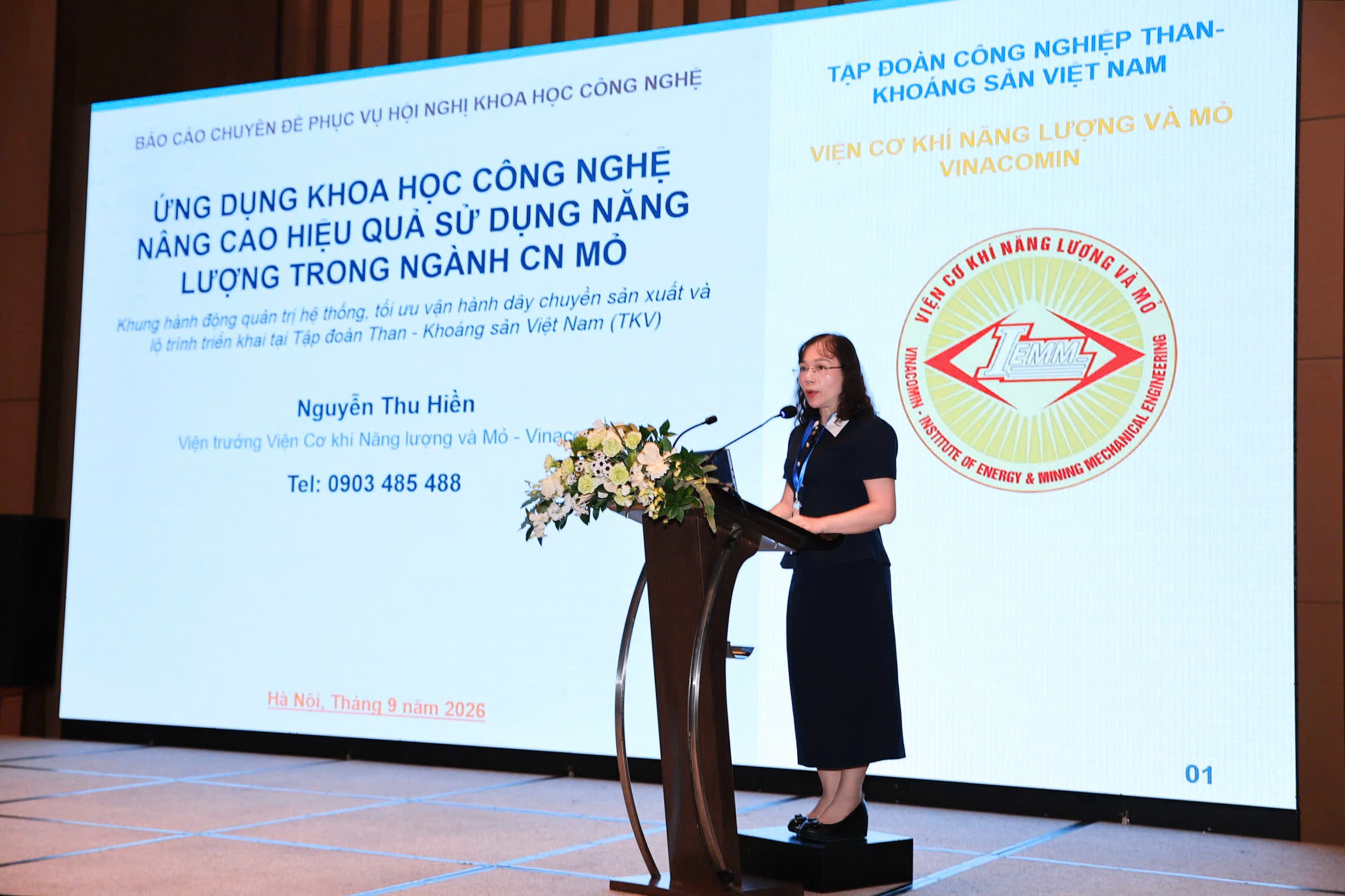
At the workshop “Energy Efficiency in Industry: From Policy to Practical Action” held in Hai Phong, Dr. Nguyen Thu Hien, Director of the Institute of Mining and Energy Mechanical Engineering (Vinacomin), noted that mining operations in Vietnam are currently facing challenges arising from both demanding technical conditions and an increasingly stringent legal and regulatory framework.
Dr. Nguyen Thu Hien, Director of the Institute of Mining and Energy Mechanical Engineering.
From a technical perspective, mining operations are moving to increasingly greater depths, where higher mine pressure and greater ventilation resistance require continuous high-capacity ventilation. In addition, large volumes of groundwater, which fluctuate seasonally, place considerable pressure on mine drainage systems in terms of both pumping head and electricity consumption. In open-pit mining and underground haulage, longer haulage distances for overburden and coal, combined with steep gradients, significantly increase diesel fuel consumption and electricity use by conveyor systems. As a result, specific energy consumption (kWh/tonne) varies considerably depending on mining depth, haulage distance, and run-of-mine material quality, making it impractical for mines to apply a single fixed energy consumption benchmark.
From a regulatory perspective, Law No. 77/2025/QH15, effective from January 1, 2026, together with Decree No. 30/2026/ND-CP, has tightened requirements on energy efficiency and conservation. The National Program on Energy Efficiency and Conservation under Decision No. 280/QD-TTg sets a target of reducing total energy consumption by 8–10% by 2030. In addition, international standards such as ISO 50001, ISO 50006, ISO 50002-1:2025, and ISO 50015:2014 require mining enterprises to move beyond basic energy consumption reporting toward a continuous improvement approach based on energy baselines and standardized measurement and verification methodologies.
A key point highlighted in Dr. Nguyen Thu Hien’s presentation was the need to rethink energy efficiency: “Equipment efficiency is not the same as system efficiency.” Investing in high-efficiency motors such as IE3 or IE4 does not necessarily mean that the entire system has been optimized. If pumps or ventilation fans operate away from their optimal efficiency points, even high-efficiency motors can still result in significant energy waste.
In practice, major energy losses often occur outside the motor itself and can result from excessive throttling, pipeline leaks, inappropriate conveyor belt inclination, or excessive roller friction. In addition, equipment frequently running idle during production shifts due to insufficient interlocking and coordination between mining and haulage processes can also lead to substantial unnecessary costs.
Therefore, investing in individual pieces of equipment alone may simply increase upfront investment costs without delivering actual reductions in energy consumption reflected in utility bills. Instead, technology needs to be optimized across each production line.
Addressing Technical Bottlenecks Through Integrated Technology Solutions
To address these technical bottlenecks, the Institute of Mining and Energy Mechanical Engineering proposes applying science and technology to energy management and use through a structured process comprising measurement, baseline assessment, standardization, diagnostics, optimization, verification, and replication.
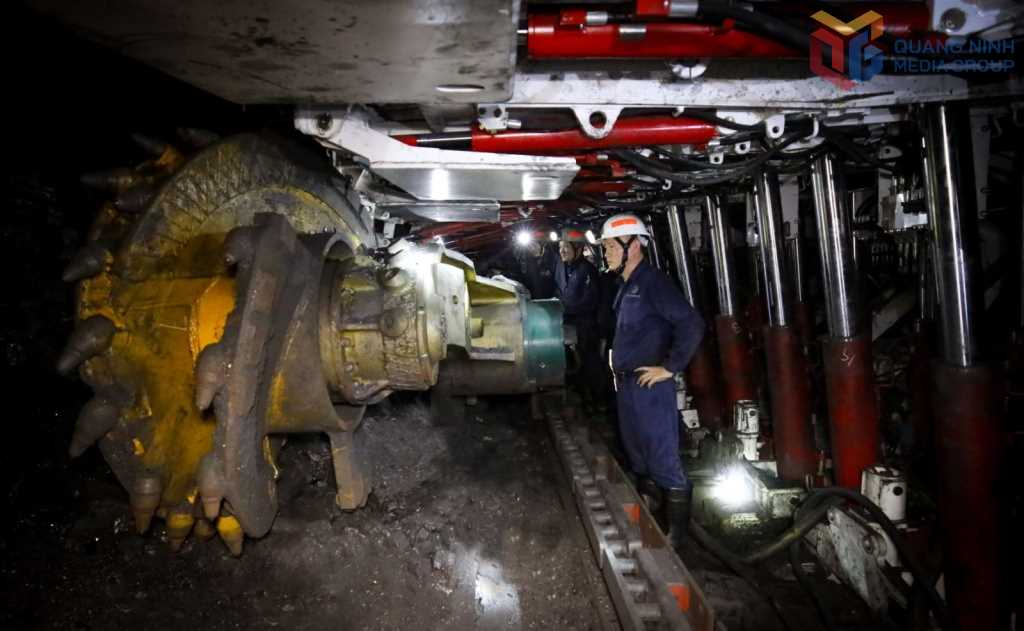
Mechanized longwall at Nam Mau Coal Company. (Photo: Quang Ninh Provincial E-Portal)
Accordingly, depending on the specific mining method, technological solutions should focus on processes with the greatest potential for energy optimization.
For underground mining, ventilation and mine drainage should be optimized. Demand-controlled ventilation technology enables fan airflow to be automatically adjusted based on mine gas concentrations, dust and smoke levels, and the actual number of personnel and equipment operating at each working face. The system operates on a fail-safe principle, automatically switching to a predefined safe ventilation mode while issuing alerts in the event of sensor signal loss, communication failure, or detection of abnormal conditions. For mine drainage, smart pumping stations can automatically select the most appropriate pump combination based on actual water inflow, minimizing situations in which pumps operate under partial load or too many small-capacity pumps are activated simultaneously. The system can also make use of sump storage capacity to increase pumping during off-peak hours, thereby minimizing operation during peak-demand periods. To date, Vietnam National Coal and Mineral Industries Group (TKV) has successfully automated three main ventilation fan stations, one main drainage pumping station, and five high-pressure emulsion pumping stations.
For open-pit mining, haulage and load-based conveyor operation should be optimized. Load-adaptive conveyor systems use variable frequency drives (VFDs) to adjust conveyor speed according to the actual volume of coal delivered from mining equipment, thereby reducing friction and roller wear. Material-flow interlocking enables upstream conveyor sections to shut down automatically when the system has been running without load for more than five minutes.
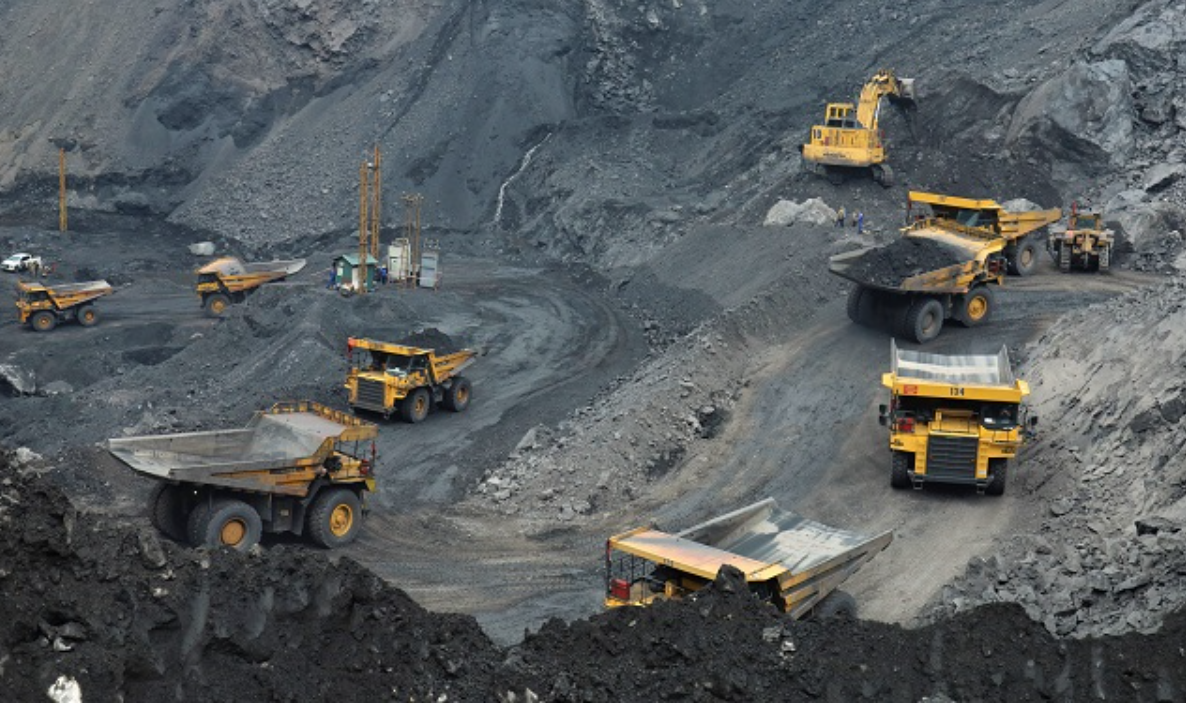
Haulage operations in open-pit mines can be optimized using satellite positioning systems and truck–excavator dispatch algorithms to reduce waiting times for loading and dumping. This solution can be combined with online monitoring of fuel consumption for each vehicle and shift, while diesel consumption benchmarks are standardized according to haulage distance and gradient. Notably, TKV is currently piloting nine lithium battery-powered monorail locomotives as replacements for diesel-powered locomotives in underground mines.
Practical Results
Practical applications at TKV member units have demonstrated clear financial and technical benefits. At Cao Son Coal Joint Stock Company, more than 3.2 million kWh of electricity—equivalent to approximately VND 5 billion—and around 1.2 million liters of diesel fuel, valued at more than VND 22.6 billion, were saved during 2023–2024 through the digitalization of the L/t·km indicator.
At Ha Tu Coal Joint Stock Company, improvements to blasting parameters and drilling machine operating modes reduced specific electricity consumption to approximately 0.3 kWh per meter drilled, a 50% reduction, generating savings of around VND 5 billion per year. Duong Huy Coal Company has set a 2026 electricity consumption scenario of 63.9 million kWh and aims to achieve savings of at least 3%, equivalent to a reduction of 1.917 million kWh.
Optimizing haulage operations in open-pit coal mining helps reduce energy consumption. (Photo: Ha Tu Coal)
To improve energy efficiency in the mining industry, Dr. Nguyen Thu Hien proposed six groups of solutions: developing and issuing a TKV Energy Efficiency Management Scheme; establishing standardized energy data categories and energy performance indicators; prioritizing metering infrastructure; implementing three pilot models for underground mining, open-pit mining, and coal preparation, with independent measurement and verification; shifting toward procurement based on total life-cycle cost and energy performance; and establishing an interdisciplinary working group.
Dr. Nguyen Thu Hien emphasized: “Science and technology can deliver sustainable results only when measurement data are accurate, solutions are suited to actual operating conditions, energy savings are transparently verified, and absolute mine safety is maintained at all times.”
Duc Do








 Polytex Pioneers Energy Efficiency in the Textile and Dyeing Industry
 Vietnam ETE & Greenergy Expo 2026: Promoting Green Transition and Energy Efficiency
 Consultation on the Draft of the Vietnam Energy Efficiency Fund Establishment
 Contract Award Notice - Review and update for current Energy Efficiency Benchmarking for 2 Sub-Industrial sectors