-

Minimum taxes on energy-rich diesel will rise under the EU plans, although the commission has stressed that this will not automatically result in a rise in diesel prices at the pump. It points to Germany and other member states where diesel taxes are already above the proposed new minimum threshold of €412 euros per 1,000 litres.
-

Xuong Giang paper mill under Bac Giang Import Export Corporation-IMEXCO Bac Giang is the largest energy consumer in the province of Bac Giang. Responding to the energy saving program in recent years, the factory has continuously made improvements to reduce power consumption and protect the environment. However, according to experts of Hanoi Center Energy Conservation Center, energy saving potential in this business is still quite large.
-

Along with the pressure of raising electricity prices, fuel prices, adjusting the VND/USD exchange rate, price of coal sold to cement households has risen by 40% since the beginning of April, which has added a greater burden to cement enterprises.
According to Mr. Nguyen Van Thien, Chairman of Vietnam Cement Association, currently, the total energy costs account for 45% - 50% of cement production costs. An 18% increase in gasoline price, a 15.3% increase in electricity price and a 40% increase in coal price have made price of cement increase by 10% to 15%.
-

Australian prime minister Julia Gillard today announced the approval of a $104.7 million project to integrate solar energy into one of Queensland’s largest fossil fuel power stations. The 750 megawatt (MW) coal-fired Kogan Creek Power Station in South West Queensland will be integrated with a new 44 MW solar thermal system, making it the largest project of its kind in the world.
-

Công ty Môi trường Đô thị Đà Nẵng và Công ty Pangea Green Energy (Ý) đang hợp tác triển khai Dự án thu hồi khí gas theo cơ chế phát triển sạch tại TP.Đà Nẵng.Hiện Dự án đang khai thác sinh khí, thu hồi khí đốt làm nhiên liệu chạy máy phát điện tại bãi rác Khánh Sơn (phường Hòa Khánh Nam, quận Liên Chiểu), giảm hiệu ứng nhà kính từ việc vận hành trên bãi rác để quản lý chất thải rắn.
-

“Algae has been a hot topic of biofuel discussions recently, but no one has taken such a detailed look at how much America could make – and how much water and land it would require — until now,” said Mark Wigmosta, lead author and a PNNL hydrologist. “This research provides the groundwork and initial estimates needed to better inform renewable energy decisions.”
-

In recent times, Gia Lai Power Company has taken many measures in propagating the economic and effective use of electricity, thus saving not only an energy source for the country but also expenses for agencies, businesses and households. Thereby Gia Lai Power Company has made a good use of the electric energy source allocated for production and social-economic development in the province, contributing significantly to the electric energy saving movement.
-

100% of the barracks and households in Truong Sa District (The Spratly - Khanh Hoa Province) can now use electric energy for their work and life, with the continuous supply for 24 hours a day. The whole district is now under television and telephone coverages. It is special that all the electric energy used in this island district is produced from wind power and solar energy. So far, Truong Sa has been the first district in the country to use clean energy sources.
-

Sa Giang Import Export JSC (Sa Dec Industrial Zone, Dong Thap) is specialized in producing shrimp chips which have been very familiar to domestic consumers. Since late 2010, as part of the project "Promoting energy conservation in small and medium enterprises", the company has implemented energy audit for the purpose of raising the efficiency of energy use.
-

Deputy Prime Minister confirmed this would be an important legal basis for investors to implement projects exploiting potential renewable energy sources, especially a series of wind power projects in the South Central Province, on islands and in remote areas. He also signaled the views and encouragement on increasing the promotion of renewable energy exploitation and utilization to meet the demand of national energy balance and sustainable development at present.
-

The study, published online in Proceedings of the National Academy of Sciences (PNAS), comes on the heels of federal initiatives to wean the United States off fossil fuels by mandating significant increases in ethanol production. The Department of Agriculture forecasts that by 2018, more than one-third of the country's corn harvest will be used to produce ethanol.
-

Under a memorandum of understanding signed by Minister for Innovation, Industry, Science and Research Kim Carr in Berlin last week the ASI and Germany’s Deutches Zentrum für Luft und Raumfahrt (DLR) will collaborate to accelerate technologies aimed at enabling solar energy to become a sustainable energy source globally.
-

French scientists are looking at the possibility of submerging small nuclear power plants deep underwater to supply low-cost energy to isolated countries or islands that cannot afford a major inland atomic plant. France pioneered the mass development of nuclear power stations in the 1970s and now sees a possible use in the industry for technology adapted from nuclear submarines, a top engineer said.
-

Dubbed the ‘Solar Soldier’ project the two-year research and development mission aims to produce a power pack where the energy is gathered from a combination of solar cells and thermoelectric devices. The team of approximately 15 scientists and researchers from Glasgow, Loughborough, Strathclyde, Leeds, Reading and Brunel University will also work on investigating ways of managing, storing and using heat produced by the system.
-

Under the plan, the Economics Ministry would use its fast-track powers to expedite the approval process for building transmission routes, among other planned measures. To date, one of the main obstacles of upgrading Germany’s network to carry energy generated by solar and wind has been the country’s patchwork approval process.
-

Theo nghiên cứu của Clean Energy Patent Growth Index vừa mới công bố, hãng sản xuất xe hơi GM của Mỹ đã nhận được các bằng sáng chế về năng lượng sạch nhiều hơn bất kỳ tổ chức nào khác trong năm qua.GM đã được nhận 135 bằng sáng chế, chiếm gần 14% trong tổng số 1.881 bằng sáng chế ở Mỹ mà 700 tổ chức đạt được trong năm 2010.
-

With strong propagation, awareness of people and power users has improved considerably; in the last 3 months, Ho Chi Minh City has saved 6.9 million kWh of electricity, 30% higher than same period of 2010. According to Mr. Nguyen Van Ly, Deputy General Director of HCM City Power Corporation, amid difficulties in the current power supply, promoting energy saving is one of the most positive solutions.
-

In the quest for the perfect biofuel, various companies and government agencies are racing to uncover the “magic bullet” that will allow for the production of inexpensive and energy efficient biofuels. Algae, yeasts and bacteria have all been playing their part in transforming various feedstocks and even CO2 into usable biofuels, such as ethanol and biodiesel.
-

The Japanese government is poised to increase the incentives available to a wide range of clean energy technologies through a revamp of the country's feed-in tariff scheme, which should come into effect from next year. According to Reuters' reports, a government advisory panel today approved a set of proposals that will significantly extend the current solar incentives regime to cover other forms of energy, including wind, small-size hydro, biomass and geothermal energy.
-

The United Arab Emirates (UAE) is one of the most technologically advanced and oil rich countries in the Middle East; however, oil is not enough to meet the country’s expected energy demand in coming decades. In preparation, the UAE is following suit with neighboring Saudi Arabia and pursuing a nuclear power program of their own, with Australia as yellow cake uranium supplier of choice.



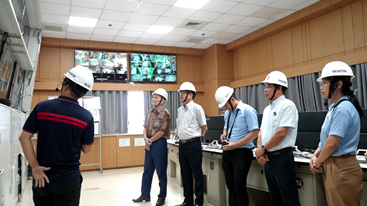 Polytex Pioneers Energy Efficiency in the Textile and Dyeing Industry
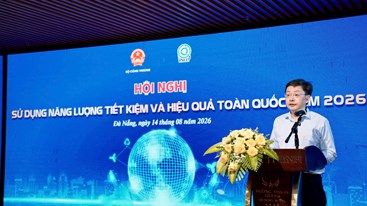 Conference on Energy Efficiency and Conservation in 2026
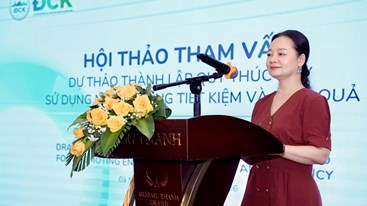 Consultation on the Draft of the Vietnam Energy Efficiency Fund Establishment
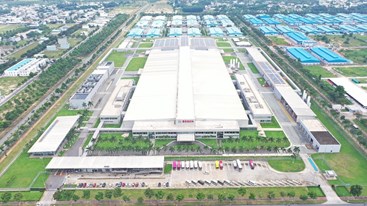 Bosch Vietnam Optimizes Energy to Advance Sustainable Manufacturing
 Contract Award Notice - Support the development of energy management systems and capacity building (Package C2.2.11)
 Contract Award Notice - Review and update for current Energy Efficiency Benchmarking for 2 Sub-Industrial sectors
 Contract Award Notice - Notice for Contracts award for Finalize VNEEF (Vietnam National Energy Efficiency Fund) model (Package C2.2.14)