-

The thing on the left is a snail, and it’s called abalone. Aside the fact that it’s edible, the abalone taught Angela Belcher, from MIT, how to turn carbon dioxide into rock-solid construction materials and thus sequester the gas for hundreds of thousands of years, instead of burying it underground, which is not as safe and as useful.
-

Chicago-based Invenergy Wind will build a farm equipped with 125 giant wind turbines on o surface of about 30,000 acre in Gratiot County, Michigan. Being considered Michigan’s largest, the $440 million project will produce 200 megawatts of energy by the end of next year, enough to supply electricity for more than 54,000 homes.
-

China has shown fresh interests in the development of hydropower in Nepal.
“There are opportunities for Chinese hydropower companies to participate in hydropower generation in Nepal,” said Qiu Guohong, Ambassador of China to Nepal, addressing the Nepal-China Non-Governmental Cooperation Forum meeting here in the valley today.
-

Verve Energy in collaboration with BP Solar are planning to build Australia’s largest ever grid-connected solar power plant. The photovoltaic power plant is expected to generate about 10MW of clean energy and according to the two companies, it will be built in Geraldton, Western Australia.
-

At the beginning of this month, the European division of Sanyo has officially released its new enhanced HIT solar panel. Dubbed HIT-N235SE10, the new 235 watt solar panel has an energy-efficiency of 21.1%, improving the performance in limited space installations and offering more power generation per square meter.
-

Summerhill Group, which is representing Ice Energy’s Ice Bear product in Canada, probably wishes the system has had more traction. Basically, the Ice Bear system uses off-peak electricity to create large blocks of ice, and then uses that ice during summer peak times to provide cooling — the idea being that it offsets the need to run air conditioners at times when electricity is most expensive.
-

A personal helicopter weighing just 230 lb created sizzling news when it flew on hydrogen with zero emission. With an ability to carry payloads up to 800 lbs, this pocket Hercules can fly for 90 minutes. Fitted with easy controls, this reaches a speed of 100 knots thanks to a pair of small yet powerful motors mounted on it. Two common and easily available things – Hydrogen peroxide (H2O2) and a catalyst – combined to bring about a milestone in personal aviation history with attention to the environmental issues as well! Avimech has combined these two to power engine in to an innovative machine.
-

A team of researchers from the University of Nevada at Reno is out to prove that sludge from a wastewater treatment plant can be dried, powdered, gassified as biofuel, and then burned to generate electricity, which in turn can run equipment at the same treatment plant. Talk about having your cake and eating it, too! The question is whether the researchers can make their sewage sludge-to-biofuel process operate at a cost low enough to compete with the price of conventional fuels.
-

The 155,000-square-foot facility is located in Lockport, N.Y., and unlike conventional ones, it uses 95 percent less water and 40 percent less energy. The energy-efficient data center has a power usage effectiveness rating of 1.08, which is quite less compared to the industry average of 1.92.
-

Nhà cung cấp năng lượng EDF vừa công bố một thiết bị mới mang tên EcoManager, cho phép người dùng có thể tắt các đồ gia dụng từ bất cứ nơi đâu trong nhà. EcoManager là thiết bị không dây, có khả năng giúp con người điều khiển và tắt lò vi sóng, TV, radio tại mọi nơi cũng như ngắt các nguồn sử điện không cần thiết, cắt giảm tiền điện.
-
Energy supplier EDF have unveiled a new gadget that allows consumers to turn off their appliances from anywhere in the home. The wireless EcoManager enables householders to control and switch off their microwave ovens, TVs and stereos from any location, allowing them to cut needless energy use and save money on their bills in the process.
-

Six miles per gallon doesn't sound like much, but don't tell that to the Pinellas Suncoast Transit Authority. The transit authority's new diesel-electric hybrid buses get two miles per gallon more than the diesel-only cousins they are replacing.
-

Nowadays, batteries are hardly meeting the normal consumer’s demand regarding their capacity and lifetime. Complaints about laptops whose charge lasts too little, or about electric cars not being able to charge as quick and last as long as gasoline are frequent. Amprius, a US-based company, addresses these issues and develops abattery that they say it can hold double the charge of regular lithium ion batteries.
-

Siemens has launched its renewable energy business arm in India to get a sizable share in one of the fastest growing markets in the world. The German engineering giant has opened its business in India at just the right time given the abundant economic and policy incentives offered by the government to the project developers as well as manufactures in the renewable energy sector.
-

Các cách thức mới nhằm tạo ra các tấm pin năng lượng mặt trời hiệu quả hơn thì vẫn đang diễn ra hàng ngày. Bộ phận mới trong thiết bị này đó là một tấm dán lớn, trong suốt được gắn ở phía trước tấm pin nhằm tăng sản lượng điện năng lên khoảng 10%. Genie Lens Technologies là hãng chyên sản xuất các tấm dán mỏng bằng chất liệu polyme như thế này.
-

There are still funds available to help West Virginians replace home appliances with new, energy efficient models. In fact, residents can now take advantage of two programs aimed at saving consumers money and protecting the environment. Currently, the West Virginia Enery Efficient Appliance Rebate Program and the state's Energy Star® Sales Tax Holiday are both in effect.
-

The 27-nation bloc could make 90 billion liters (24 billion gallons) of so-called next-generation ethanol in 2020, about 65 percent of predicted fossil gasoline use, the London-based group said in a study. At least 100 refineries a year could be built in the bloc from 2013, it said. The EU currently has no commercial factories that refine biofuels from plant waste.
-

A research team from the ORNL (Oak Ridge National Laboratory) performed a microscopy research on lithium ion batteries. They found out how they actually work at nanoscale levels and provided invaluable data never gathered before.
-

A new directly solar powered air conditioning system has been unveiled in China that has the potential to not only make cooling a home green, but also save homeowners a huge amount of money at the same time. The machine is made by a company called Vicot.
-

New and unique ways of making solar panels more efficient in power generation are coming to light every day. The new kid in the block of one such device is a large transparent sticker applied to the front of the panel which increases the power output by about 10% or so. Genie Lens Technologies is the firm which has developed these polymer film stickers. These polymer films are imprinted with special kind of microstructures.



.png?w=367&h=206&mode=crop) ROEI - C2.2.15: Develop a framework for proposing new projects financed by the GCF
ROEI - C2.2.15: Develop a framework for proposing new projects financed by the GCF
 Contract Award Notice - Develop tools for analyzing the energy efficiency of sub-projects and assess the current state of the market for energy-saving investment loans (C2.2.12)
 Contract Award Notice - Support the development of energy management systems and capacity building (Package C2.2.11)
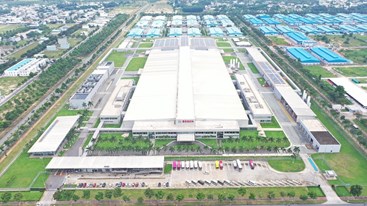 Bosch Vietnam Optimizes Energy to Advance Sustainable Manufacturing
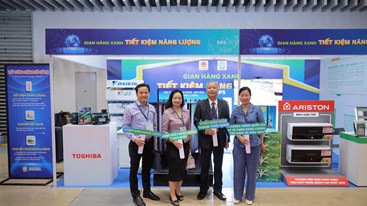 Vietnam ETE & Greenergy Expo 2026: Promoting Green Transition and Energy Efficiency
 Contract Award Notice - Develop/Upgrade MRV Systems for Selected Industrial Sectors – Package C2.1.26
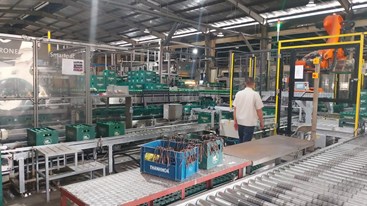 Hanoi – Thanh Hoa Beer Optimizes Energy Efficiency in Production