Sunday, 27/09/2026 | 02:19 GMT+7

A research team from the ORNL (Oak Ridge National Laboratory) performed a microscopy research on lithium ion batteries. They found out how they actually work at nanoscale levels and provided invaluable data never gathered before.
The study has been performed by Nina Balke, Stephen Jesse and Sergei Kalinin, who used the electrochemical strain microscopy (ESM) to visualize the movement of lithium ions inside the battery’s cathode.
“We can provide a detailed picture of ionic motion in nanometer volumes, which exceeds state-of-the-art electrochemical techniques by six to seven orders of magnitude,” Kalinin said.

They applied voltage to the battery’s layered cathode by using an ESM probe, and measured the corresponding volume change. Older electrochemical techniques that analyzed electric current instead of volume change (or electrochemical strain) are not applicable at nanoscale levels, because the currents are too small to assess.
“We want to understand – from a nanoscale perspective – what makes one battery work and one battery fail. This can be done by examining its functionality at the level of a single grain or an extended defect,” Balke said.
Being able to display individual grains, grain clusters and defects within the cathode material, the mapping showed that the lithium ions flows along grain boundaries in higher concentrations. This could lead to premature battery failure due to cracking.
“Very small changes at the nanometer level could have a huge impact at the device level,” Balke said. “Understanding the batteries at this length scale could help make suggestions for materials engineering.”
This microscopic nanoscale measuring technique is hoped to be of help to developing more efficient batteries and fuel cells, but the range of applications is not only limited to those. The technique could be used for any electronic device that uses nanoscale ionic motion for storing data, for example.
greenoptimistic.com










 Contract Award Notice - Develop tools for analyzing the energy efficiency of sub-projects and assess the current state of the market for energy-saving investment loans (C2.2.12)
 Contract Award Notice - Support the development of energy management systems and capacity building (Package C2.2.11)
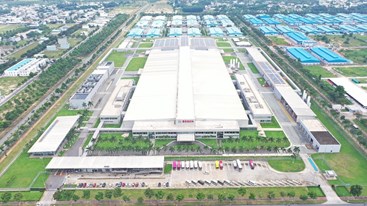 Bosch Vietnam Optimizes Energy to Advance Sustainable Manufacturing
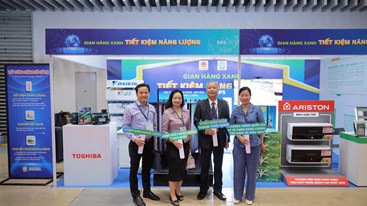 Vietnam ETE & Greenergy Expo 2026: Promoting Green Transition and Energy Efficiency
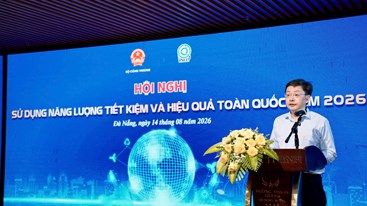 Conference on Energy Efficiency and Conservation in 2026
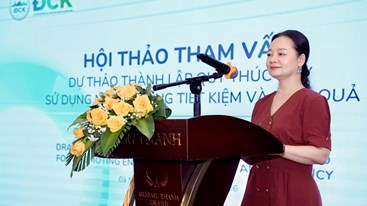 Consultation on the Draft of the Vietnam Energy Efficiency Fund Establishment
 Contract Award Notice - Develop/Upgrade MRV Systems for Selected Industrial Sectors – Package C2.1.26