Thursday, 15/10/2026 | 09:24 GMT+7

The rush to invest in wind energy to take advantage of the Government's pricing incentives could lead to overloading of the national grid in a repeat of the solar scenario, experts warn.
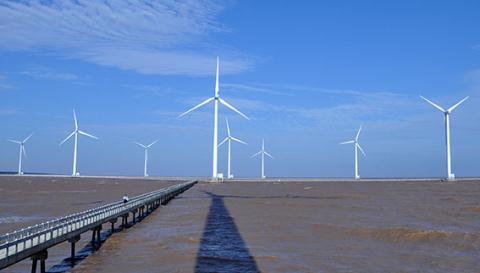
A wind power plant in Bạc Liêu Province. — VNA/VNS Photo
The rush to invest in wind energy to take advantage of the Government's pricing incentives could lead to overloading of the national grid in a repeat of the solar scenario, experts warn.
The Government announced a feed-in tariff (FiT) in 2011 for wind energy of VNĐ1,770 per kWh (7.8 US cents) and a power purchase agreement (PPA) duration of 20 years.
In 2018 it raised the FiT to VNĐ1,928 (8.7 cents) for onshore wind projects and VNĐ2,223 (9.8 cents) for offshore projects.
The rates apply to grid-connected power plants with commercial operations before November 1, 2021.
According to the National Load Dispatch Center (A0), nine wind power plants with a total capacity of 353MW were built before the Government raised the FiT.
Since the increase, plants with thousands of megawatts of capacity have signed PPAs and have been added to the country’s wind power plans, it said.
According to a report by the Electricity of Vietnam (EVN), besides the nine plants that have begun commercial operations, it has also signed PPAs with 31 other plants with a total capacity of 1,645 MW that are under construction.
Besides, 59 others with a total capacity of around 2,700 MW have been included in the zoning plans for wind energy for the period up to 2025. More than 100 other projects have sought approval.
The proposed plants are mainly in Bạc Liêu, Cà Mau, Trà Vinh, Ninh Thuận, Bình Thuận, Quảng Trị, and Phú Yên provinces.
The AO warned that with many wind power plants going on stream this year the national grid and transmission system could be overloaded in Trà Vinh, Ninh Thuận and Bình Thuận.
A well-known renewable energy expert, who did not want to be named, said investing in wind power to enjoy pricing incentives is risky.
The preferential rate for wind power only applies to grid-connected plants beginning commercial operations before November 1, 2021, and many investors are racing against time to start operations, but a wind power plant cannot be built as quickly as a solar power plant, he explained.
“To get a feasibility report, an investor must have wind measurement data for at least 12 months. When there is the wind data, an investor can design a plant.
“Besides, sourcing wind power equipment is quite difficult. It is usually bought from Sweden, Germany, the US, or China. Suppliers only manufacture after receiving orders.”
Citing the example of solar farms, he warned that if many wind power plants are built in any place before November 2021, the grid there would surely be overloaded and they would have to operate below capacity.
Bùi Văn Thịnh, chairman of the Bình Thuận Wind Power Association, told Hải Quan (Customs) newspaper, “Operating below their capacity will cause wind power investors to suffer losses. - VNS











 Polytex Pioneers Energy Efficiency in the Textile and Dyeing Industry
 Vietnam ETE & Greenergy Expo 2026: Promoting Green Transition and Energy Efficiency
 Conference on Energy Efficiency and Conservation in 2026
 Consultation on the Draft of the Vietnam Energy Efficiency Fund Establishment
 Contract Award Notice - Support the development of energy management systems and capacity building (Package C2.2.11)
 Bosch Vietnam Optimizes Energy to Advance Sustainable Manufacturing
 Contract Award Notice - Review and update for current Energy Efficiency Benchmarking for 2 Sub-Industrial sectors