-

People were skeptical when the idea was first floated about a year ago, says Nick Getzen, spokesman for The Jobs Project, which is trying to create renewable energy job opportunities in West Virginia and Kentucky. In the southern coalfields, he says, people have only ever gotten electricity one way – from coal-fired power plants.
-

Germany, a pioneer in many renewable energy initiatives, is also at the forefront of creating environment-friendly toys aimed at making kids think about where energy comes from and how much of it they can use, raising awareness through play.
-

VEEPL là một sáng kiến chung của Chương trình Phát triển Liên hợp quốc (UNDP), Quỹ Môi trường Toàn cầu (GEF) và Chính phủ Việt Nam do Viện Khoa học và Công nghệ Việt Nam triển khai thực hiện. Đây là một Dự án được đánh giá là rất thành công và được các doanh nghiệp rất ủng hộ, mong muốn kéo dài thời gian thực hiện. Tuy nhiên, chỉ còn 6 tháng nữa, Dự án sẽ kết thúc. Bản tin TKNL đã có cuộc trao đổi với GS.TS. Phan Hồng Khôi – Giám đốc Điều hành Dự án về những vấn đề liên quan đến VEEPL.
-

The site allows homeowners and property developers to work out the optimum size of any solar power system they wish to install, and provides users with links to local installers. The site is designed to encourage more uptake of renewable energy in the region and to fuel job growth, according to DRCOG executive director, Jennifer Schaufele.
-

Các chuyên gia năng lượng tái tạo cho rằng cảng Portland (Anh) là nơi lí tưởng để trở thành trung tâm năng lượng xanh trong tương lai. Hơn 80 đại biểu từ các công ty xây dựng và phát triển khu năng lượng tái tạo ngoài khơi đã có mặt tại khách sạn Portland Heights để tham dự buổi hội thảo “Ports, Gateway to Offshore Renewables” do Ban quản lí cảng Portland và cơ quan tư vấn năng lượng tái tạo Regen SW tổ chức lần đầu tiên.
-

The director of the Energy Intensive Users Group, Jeremy Nicholson has said that failure of wind how has very profound implications. This comes after new figures have shown that during the recent cold period, wind power produced less than two percent of the nation’s electricity. He says that because of this, the government will encourage companies to build back up stations in case of further failures.
-

Havana Energy Ltd – part of the Esencia Group of companies - has teamed up with Zerus SA, a company linked to the Ministry of Sugar, to develop a pilot 30MW power plant at Ciro Redondo Sugar Mill, about 400km from Havana, and as a second stage four further power plants. The business will be developed in a joint venture company.
-

You might dream of living off the grid someday, but for billions of people around the world, it's a reality and not a choice. The International Energy Agency estimates that when the Earth's population exeeds 8 billion around 2030, 1.3 billion will still live without electricity. Of those, 700 million will be in Africa.
-

Both the private sector and government in Korea have increased spending on clean energy and green technology development in the past few years. Korea’s Ministry of Knowledge Economy has worked with private firms to find new improvements in battery technology, photovoltaics, geothermal power generation, and biofuels. And this year, the Korea government expects to inject 1 trillion won (US$900 million) into current and next generation clean energy sources.
-

UK regulator, the Renewable Fuels Agency (RFA), has issued the subsidiaries of two major oil companies with penalties for not meeting biofuel standards. Under the Renewable Transport Fuels Obligation (RTFO), companies supplying over 450,000 l of petrol or diesel to the UK market have to register with the RFA and match their supply with a percentage of biofuel, as well as providing information on its carbon intensity and sustainability.
-

Chief minister Narendra Modi on Thursday formally launched work on the 500 MW solar power park, Asia's largest such project, at Charanka village in Patan district, and expressed confidence that the park would bring a lot of benefits for the local populace and the area.
-

In conventional photoelectrochemical cells, sunlight is converted into electricity and an electrolyte is used to move electrons which creates a current. The problem is that these cells have chromophores, which are light-absorbing dyes that degrade after being exposed to sunlight. But with self-repairing solar cells, this would no longer be an issue. To create these new solar cells, the Purdue research team utilized two crucial elements needed to make this technology imitate nature, which was molecular recognition and thermodynamic metastability. This allows the system to be dissolved and reassembled on a regular basis, replacing photo-damaged dyes continuously.
-

There’s a lot of debate over to what extent the demand for cleantech products and oil prices are linked, but in general sky high oil prices seem to help boost demand for goods like electric cars, and biofuels, as well as stimulate cleantech investing. At least that’s how it looked back in 2008, when oil traded around $100 a barrel for awhile, and hit a high of $145.
-

Theo báo cáo của Phòng Năng lượng tái tạo Argentina (CADER), nước này đã vượt qua Mỹ để trở thành nhà sản xuất dầu diezel sinh học lớn thứ 4 trên thế giới, với sản lượng gần 2 triệu tấn/năm. CADER cho biết năm 2010, Argentina đã sản xuất 1,9 triệu tấn diezel sinh học, tăng 51% so với năm 2009 và thu về 1,9 tỷ USD. Báo cáo cũng chỉ ra rằng trong giai đoạn 2006-2010, sản xuất diezel sinh học của Argentina đã tăng tới 250%.
-

Scientists with USDA's Agricultural Research Service (ARS) have found that barley grain can be used to produce ethanol, and the leftover byproducts-barley straw, hulls , and dried distillers grains (DDGS)-can be used to produce an energy-rich oil called bio-oil. The bio-oil could then be used either for transportation fuels or for producing heat and power needed for the grain-to-ethanol conversion. ARS is USDA's principal intramural scientific research agency, and these results support the USDA priority of developing new sources of bioenergy.
-

Wind power rose by 18.5 per cent in 2010 and now meets 16 per cent of demand. Luis Atienza, managing director of Spain's electricity grid, predicted that "within three years wind power will overtake nuclear as an electricity source". At its peak, on November 9, wind power met 43 per cent of demand.
-

Energy will be at the top of the agenda at the first EU summit chaired by Hungary on 4 February. Officials will push for negotiation between leaders to focus on controversial EU energy market reform and measures to prevent Europe losing its lead as a clean energy hub to China and other emerging economies.
-

Siemens Healthcare is developing a solar power solution, which would support the medical imaging equipments including MRI, CT, ultrasound scanning and X-ray systems. The company said this would largely help the centres located at the rural parts of the country, where power shortage is high.
-

Conventional fuel sucks an enormous amount of resources out of disaster relief efforts, because it has to be purchased and then transported to its point of use, often under extreme conditions. It also creates new hazards at the relief site in terms of storage, leaks and spillage, along with emissions and noise from the generators. Solar and other renewable energy sources, such as portable wind power, practically eliminate these added costs and complications.
-

Abengoa Solar Inc. expects to start construction in mid-2011 on a plant in Arizona that will store sun-generated heat to provide six extra hours a day of electric-generating capacity. The heat creates steam that is used to turn power turbines. Abengoa's $2 billion Solana plant is expected to be the first major stored-heat plant in the U.S. when it enters service in 2013. Some already exist in Spain and a few more are on the drawing board for Nevada and California.



.png?w=367&h=206&mode=crop) ROEI - C2.2.15: Develop a framework for proposing new projects financed by the GCF
ROEI - C2.2.15: Develop a framework for proposing new projects financed by the GCF
 Contract Award Notice - Develop tools for analyzing the energy efficiency of sub-projects and assess the current state of the market for energy-saving investment loans (C2.2.12)
 Contract Award Notice - Support the development of energy management systems and capacity building (Package C2.2.11)
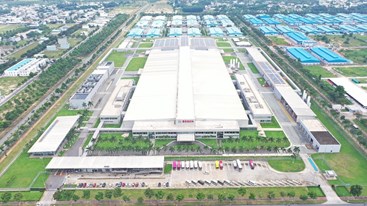 Bosch Vietnam Optimizes Energy to Advance Sustainable Manufacturing
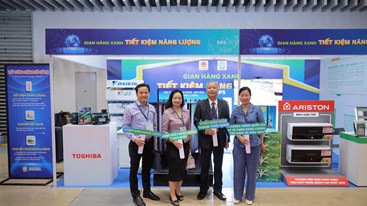 Vietnam ETE & Greenergy Expo 2026: Promoting Green Transition and Energy Efficiency
 Contract Award Notice - Develop/Upgrade MRV Systems for Selected Industrial Sectors – Package C2.1.26
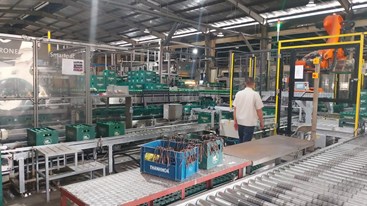 Hanoi – Thanh Hoa Beer Optimizes Energy Efficiency in Production