


Tuesday, 27/10/2026 | 14:20 GMT+7

The director of the Energy Intensive Users Group, Jeremy Nicholson has said that failure of wind how has very profound implications. This comes after new figures have shown that during the recent cold period, wind power produced less than two percent of the nation’s electricity. He says that because of this, the government will encourage companies to build back up stations in case of further failures.
It has been warned that ineffective wind farms could cost the country billions of pounds, as well as causing blackouts and triggering an economic crisis. This is due to the inability of wind farms to produce any energy in extremely cold conditions.
To make up for this lack of energy production, the government will have to build emergency back up power plants, the bill for which will be fronted by the public.
The director of the Energy Intensive Users Group, Jeremy
Nicholson has said that failure of wind how has very profound implications. This
comes after new figures have shown that during the recent cold period, wind
power produced less than two percent of the nation’s electricity. He says that
because of this, the government will encourage companies to build back up
stations in case of further failures.

These stations will be paid for through higher energy costs, meaning that household energy bills are expected to double by 2020. This is necessary in order for Britain to meet the agreed sustainable energy targets, set by Brussels. The full cost of meeting these targets is expected to amount to £200 billion.
The normal amount of energy produced by Britain’s wind turbines is around 8.6% but due to the cold weather this figure dropped to about 1.8%. This means that coal and oil fired power stations had to make up the missing 6.4%.
What is worrying about these figures, is that they are not
limited to just this recent cold period. Mr Nicholson says that this is similar
to January and February last year, when high pressure brought in cold
temperatures, snow and no wind.
The main concern for industrial users is that Government policy is committed to ensuring that 30% of the country’s energy supply comes from renewable sources by 2020. This means that the number of wind turbines will have to be more than doubled in ten years time.
Making the problem worse, is the EU directive insisting that
we close down our coal and oil powered stations.
This has led the National grid to set up a team to look at other solutions to the problem. One such solution is the idea of rationing energy during times of extreme use. Which could potentially mean shutting off the electricity supply to certain appliances, for a small amount of time.
financenews.co.uk










 Polytex Pioneers Energy Efficiency in the Textile and Dyeing Industry
 Conference on Energy Efficiency and Conservation in 2026
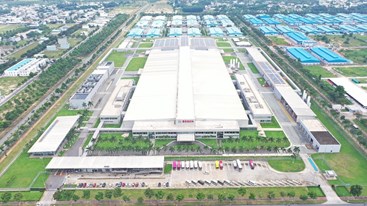 Bosch Vietnam Optimizes Energy to Advance Sustainable Manufacturing
 Consultation on the Draft of the Vietnam Energy Efficiency Fund Establishment
 Contract Award Notice - Notice for Contracts award for Finalize VNEEF (Vietnam National Energy Efficiency Fund) model (Package C2.2.14)
 Contract Award Notice - Review and update for current Energy Efficiency Benchmarking for 2 Sub-Industrial sectors
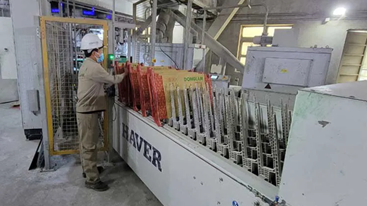 Dong Lam Cement Promotes Energy Efficiency to Enhance Sustainable Production