Saturday, 17/10/2026 | 03:57 GMT+7

Scottish renewable energy company Green Highland Renewables has started work on a £13.5m hydropower scheme in the Scottish Highlands.
Scottish renewable energy company Green Highland Renewables has started work on a £13.5m hydropower scheme in the Scottish Highlands.
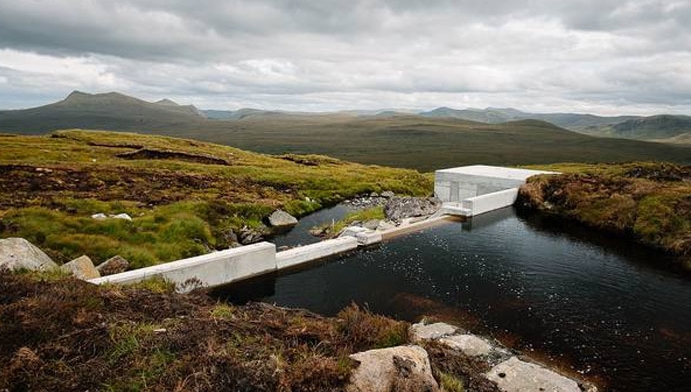
The Loch Eilde Mor project is fully funded by the hydro firm’s owners Ancala Renewables and could be producing power by summer 2017.
“This is a really exciting project and marks the start of an extremely busy two years for our firm,” said Green Highland Renewables chief executive Mark Mathieson.
“In the last four years, we have constructed and commissioned 25 schemes totalling 17MW across the Highlands and in the process have invested £62m – the majority of this going to local construction firms and contractors.
“Add to this the £25m we have committed so far this year, and it is clear our hydro projects will make a significant positive impact on the Highland economy.
These schemes all secured subsidies through the Feed-in Tariff (FiT), but the recent cuts to the tariff for hydro schemes means that “next to zero new Highland schemes will come forward for construction from 2018 onwards”, according to Mathieson.
"It will be the end of an era,” he said.
Tariffs for small-scale hydro schemes were cut by as much as 37% in the controversial changes to the FIT.
Backlash
Much like the solar industry, the British Hydro Association told Amber Rudd that the cuts could cost thousands of jobs in the sector, and undermine Britain’s transition to a low-carbon energy system.
“DECC is concerned that we move towards grid parity (subsidy-free) low carbon power, but fails to note that hydro already produces grid parity power,” said Mathieson. “Hydro schemes last 50 years at least, and many of our historic hydro power stations are today delivering subsidy free-green energy right through the winter – exactly when it is required.”
“Roll forwards another 20 years and all of the small hydro schemes we have built in the last few years will be subsidy-free too, producing decades of cheap green power at a time when we’ll all be paying £1 billion a year to the foreign owners of the proposed Hinkley Point C nuclear plant.”
Hydropower accounts for approximately 20% of the planet’s electricity and around two-thirds of renewable energy output. However, its expansion in the UK is reportedly constrained by geographical limitations.
The National Trust recently installed a small-scale hydro scheme at its estate at Cragside in Northumberland.
Edie.net






 Polytex Pioneers Energy Efficiency in the Textile and Dyeing Industry
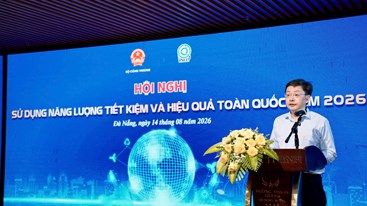 Conference on Energy Efficiency and Conservation in 2026
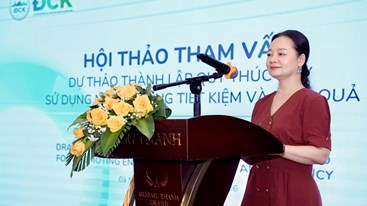 Consultation on the Draft of the Vietnam Energy Efficiency Fund Establishment
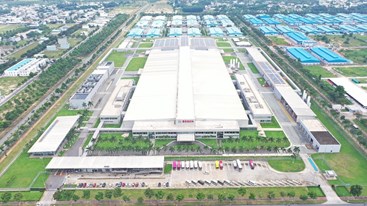 Bosch Vietnam Optimizes Energy to Advance Sustainable Manufacturing
 Contract Award Notice - Support the development of energy management systems and capacity building (Package C2.2.11)
 Contract Award Notice - Review and update for current Energy Efficiency Benchmarking for 2 Sub-Industrial sectors
 Contract Award Notice - Notice for Contracts award for Finalize VNEEF (Vietnam National Energy Efficiency Fund) model (Package C2.2.14)