Thursday, 15/10/2026 | 08:34 GMT+7

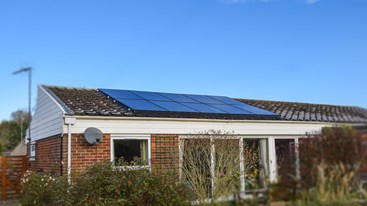
Google is offering a million-dollar prize for a breakthrough that would make solar or wind generated electricity more enticing for everyday uses.
Google is offering a million-dollar prize for a breakthrough that would make solar or wind generated electricity more enticing for everyday uses.
Google teamed with the Institute of Electrical and Electronic Engineers to back a "Littlebox Challenge" promising to reward whoever comes up with the best design for a device no bigger than a laptop that can efficiently convert direct current to alternating current commonly used in homes and businesses.
Renewable energy sources such as solar panels and wind turbines create direct current that must be converted into alternating current, the system for which now involves complex power grids and sources such as fossil or nuclear fuels.

The challenge is to shrink power converters to about a tenth of their present size, which was described as on par with large picnic coolers.
"There will be obstacles to overcome; like the conventional wisdom of engineering," Eric Raymond of the Google Green Team said in an online post announcing the challenge.
"But whoever gets it done will help change the future of electricity."
Small inverters could make it possible to accomplish handy feats such as creating low-cost power grids in remote places or using car batteries to keep lights on in homes during blackouts, according to Raymond.
"We think it's time to shine a light on the humble inverter, and the potential that lies in making it much, much smaller," Raymond said.
Spacedaily.com











 Polytex Pioneers Energy Efficiency in the Textile and Dyeing Industry
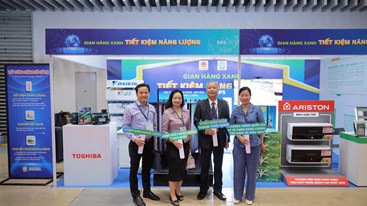 Vietnam ETE & Greenergy Expo 2026: Promoting Green Transition and Energy Efficiency
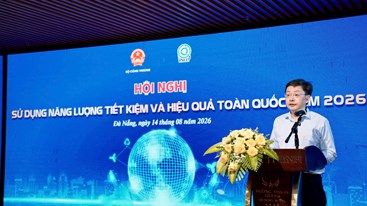 Conference on Energy Efficiency and Conservation in 2026
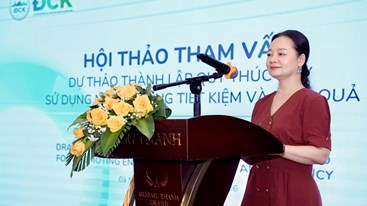 Consultation on the Draft of the Vietnam Energy Efficiency Fund Establishment
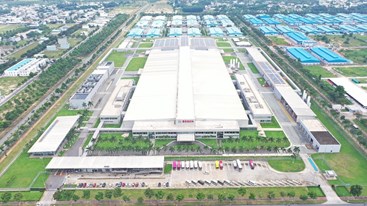 Bosch Vietnam Optimizes Energy to Advance Sustainable Manufacturing
 Contract Award Notice - Support the development of energy management systems and capacity building (Package C2.2.11)
 Contract Award Notice - Review and update for current Energy Efficiency Benchmarking for 2 Sub-Industrial sectors