Tuesday, 06/10/2026 | 00:29 GMT+7

Scientists proved that potassium can serve as a cheap and abundant, highly efficient alternative to lithium in batteries with graphite anode.
Scientists proved that potassium can serve as a cheap and abundant, highly efficient alternative to lithium in batteries with graphite anode.
Lithium ion batteries are currently the core of energy storage. Although alternatives based on sodium and magnesium, have been explored for quite some time, no technology is able to compete just yet. In any normal circumstances this would not have been such a big problem as Li-ion batteries are serving their purpose relatively successfully.
But the reality is, lithium is not a highly abundant element, in fact it is exactly the opposite- it occurs in only 0.002% of the Earth’s crust. In addition, it is highly toxic, still very difficult to recycle, and it comes at quite a price.
With all this in mind, it is more than reasonable for scientists and technology developers to seek for alternative elements that can serve the same purpose but without the environmental impact, and the steep cost. What is more interesting, however, is that everybody seems to have focused on the usual suspects (sodium, magnesium, etc.), neglecting one very key element that was pronounced “not suitable” nearly a century ago, and forgotten ever since- potassium.
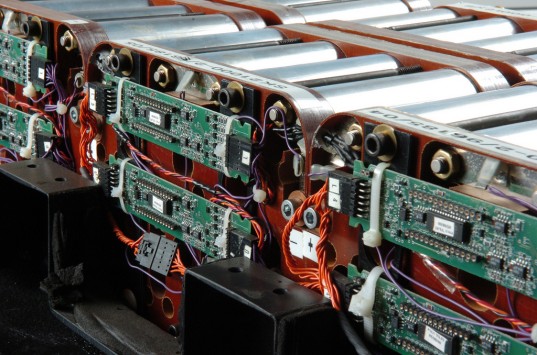
A team of scientists from the Oregon State University, supported by the U.S, Department of Energy, decided to wake up the ghost and test the assumption made back in 1932 that potassium and graphite (or other bulk carbon) anodes will not work. Surprisingly to some, the assumption was proven wrong.
Published in the Journal of the American Chemical Society, the study conducted by Xiulei (David) Ji and team shows that the highly abundant and cheap element can in fact work effectively in an energy storage system and in combination with the graphite anode. The preliminary tests have not yet resulted in competitive performance of the technology against Li-ion, however the potential is great.
The authors have already applied for a patent on their technology, and are extremely surprised that no one has picked up this line of research for more than 80 years. They are hopeful that the technology will revolutionize energy storage, and currently seek for partners and investors that will help them demonstrate this to the public by making the technology commercial.
Mai Linh












 Contract Award Notice - Develop tools for analyzing the energy efficiency of sub-projects and assess the current state of the market for energy-saving investment loans (C2.2.12)
 Contract Award Notice - Support the development of energy management systems and capacity building (Package C2.2.11)
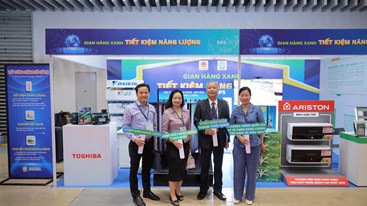 Vietnam ETE & Greenergy Expo 2026: Promoting Green Transition and Energy Efficiency
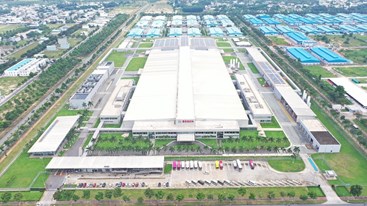 Bosch Vietnam Optimizes Energy to Advance Sustainable Manufacturing
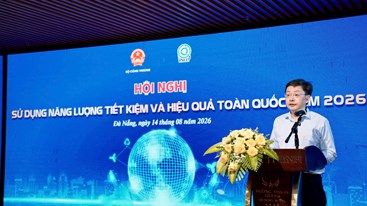 Conference on Energy Efficiency and Conservation in 2026
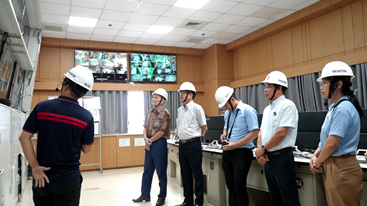 Polytex Pioneers Energy Efficiency in the Textile and Dyeing Industry
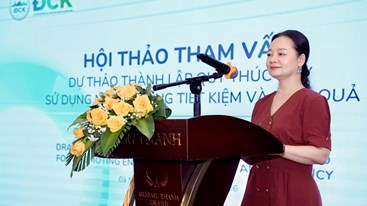 Consultation on the Draft of the Vietnam Energy Efficiency Fund Establishment