-

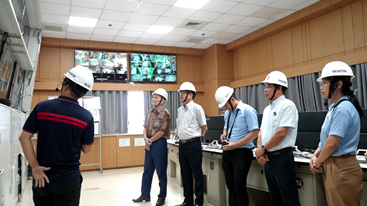
The built environment consists of buildings and infrastructure that touch all aspects of human life—from our houses and apartments to the commercial and industrial spaces where we work, shop, and socialize. This ecosystem accounts for around 26% of global greenhouse gas (GHG) emissions.
-
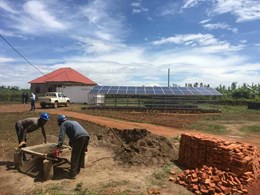
Countries across Sub-Saharan Africa are grappling with the challenges of expanding energy access while addressing climate change. As efforts accelerate to expand access to electricity to more people in the region, adopting energy efficiency measures upfront would help avoid locking-in inefficient energy consumption.
-
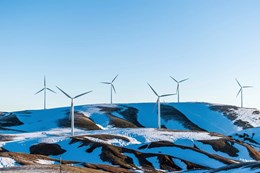
Energy demand – how much energy we use – is a surprisingly under-explored area in the drive to cut carbon emissions and fight the climate crisis. But for energy users who take action in this area, there is “extraordinary potential,” the World Economic Forum says.
-
The textile and garment industry uses a massive amount of energy in the production and manufacturing processes. And, due to geopolitical events, such as COVID-19 or the Russian-Ukraine war, energy costs have been rising which has also had a big impact on manufacturing companies , including the garment sector. Combined with the global increased pressure to adopt sustainable practices, garment manufacturers are prompted to seek innovative ways to reduce their energy consumption and enhance efficiency.
-

The Power Management Integrated Circuit (PMIC) market is experiencing significant changes driven by the need for energy efficiency across multiple industries.
-

Energy and gas costs continue to rise, leaving businesses like food and beverage manufacturers feeling financially strained. The good news is that manufacturing businesses can significantly reduce their energy bills by becoming more energy efficient.
-
.jpg?w=260&mode=crop)
Schools, pools, and hospitals will be supported to make energy efficient upgrades, and businesses with high energy use will receive funding to help cut bills and emissions.
-

Australian Energy Ministers will decide whether to implement proposed Minimum Energy Performance Standards (MEPS) for lighting, including light emitting diodes (LEDs).
-
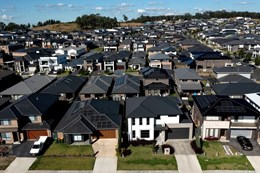
Homes that meet recommended air tightness levels have lower energy bills and healthier indoor air quality, with the study also identifying the factors – and rooms – that caused leakages in most new homes.
-
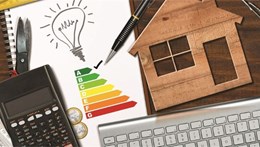
The information and communication technology sector is a major energy consumer, but it also offers the potential for savings... if used properly. Let’s work smarter, writes Pernille Weiss
-

The current decade is critical to limit temperature rise to 1.5°C: directing investments towards low- and zero-emissions technologies is instrumental to achieving the Paris Agreement target.
-

The project was commissioned by the Federal Ministry for Economic Cooperation and Development (BMZ) and ran from 2015 to 2021.
-
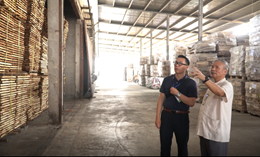
Nam Dinh Forest Products Joint Stock Company is one of four enterprises selected to participate in the Voluntary Agreement on Energy Efficiency in Energy Intensive Industries.
-

About two-thirds of the entire primary energy reserves of countries is going to waste, according to data from the International Energy Agency (IEA). Countries are expanding their efforts in achieving national energy efficiency goals by including more recommendations and policies in their long-term climate agendas.
-

A £7m scheme to install green energy heating schemes at two public buildings is set to be scrapped. Exeter City Council was awarded £6.4m of government money in 2023 to "decarbonise" the Royal Albert Memorial Museum and the Riverside Leisure Centre.
-

Energy-as-a-Service solutions provider Redaptive announced ON 22 October 2024 that it has raised $100 million through an equity investment from the Canada Pension Plan Investment Board (CPP Investments).
-

Steel remains incredibly relevant and deeply integrated into the modern world. Steel is used extensively in engineering, construction and other applications vital to modern life. The downside is that traditional methods of manufacturing, based upon fossil fuels such as coal, are damaging to the environment as they produce significant quantities of carbon dioxide (CO2). In fact, according to McKinsey & Company1, steel production accounts for about 8% of global emissions. In 2018, every ton of steel produced emitted an average of 1.85 tons of CO2.
-
.jpg?w=260&mode=crop)
An electric-powered complex debuts with hundreds of ‘passive’ homes.
-
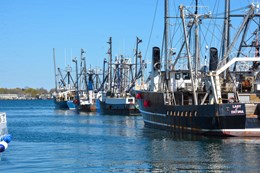
A new program to plan low- and zero-emissions energy technology for the Massachusetts fishing industry is getting nearly $2 million as part of the recently passed federal Omnibus Appropriations Act for 2023.
-
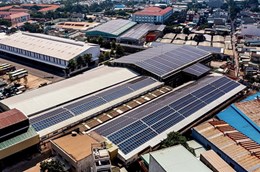
According to the plan, Vietnam Electricity will pay for the surplus energy from the local solar power system to the national grid in alignment with the average market electricity price of the previous year.



 Contract Award Notice - Review and update for current Energy Efficiency Benchmarking for 2 Sub-Industrial sectors
 Contract Award Notice - Notice for Contracts award for Finalize VNEEF (Vietnam National Energy Efficiency Fund) model (Package C2.2.14)
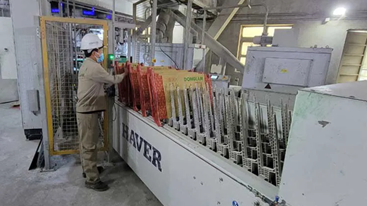 Dong Lam Cement Promotes Energy Efficiency to Enhance Sustainable Production