-
.jpg?w=260&mode=crop)
Rooftop solar now accounts for 11.2% of Australia’s electricity supply, with households and businesses playing a leading role in Australia’s renewable energy transition, according to the Clean Energy Council’s new Rooftop Solar and Storage Report.
-
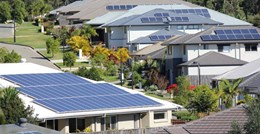
The Climate Council has launched a new plan to seize the sun and capitalise on Australia’s rooftop solar strengths, double our solar power capacity and install two million household batteries by the end of the decade.
-

The food processing industry is one of the most energy-intensive sectors, consuming vast amounts of electricity and fuel to transform raw ingredients into the products we consume daily. This high energy usage not only contributes to significant operational costs but also results in substantial greenhouse gas (GHG) emissions. Implementing energy-efficient practices is crucial for reducing both costs and environmental impact. This article explores various strategies to enhance energy efficiency in food processing, ultimately leading to a more sustainable and profitable industry.
-
.jpg?w=260&mode=crop)
The iron and steel industry is one of the pillars of the world economy, as steel is a very important material in sectors including construction, the automotive industry, aerospace, energy, and more. However, the steel industry is known to be very energy intensive. For this reason, it is imperative to implement measures to improve energy efficiency.
-
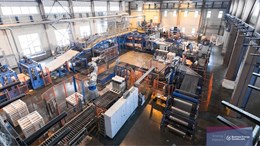
The energy crisis has affected businesses in all sectors, but perhaps none harder than those in manufacturing. Glass, ceramic and paper manufacturers warned that rising prices may mean they have to charge customers more. Manufacturers in energy-intensive industries such as steel and chemical also warned that the price of goods would increase for consumers because of the high and rising energy costs.
-

From March 5–7, METEF, the international expo for aluminum, aimed at highlighting new chances for the industry and provide opportunities to diversify one’s business, returns to Bologna
-

Energy costs are a hot topic for fish processing plants, who can potentially spend a lot of electricity to maintain optimal climates at all times. Below, we explain how Dantherm’s ECOline solution is significantly reducing the energy demands of climate control in this industry.
-

According to the European Commission, buildings in the European Union are responsible for 40% of final energy consumption in the European Union and 36% of its energy-related greenhouse gas emissions, while 75% of the European Union’s buildings are still energy inefficient and 85-95% of the buildings that exist today will continue to exist in 2050.
-

Egypt Vision 2030 was a strategy that sought to build a nation from the grassroots level up, and a critical part of realizing this vision was to realize ambitions to make a regional energy hub. To accomplish this, national production needs to be improved and production efficiency must be enhanced to appropriate levels, taking into consideration commitments to decarbonization and global competition. Improving energy efficiency is the step that needs to be taken for the nation’s objectives to be fully realized.
-

As the world shifts towards sustainable energy solutions, researchers are exploring innovative technologies that can efficiently convert heat into electricity.
-
.jpg?w=260&mode=crop)
The device uses special materials that change temperature when stretched or compressed, allowing it to cool the air and condense water vapor with minimal energy use.
-

The U.S. Department of Energy found increasing levels of savings under a high-renewables grid across three transmission frameworks: first, accelerated transmission expansion, then point-to-point high-voltage direct current (HVDC) transmission, then HVDC using more flexibly sized multiterminal converters.
-

Schneider Electric highlights the critical need for sustainable data center design to reduce carbon emissions and enhance resilience. Through advanced digital solutions, Schneider aims to optimize energy use and drive sustainability in the data center industry.
-

In Iran, the energy sector is the largest contributor to carbon emissions.These sectors exert significant pressure on energy resources and contribute substantially to carbon emissions. Recognizing these challenges, UNDP Iran has spearheaded transformative initiatives in sustainable energy and operational efficiency at UN facilities.
-

The cutting-edge, state-backed project at 345 Hudson could be a model for other big buildings sprinting to comply with the city’s building decarbonization law.
-

The energy price cap, or the amount suppliers are allowed to charge for each unit of gas and electricity, will increase by around 5% from January 2024, the regulator Ofgem has said.
-

From the aircraft taking you on your next trip, to the buildings you work in – learn how energy efficiency is at work all around you.
-

The EEC welcomed the release of the NSW Consumer Energy Strategy, which includes a $239 million Home Energy Saver Program and a commitment to introduce disclosure of home energy performance at point of sale or lease.
-

To limit global warming to 1.5°C, we need to cut emissions by about 7% annually. Right now, emissions are rising by 1.5% each year. Energy-related emissions contribute to more than 80% of this global total. And although renewable energy production has more than doubled in the last decade, it still makes up only slightly over 13% of total energy use, up from 9% in 2011.
-

Nova Scotia is unveiling new details on its planned public housing project. It says the bulk of the new homes will be coming to the Halifax area. As Skye Bryden-Blom reports, it’s also introducing 25 new modular units as it looks to bolster its affordable housing stock.



 Contract Award Notice - Develop tools for analyzing the energy efficiency of sub-projects and assess the current state of the market for energy-saving investment loans (C2.2.12)
 Contract Award Notice - Support the development of energy management systems and capacity building (Package C2.2.11)
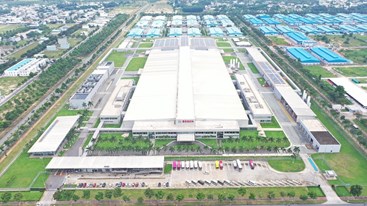 Bosch Vietnam Optimizes Energy to Advance Sustainable Manufacturing
 Vietnam ETE & Greenergy Expo 2026: Promoting Green Transition and Energy Efficiency
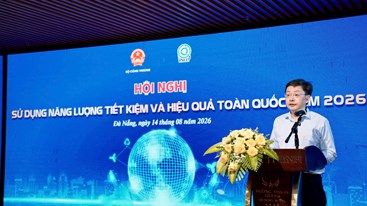 Conference on Energy Efficiency and Conservation in 2026
 Contract Award Notice - Develop/Upgrade MRV Systems for Selected Industrial Sectors – Package C2.1.26
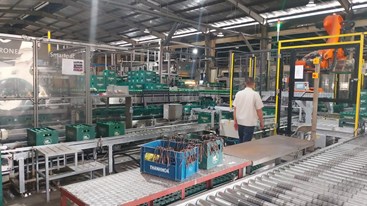 Hanoi – Thanh Hoa Beer Optimizes Energy Efficiency in Production