-

Each household taking part in the project has been provided with financial assistance worth VND1.2 million to build a biogas plant (of this sum, VND625,000 comes from the project’s budget and the remainder from the provincial budget). In places where the project was developed, people took active part in the construction of biogas plants. Before they were put into use, biogas plants were checked carefully and at the same time users were provided with detailed instructions to ensure effective and safe operation of biogas plants.
-

Each year, the factory discharges 3.000m3 of untreated waste water and 80 tons of untreated solid waste (waste rattan bark) into the environment. More ominously, waste water also contains many dangerous chemicals such as H2O2, NaOH, SiO2 ... Besides, a large amount of gas and dust dispersed into the air during the production process has also greatly affected the health of workers and the surrounding environment".
-

Participating in the course, trainees will be equipped with systematic knowledge and management skills and techniques on energy efficiency. With that knowledge, businesses will not only save costs and gain markedly economic benefits but will also be more active when the Law on Energy Efficiency and Conservation is officially enforced from 01/01/2011.
-

Explaining about the concept of green architecture which is applied in this construction, architect Duong Hong Hien said that the direction of the house must be determined first. The project consists of two parts: the 120 room hotel and 22 villas. Direction of the hotel is East - West is but of the villa is North - South.
-

New technology is the key to the meeting the coalition's pledge to lead the "greenest government ever", David Cameron has said. The prime minister was announcing the publication of an online league table which will be updated daily, to allow the public to see which departments were cutting energy use the most.
-

Norwalk and Darien residents looking to dispose of used compact fluorescent light bulbs, commonly called CFLs, have a variety of options to take advantage of. At a news conference at the Home Depot location on Connecticut Avenue in Norwalk Thursday, state Senator Bob Duff (D-Norwalk) and Norwalk Mayor Richard Moccia detailed the services available to those in the area.
-

An energy saving house built from hemp is being tested at the University of Bath to see if the eco-friendly resource might be used in construction. The test home was built by a consortium led by the Building Research Establishment Centre for Innovative Construction Materials.
-

The vehicle that has been Dubbed Superbus, is as long as a normal bus and has the same height as a conventional SUV, being capable to carry about 23 passengers. According to the designers, the new electric bus is a “future vision of sustainable public transport.” It also features an aerodynamic design to create a sustainable, fast and comfortable mode of public transport.
-

Utilizing what we have in a wiser way could lead us to something worth it. As the famous line goes, “everything has its purpose” no matter how small or big it is. It also includes waste products such the awful pet poop, specifically dog poop. In Cambridge, Massachusetts, a dog park hasn’t been considering these dog poop a waste at all. In fact, in has turned out to be a very useful.
-

Prominent corporations are paying special attention to go green and create a conducive environment for clean and green energy. Walmart too is taking appreciative steps in the field of alternative energy. In the year 2007, Walmart entered into a partnership with Environmental Defense Fund (EDF) to provide a thrust to the photovoltaic technologies. It was related with thin-film solar. They aimed for taking it out from labs to the real world.
-

Solar cells currently used are mostly bulky and made from silicon and other non-recyclable materials, hence they’re not as green as they should be. Mimicking nature might be a solution to this problem. More exactly, North Carolina State University researchers have prototyped a water-based solar cell, mimicking the functioning of a leaf, to produce electricity.
-

Designers have come up with a new portable wind turbine that is very easy to be transported and put into function by just one person. Dubbed the “Mobile Wind Turbine”, it includes a hybrid carrier that uses electricity harnessed from wind energy to run.
-

Vietnam National Coal - Mineral Industries Group (TKV), together with foreign partners, is researching the technology to exploit coals in the Red River coal basin. Currently, the Group is carrying out the procedures for additional exploration licenses in the area of 85.4 km2 in Khoai Chau, Hung Yen province. This location has been preliminarily explored and carefully searched.
-

But a dimmer living room and risk of eye-strain may be the least of our worries. In the rush to get us using greener, more energy-efficient light bulbs, authorities here have forgotten to engage in any public information campaign about their health risks.
-

Designed by the Tokyo Institute of Technology and fine-tuned by researchers at MERSTech in partnership with the ONR's office in Tokyo, the Magnetic Energy Recovery Switch (MERS) harnesses and recycles residual magnetic power that is produced by electrical current. By using a device that controls the flow of electricity, light bulbs can now maximize their potential. The proposal for the expanded experiment is scheduled for completion in October.
-

Chris Huhne threatened to get heavy-handed with gas and electricity providers on Tuesday, warning that he would step in if the industry failed to tell customers about price rises.The energy secretary hit out at providers who “put up their prices without telling you for three months”.
-

According to the Pedegopress release , “The announced battery-fuel cell hybrid system is compatible with all existing Pedego bicycles and batteries. For every 1.5 lbs. of weight a rider carries, an additional 700 watt-hours of energy is available (compared to ~350 watt-hours for an ultra-high performance lithium-polymer battery at a weight of 7 lbs.).
-

Các nhà khoa học Australia đã nghiên cứu cách sản xuất các tấm pin mặt trời bằng cách “in” các đơn vị quang điện biến quang năng thành điện năng lên đế polyme và tạo ra những thay đổi lớn trong việc sử dụng điện mặt trời.
-

The inventor says his device can cut the energy use by 25%. Moreover, it can prove itself healthy for those who suffer from asthma, allergies, of whatever age or sex. CleanAir supposedly removes particles, viruses, ozone, bacteria, organic solvents, hydrocarbons and cigarette smoke from the air.
-

All new investments must undergo independent assessments and government reviews on whether they are energy-saving or not before being approved by regulators, the National Development and Reform Commission, China's top economic planner, said yesterday in a statement on its website.



 REOI - C2.2.11: Support the development of energy management systems and capacity building
28/04/2026
REOI - C2.2.11: Support the development of energy management systems and capacity building
28/04/2026
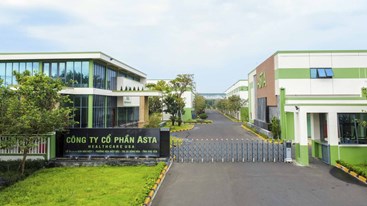 Energy Efficiency Solutions in Pharmaceutical Manufacturing
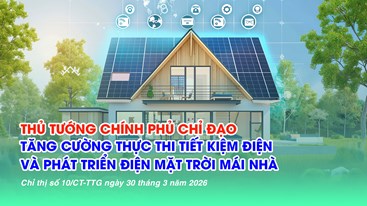 Prime Minister Issues Directive to Strengthen Electricity Saving and Promote Rooftop Solar Power Development
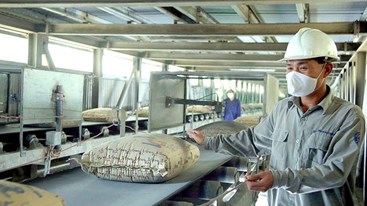 The cement industry applies energy efficiency and conservation, moving toward green and sustainable development
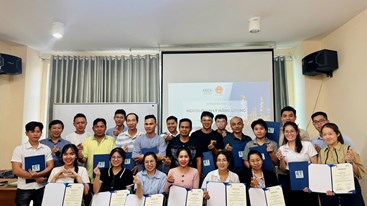 Energy manager training courses in June 2026


.jpg?w=367&h=206&mode=crop)