-

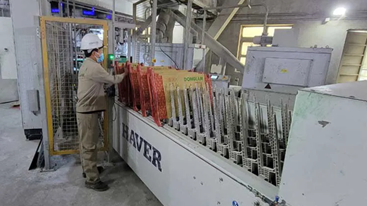
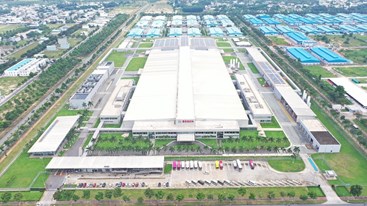
Ngày 15/10, Tập đoàn GE (Mỹ) đã chính thức đưa vào hoạt động Nhà máy sản xuất máy tuabin gió phát điện đầu tiên tại Việt Nam (thuộc Công ty GE Energy) sau gần một năm ruỡi xây dựng tại Khu công nghiệp Nomura-Hải Phòng.
-

The University of Malta Junior College recently concluded a two-year project entitled ‘Saving energy… Saving our future’, in which 21 Maltese students and teachers made use of Comenius EU funds made available by the European Commission through the local agency EUPA.
-

U.S. Energy Secretary Steven Chu announced the release of a new proposed energy efficiency standard for residential refrigerators, refrigerator-freezers, and freezers. The standard, as proposed, could save consumers as much as $18.6 billion over thirty years. The Obama Administration has made efficiency standards a major priority as a way to save energy and money for American families and businesses.
-

The U.S. Department of the Interior (DOI) approved on October 5 the first large-scale solar energy plants ever to be built on U.S. public lands. The approval of two developments in California grants the U.S.-based companies behind the projects access to almost 6,800 acres of public lands for 30 years to build and operate solar plants. The approved plants could produce up to 754 megawatts (MW) of renewable energy, or enough to power 226,000–566,000 typical U.S. homes. The projects will generate almost 1,000 new jobs.
-

It seems that we are finding a new use for solar power everyday. Whether its grid-tie applications, lighting, or backup power, solar is rapidly becoming our green energy alternative of choice. Solar is rapidly evolving as the technology and applications for it are changing daily. In this light, here are 3 great contests that are stretching the limits of what solar can be used for and may just change the way we use energy in our everyday lives.
-

According to Can Tho Energy Conservation Center, with only three energy efficiency solutions, it has been estimated that each year, Meko Garment Joint Stock Company has the opportunity to save over VND 417 million, equivalent to reducing the consumption of about 338 Kwh and 2800 liters of DO oil. Implementing energy saving solutions, the company will also reduce 219 tons of carbon emissions annually.
-

Dong Nai is a province which has rapid economic growth with over 10 thousand enterprises in operation. Not only energy consumption but also the risk of environmental pollution is significantly high. Therefore, the goal of cleaner production, energy efficiency and conservation in production and consumption has been seriously implemented and brought positive results.
-

According to architect Pham Minh Hieu of Song Da Thang Long Joint Stock Company, the design of window for any architectural space needs to focus on the air convection. The sizes of window can be various, depending on the structure of the house and hobbies of the owner.
-

The cells that power the bicycle use sodium silicide, a powder similar to sand. In combination with water, the substance “instantly creates hydrogen gas”, that is further on used to generate energy. Moreover, excess electricity is stored in batteries that are safe and fully recyclable.
-

Previous news were saying that the Obama administration doesn’t have any plans of installing solar panels on the White House. Not even a month has passed, and a representative of the White House in Washington, DC says solar panels will be installed on the White House in order to impulse Americans to adopt green energy.
-

The International Energy Agency (IEA) joined China, France, Germany, Japan, South Africa, Spain, Sweden, and the United States in launching the Electric Vehicles Initiative (EVI) on October 1 at the Paris Motor Show in France. The new initiative will provide a platform for global cooperation on the development and deployment of electric vehicles.
-

Tocco is a remarkable Italian town, not only for its ancient heritage, but also for its futuristic projects that concern the implementation of renewable energy installations. The town benefits four wind turbines that are more than enough to meet the needs of its 2,700 inhabitants.
-

Beacon Power Corp., a provider of energy storage systems has established a partnership with the U.S. Department of Energy’s Advanced Research Projects Agency to produce parts of a flywheel energy storage over a period of two years.
-

As one of three companies of which products are labeled as “Vietnam Energy Star”, the Rang Dong Light Source And Vacuum Flask Joint Stock Company proves its leading position in producing lighting equipment which has high quality, save energy and does less harms to the environment.
-

Participating in the course, trainees will be equipped with systematic knowledge and management skills and techniques on energy efficiency. With that knowledge, businesses will not only save costs and gain markedly economic benefits but will also be more active when the Law on Energy Efficiency and Conservation is officially enforced from 01/01/2011.
-

New technology is the key to the meeting the coalition's pledge to lead the "greenest government ever", David Cameron has said. The prime minister was announcing the publication of an online league table which will be updated daily, to allow the public to see which departments were cutting energy use the most.
-

Struggling to tackle the acute power crisis in the state, Shobha Karandjale, the new energy minister, is planning to encourage energy conservation as purchasing electricity is proving to be a costly affair. The government spends an average of Rs 350 crore a month to purchase power from private producers to meet the power crisis.
-

The latest official figures from the Department of Energy and Climate Change (DECC) could provide insight into how energy saving aspirations across the UK have affected power consumption. In its second quarter 2010 report, DECC notes a 24 per cent fall in primary electricity consumption across the country.
-

British Telecom, Belgacom, France Telecom-Orange, OTE, Telefonica and Turk Telekom among others, have joined heavyweights such as Fujitsu, Hewlett-Packard, IBM, Intel, Microsoft, Vodafone and Cisco in the voluntary plan to help cut carbon emissions. The new signees bring the number of companies participating to 36.
-

Norwalk and Darien residents looking to dispose of used compact fluorescent light bulbs, commonly called CFLs, have a variety of options to take advantage of. At a news conference at the Home Depot location on Connecticut Avenue in Norwalk Thursday, state Senator Bob Duff (D-Norwalk) and Norwalk Mayor Richard Moccia detailed the services available to those in the area.



 Contract Award Notice - Providing technical support, training, and communication on energy efficiency for industrial zones and clusters in Vietnam (Package C2.2.13)
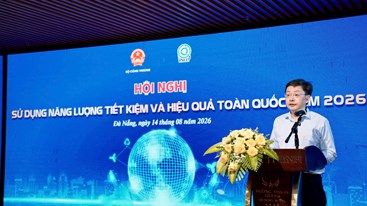 Conference on Energy Efficiency and Conservation in 2026
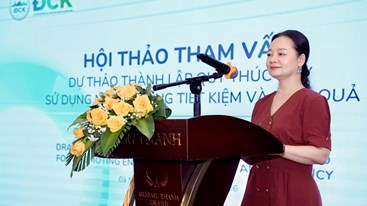 Consultation on the Draft of the Vietnam Energy Efficiency Fund Establishment
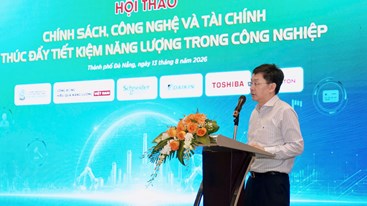 Policies, Technology and Finance Driving Energy Efficiency in the Industrial Sector
 Contract Award Notice - Review and update for current Energy Efficiency Benchmarking for 2 Sub-Industrial sectors
 Contract Award Notice - Notice for Contracts award for Finalize VNEEF (Vietnam National Energy Efficiency Fund) model (Package C2.2.14)
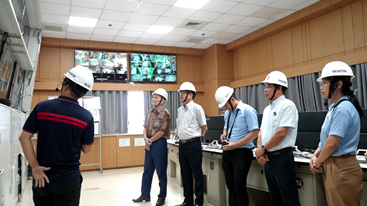 Polytex Pioneers Energy Efficiency in the Textile and Dyeing Industry