


Friday, 23/10/2026 | 23:53 GMT+7

The research overcomes a major obstacle to producing sustainable and low-cost biofuels. Current biofuel production relies on fermenting sugars found in sugar cane, beets, corn and similar food crops. This process threatens the food supply and is not an eco-friendly solution. To tackle these issues, researchers are exploring new techniques to change woody plants and grasses to liquid fuel, which will absorb both the atmospheric CO2 and the CO2 produced during its process.
Researchers at the University of Illinois have made a significant breakthrough by identifying dozens of microbial enzymes which have been previously unknown to mankind, in the cow’s primary grass-digestion chamber. The enzymes helped in breaking down a renewable biofuel energy source, switchgrass.
The research overcomes a major obstacle to producing sustainable and low-cost biofuels. Current biofuel production relies on fermenting sugars found in sugar cane, beets, corn and similar food crops. This process threatens the food supply and is not an eco-friendly solution. To tackle these issues, researchers are exploring new techniques to change woody plants and grasses to liquid fuel, which will absorb both the atmospheric CO2 and the CO2 produced during its process.

However, converting and releasing the energy into the plant cell wall presents a major challenge because to produce second-generation biofuels, fermentable sugars in the plant cell wall have to be unlocked. According to Roderick Mackie, an animal sciences professor at the University of Illinois, the same process is being carried out in the cow's rumen and studying the mechanisms of this process will enable the scientists to discover enzymes that can be used in the biofuels industry.
Matthias Hess, a Mackie and Washington State University professor, applied an old technique to examine the ruminant nutrition. Tiny mesh bags were filled with switchgrass and milled alfalfa via a cannula into the cow’s rumen. Microbes present in each plant were examined after a couple of days. Analyses indicated that microbes in the rumen were able to break down the plant matter easily.
The scientists then examined the switchgrass, which was incubated in the cow’s rumen for three days. A genomic analysis of the bacteria revealed a better picture of the processes taking place in the rumen, making plant degradation a viable option.
The research indicates that the bovine rumen presents suitable microbial habitats to examine the sources of plant-degrading enzymes.
azocleantech.com











 Polytex Pioneers Energy Efficiency in the Textile and Dyeing Industry
 Conference on Energy Efficiency and Conservation in 2026
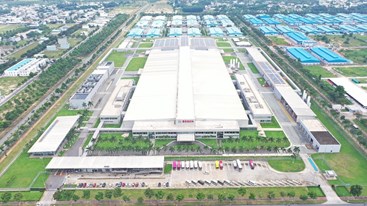 Bosch Vietnam Optimizes Energy to Advance Sustainable Manufacturing
 Consultation on the Draft of the Vietnam Energy Efficiency Fund Establishment
 Contract Award Notice - Support the development of energy management systems and capacity building (Package C2.2.11)
 Contract Award Notice - Review and update for current Energy Efficiency Benchmarking for 2 Sub-Industrial sectors
 Contract Award Notice - Notice for Contracts award for Finalize VNEEF (Vietnam National Energy Efficiency Fund) model (Package C2.2.14)