


Saturday, 24/10/2026 | 21:34 GMT+7

Gaining new insight into how efficiently the microbes in large bioreactors produce methane from brewery waste, Cornell scientists hope to use their new knowledge to shape these microbial communities to produce liquid biofuels and other useful products.
Gaining new insight into how efficiently the microbes in large bioreactors produce methane from brewery waste, Cornell scientists hope to use their new knowledge to shape these microbial communities to produce liquid biofuels and other useful products.
The scientists Largus T. Angenent, associate professor of biological and environmental engineering, and the first author and research associate Jeffrey J. Werner, recently published an article on their research in the journal Proceedings of the National Academy of Sciences.

The scientists had access to a plethora of data, thanks to a collaboration with engineers at Anheuser-Busch InBev, which makes Budweiser beer and operates nine domestic beer breweries that treat wastewater in bioreactors. They took regular samples of bioreactor sludge from each of the facilities over the course of a year and, using state-of-the-art genome sequencing software, they analyzed more than 400,000 gene sequences of the microbes in the sludge.
Among the thousands of species of bacteria, the researchers identified 145 types that were unique to each of the nine facilities -- showing that each bioreactor hosted a specific microbial community. In their analysis they observed that certain types of bacteria called syntrophs had surprisingly stable populations.
"The cool thing we found was that if you're looking at these thousands of species of bacteria, it's a very dynamic system with things dying off and replacing them," Werner said. "There are certain signature populations that are resilient. Even if they get disturbed, they come right back up."
Typically inside these million-gallon bioreactor tanks, the microbial populations in the sludge interact and one of them produces methane gas. Anheuser-Busch InBev recoups 20 percent of its heat energy use through the methane produced, saving the company millions of dollars every year.
Angenent said that where the genome surveys of these microbial communities could lead is particularly exciting. Understanding their functions and how they change with environment -- be it pH or temperature, for example -- could lead to learning how to make the communities of microbes perform new functions.
In ongoing research, the Cornell engineers are looking to prevent methane production by the microbes, and instead, to shape the bacterial communities to produce carboxylates, which are a precursor to the alkanes found in fuels.
"We are going to shape these communities so they start making what we want," Angenent said.
The researchers also collaborated with scientists at University of Colorado at Boulder and at Washington University in St. Louis. The work was supported by the U.S. Department of Agriculture, Department of Energy and National Institutes of Health.
Sciencedaily.com








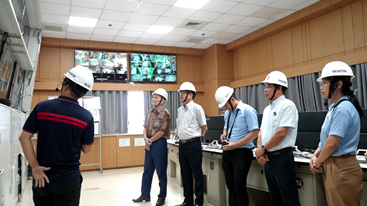 Polytex Pioneers Energy Efficiency in the Textile and Dyeing Industry
 Conference on Energy Efficiency and Conservation in 2026
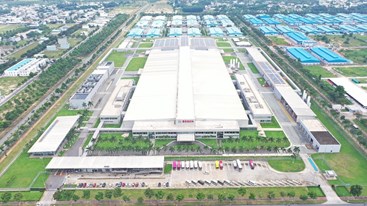 Bosch Vietnam Optimizes Energy to Advance Sustainable Manufacturing
 Consultation on the Draft of the Vietnam Energy Efficiency Fund Establishment
 Contract Award Notice - Notice for Contracts award for Finalize VNEEF (Vietnam National Energy Efficiency Fund) model (Package C2.2.14)
 Contract Award Notice - Review and update for current Energy Efficiency Benchmarking for 2 Sub-Industrial sectors
 Policies, Technology and Finance Driving Energy Efficiency in the Industrial Sector