Sunday, 18/10/2026 | 06:40 GMT+7

Reza Shahbazian-Yassar thinks sodium might be the next big thing in rechargeable batteries. Ads by Google graphite electrodes
Reza Shahbazian-Yassar thinks sodium might be the next big thing in rechargeable batteries. Ads by Google graphite electrodes
Now, the gold standard in the industry is the lithium ion battery, which can be recharged hundreds of times and works really well. Its only problem is that it is made with lithium, which is not cheap. It could get even more expensive if more electric vehicles powered with lithium ion batteries hit the road and drive up demand.

"Some people think lithium will be the next oil," says Shahbazian-Yassar, an associate professor of mechanical engineering–engineering mechanics at Michigan Technological University.
Sodium may be a good alternative. "After lithium, it's the most attractive element to be used in batteries," Shahbazian-Yassar said. It's also cheap and abundant; seawater is full of it.
It has just one problem: sodium atoms are big, about 70 percent larger in size than lithium atoms. "When the atoms are too big, that's problematic," says Shahbazian-Yassar, because they can cause a battery's electrodes to wear out faster. "Imagine bringing an elephant through the door into my office. It's going to break down the walls."
Before a long-lasting rechargeable sodium battery can be developed, scientists need to better understand these challenges and develop solutions. With a $417,000 National Science Foundation grant, Shahbazian-Yassar is leading that effort at Michigan Tech. "We have an opportunity to tackle some of the fundamental issues relating to charging and discharging of batteries right here," he said. "We have a unique tool that lets us observe the inside of a battery."
Using a transmission electron microscope, Shahbazian-Yassar and his team can peer inside and see how a battery is charging and discharging at the atomic level. "We will study these fundamental reactions and find out what materials and electrodes will do a better job hosting the sodium."
Sodium ion batteries would not have to be as good as lithium ion batteries to be competitive, Shahbazian-Yassar notes. They would just need to be good enough to satisfy the consumer. And they could make electric cars more affordable, and thus more attractive. Plus, they could reduce our dependence on fossil fuels, particularly if the batteries were charged using renewable energy sources. That would lead to two laudable goals: greater energy independence and less pollution worldwide. "I hope I can make a contribution," says Yassar.
Source: http://phys.org/











 Polytex Pioneers Energy Efficiency in the Textile and Dyeing Industry
 Conference on Energy Efficiency and Conservation in 2026
 Consultation on the Draft of the Vietnam Energy Efficiency Fund Establishment
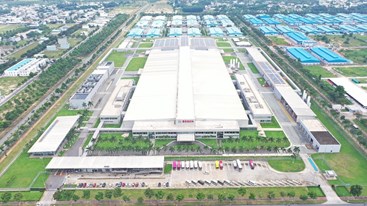 Bosch Vietnam Optimizes Energy to Advance Sustainable Manufacturing
 Contract Award Notice - Support the development of energy management systems and capacity building (Package C2.2.11)
 Contract Award Notice - Review and update for current Energy Efficiency Benchmarking for 2 Sub-Industrial sectors
 Contract Award Notice - Notice for Contracts award for Finalize VNEEF (Vietnam National Energy Efficiency Fund) model (Package C2.2.14)