Thursday, 08/10/2026 | 23:11 GMT+7

Japanese electronics maker Nichia has developed laser technology that could make LCD televisions 25% more energy efficient than LED-based TVs, sources told The Nikkei on Tuesday.
Japanese electronics maker Nichia has developed laser technology that could make LCD televisions 25% more energy efficient than LED-based TVs, sources told The Nikkei on Tuesday.
The major maker of light-emitting diodes has created a way to produce laser light that is 1,000 times stronger than laser light created through conventional methods, but which uses less power, the sources said.
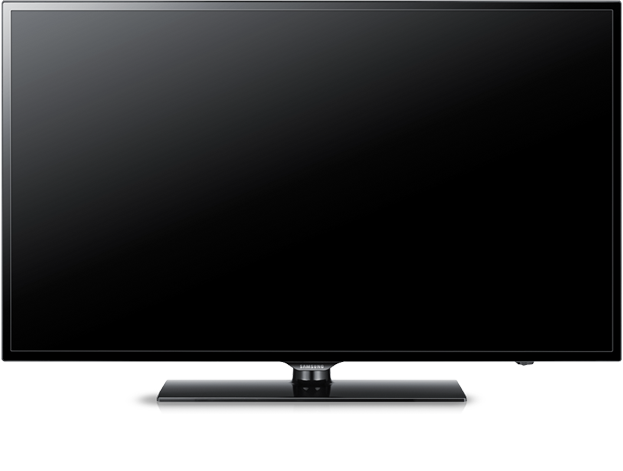
The company, based in Tokushima Prefecture, implemented semiconductor design changes that made it possible to create a laser system capable of emitting stronger blue and green light. The semiconductor device is made of gallium nitride, the same material used in LEDs.
Green and blue laser light has traditionally been relatively weak and therefore is not used in many commercially available products. Blu-ray Disc players are one example.
Because laser light has a uniform wavelength, it can be projected in a straight line. Unlike light created by LEDs, laser light does not get diffused and thus can illuminate liquid crystal display TVs and PC monitors with far less power when used as backlighting -- up to 50% in the case of PCs.
Mitsubishi Electric and other companies have already developed red semiconductor lasers that can emit a strong light, but until now there had been no such system for green and blue lasers. Nichia's breakthrough means semiconductor laser light is now available in the three primary colors.
Nichia has begun shipping samples to consumer electronics makers and aims to commercialize the technology by 2016.
Anh Tuan









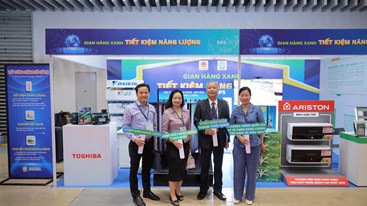 Vietnam ETE & Greenergy Expo 2026: Promoting Green Transition and Energy Efficiency
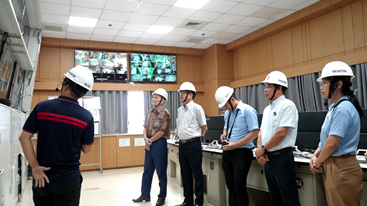 Polytex Pioneers Energy Efficiency in the Textile and Dyeing Industry
 Contract Award Notice - Support the development of energy management systems and capacity building (Package C2.2.11)
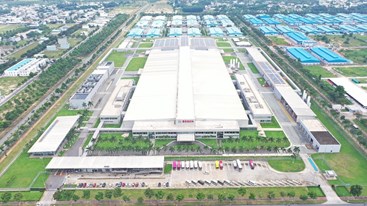 Bosch Vietnam Optimizes Energy to Advance Sustainable Manufacturing
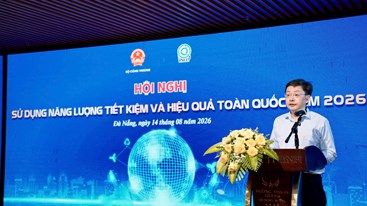 Conference on Energy Efficiency and Conservation in 2026
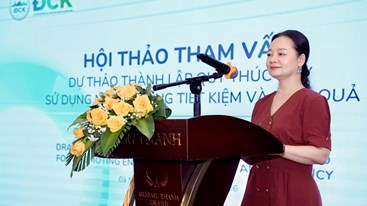 Consultation on the Draft of the Vietnam Energy Efficiency Fund Establishment
 Contract Award Notice - Review and update for current Energy Efficiency Benchmarking for 2 Sub-Industrial sectors