Thursday, 15/10/2026 | 02:41 GMT+7

As most consumers now download and stream their movies and music, more and more CDs and DVDs will end up in landfills or be recycled. But scientists believe these discarded discs could soon take on a different role by curbing the release of greenhouse gases.
As most consumers now download and stream their movies and music, more and more CDs and DVDs will end up in landfills or be recycled.
But scientists believe these discarded discs could soon take on a different role by curbing the release of greenhouse gases.
In the journal ACS Sustainable Chemistry & Engineering, researchers report a way to turn the discs into a material that can capture carbon dioxide, a key greenhouse gas, and other compounds.

Mietek Jaroniec and colleagues at the Institute of Chemistry at Poland’s Military Technical Academy and the US found that manufacturers typically use natural sources, such as coal and wood, to make activated carbon. The material is then incorporated in a wide range of applications from decaffeination to gas purification.
More recently, scientists have been preparing activated carbon out of everyday plastic products. Jaroniec’s team wanted to try this with optical discs, a fast-growing part of our waste stream.
The researchers processed disc fragments into two kinds of activated carbon with high surface areas and large volumes of fine pore. These key characteristics allowed the materials to capture carbon dioxide.
They also adsorbed hydrogen gas and benzene, a carcinogenic compound used in industrial processes. The researchers say that in addition to carbon capture applications, their materials could be used to separate volatile organic compounds and store hydrogen.
Truong Duy










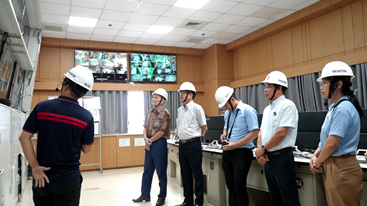 Polytex Pioneers Energy Efficiency in the Textile and Dyeing Industry
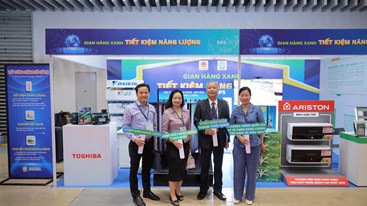 Vietnam ETE & Greenergy Expo 2026: Promoting Green Transition and Energy Efficiency
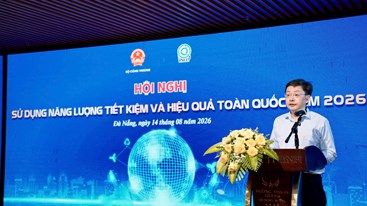 Conference on Energy Efficiency and Conservation in 2026
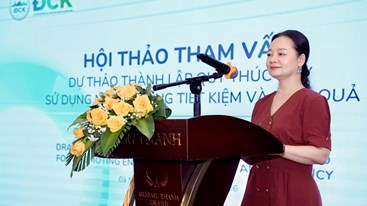 Consultation on the Draft of the Vietnam Energy Efficiency Fund Establishment
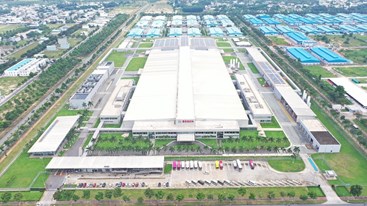 Bosch Vietnam Optimizes Energy to Advance Sustainable Manufacturing
 Contract Award Notice - Support the development of energy management systems and capacity building (Package C2.2.11)
 Contract Award Notice - Review and update for current Energy Efficiency Benchmarking for 2 Sub-Industrial sectors