Sunday, 04/10/2026 | 13:19 GMT+7

A four-month trial of a train powered by a traction inverter incorporating silicon carbide (SiC) devices, has demonstrated a 40% reduction in power consumption compared to a similar train using conventional circuitry.
A four-month trial of a train powered by a traction inverter incorporating silicon carbide (SiC) devices, has demonstrated a 40% reduction in power consumption compared to a similar train using conventional circuitry.
The all-SiC inverter was installed in an urban train operated by Odakyu Electric Railway in Japan, and compared in commercial operation with a locomotive fitted with a conventional GTO (gate turn-off) thyristor traction inverter. The tests measured the power consumption and electric power regeneration ratio of the trains’ main circuits – which consist of traction inverters, high-efficiency motors and filter reactors.
Over the four-month trial, the average power regeneration ratio – calculated as the power from the regenerative brakes to the catenaries, divided by the total electric power needed to drive the train – improved from 34.1% for the standard inverter to 52.1% for the SiC system. There was a further 17% power saving during operation, resulting in the combined saving of 40%.
The SiC inverter, which is rated for use with 1,500V DC catenaries, was developed by Mitsubishi Electric. In the trial, it was used to power four 190kW traction motors.
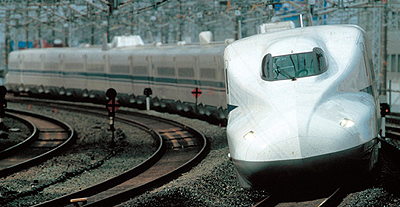
Mitsubishi has also started to test a silicon carbide traction converter/inverter system on Shinkansen “bullet” trains operated by the Central Japan Railway Company. These are claimed to be the first 3.3kV, 1500A traction systems to be installed on a high-speed train.
Japan's famous "bullet" trains are now being tested with silicon carbide inverters, which result in substantial savings in space and weight
Mitsubishi has been working to shrink traction systems for bullet trains. The use of the SiC power modules reduces the size of the converter/inverter system by about 55% compared to existing systems – and the weight by about 35%. The weight of the traction motor, including the drive system, is reduced by around 15%. The inverters are being used to power four 305kW traction motors.
Mitsubishi developed the power modules – which incorporate three-level PWM inverters with regenerative braking – with support from Japan’s New Energy and Industrial Technology Development Organisation.
Truong Duy










 Contract Award Notice - Develop tools for analyzing the energy efficiency of sub-projects and assess the current state of the market for energy-saving investment loans (C2.2.12)
 Contract Award Notice - Support the development of energy management systems and capacity building (Package C2.2.11)
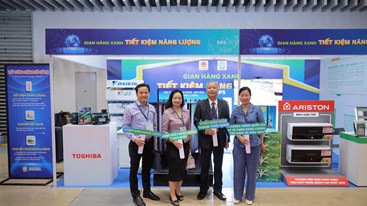 Vietnam ETE & Greenergy Expo 2026: Promoting Green Transition and Energy Efficiency