Saturday, 03/10/2026 | 04:48 GMT+7

The U.S. Department of Agriculture (USDA) released a report on June 23 detailing regional strategies to increase biofuels production to meet the Renewable Fuels Standard (RFS2) mandate for U.S. consumers to use 36 billion gallons of biofuel per year by 2022.
The U.S. Department of Agriculture (USDA) released a report
on June 23 detailing regional strategies to increase biofuels production to
meet the Renewable Fuels Standard (RFS2) mandate for
Authors of the USDA's Biofuels Strategic Production Report conclude that meeting RFS2 targets will require a rapid build-up in production capabilities and a substantial investment in biorefineries. The RFS2 implementation provisions are detailed in EPA's final rule for the RFS2, which takes effect on July 1.

USDA's report identifies numerous biomass feedstocks to be
used in the development of biofuels and calls for the funding of further
investments in research and development of various feedstocks; sustainable
production and management systems; efficient conversion technologies and
high-value bioproducts; and decision support and policy analysis tools.
The report provides data on the significant impact the ethanol industry will have on job creation, with as many as 40 direct jobs and additional indirect jobs created with each 100-million-gallon ethanol facility built. In addition, the USDA outlines plans to adopt regional strategies that allow the siting of biorefineries in areas of economic distress through the leveraging of regional resources for transportation, labor, and feedstocks.
The roadmap cites sources of existing or planned biofuels capacity. For example, EPA's analysis projects that 15 billion gallons of conventional biofuels could come from current or already planned production capacity of corn starch ethanol. Of the remaining 21 billion gallons of advanced biofuels needed to achieve the RFS2 targets, 16 billion gallons must come from advanced cellulosic biofuels that reduce greenhouse gas emissions by at least 60% relative to gasoline. Key to meeting the 36-billion-gallon-goal is establishing a sustainable biofuels economy to produce the 20 billion gallons of advanced biofuels needed.

USDA recognized that some regions have a comparative
advantage over others. According to the USDA, the Southeast and Central-Eastern
portions of the country could together produce more than 93% of the biofuels
needed to meet the RFS2 targets.
The Southeast, with its extended growing season, could produce nearly half of the biofuels needed. It and the Central-Eastern region, which stretches from North Dakota and Wisconsin south to Delaware and Virginia, both have abundant resources of biofuels crops such as perennial grasses, biomass sorghum, crop residues, soy beans and woody biomass. Infrastructure will also need improvements. Using models designed by DOE's Oak Ridge National Laboratory, the U.S. Environmental Protection Agency (EPA) found that $12 billion in infrastructure improvements, particularly rail expansions, would be needed to sustain the growth in biofuels.
eere.energy.gov












 Contract Award Notice - Develop tools for analyzing the energy efficiency of sub-projects and assess the current state of the market for energy-saving investment loans (C2.2.12)
 Contract Award Notice - Support the development of energy management systems and capacity building (Package C2.2.11)
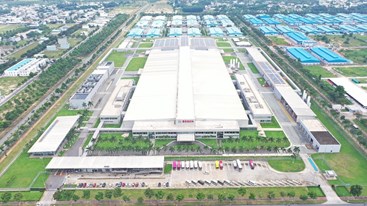 Bosch Vietnam Optimizes Energy to Advance Sustainable Manufacturing
 Vietnam ETE & Greenergy Expo 2026: Promoting Green Transition and Energy Efficiency
 Conference on Energy Efficiency and Conservation in 2026
 Polytex Pioneers Energy Efficiency in the Textile and Dyeing Industry
 Consultation on the Draft of the Vietnam Energy Efficiency Fund Establishment