Monday, 28/09/2026 | 14:55 GMT+7

Who would have imagined that teabags can be used for purposes other than those of packaging tea leaves, and filtering their flavors? No one else except South Africa’s Stellenbosch University scientists led by Eugene Cloete, who invented a kind of teabag which, instead of filtering tea impurities, purifies water at the lowest price and energy consumption possible.
Who would have imagined that teabags can be used for purposes other than those of packaging tea leaves, and filtering their flavors? No one else except South Africa’s Stellenbosch University scientists led by Eugene Cloete, who invented a kind of teabag which, instead of filtering tea impurities, purifies water at the lowest price and energy consumption possible.
The material that the special teabags are made of is a
normal one, used to make the rooibos teabags which are widely used in

“What is new about this idea is the combination of inexpensive raw materials, namely activated carbon and antimicrobial nanofibres, in point-of-use water filter systems,” Marelize Botes, researcher in the university’s department of microbiology, told SciDev.Net.
Besides the fact that they save a lot of otherwise expensive
electricity, the water filtering teabags are also environmentally friendly in
the sense that they disintegrate after only a few days. “Anybody can use it
anywhere; it’s affordable, clean and environmentally friendly,” said Jo
Burgess, manager of
Each sachet has the power of cleaning one liter of water and costs around 50 pennies, or 3 South African cents. This is still a high price to pay for many, and the government will have to fund the use of the water purifying teabags.
The first commercially available teabags will be available before the end of the year, now being tested by the South African Bureau of Standards.
greenoptimistic.com





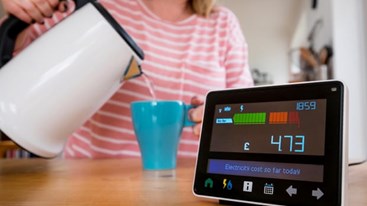


 Contract Award Notice - Develop tools for analyzing the energy efficiency of sub-projects and assess the current state of the market for energy-saving investment loans (C2.2.12)
 Contract Award Notice - Support the development of energy management systems and capacity building (Package C2.2.11)
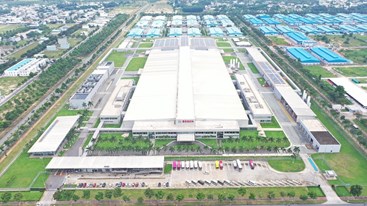 Bosch Vietnam Optimizes Energy to Advance Sustainable Manufacturing
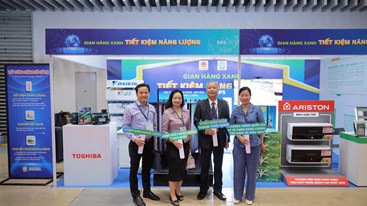 Vietnam ETE & Greenergy Expo 2026: Promoting Green Transition and Energy Efficiency
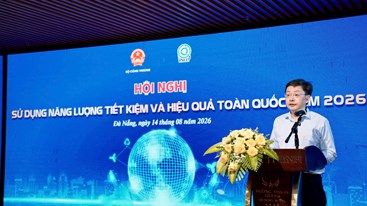 Conference on Energy Efficiency and Conservation in 2026
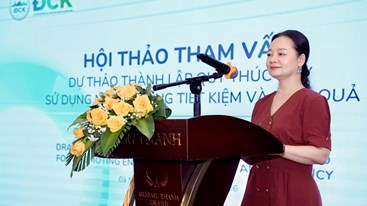 Consultation on the Draft of the Vietnam Energy Efficiency Fund Establishment
 Contract Award Notice - Develop/Upgrade MRV Systems for Selected Industrial Sectors – Package C2.1.26