Monday, 19/10/2026 | 00:29 GMT+7

"This is the first demonstration of a new class of biofuel cells," said Shelley Minteer, Ph.D., who presented the report. "When further developed, these devices have the potential for replacing disposable and rechargeable batteriesin a wide variety of consumer electronics and other products. It is the first such device based on one of the microscopic parts of the billions upon billions of cells that make up the body."
Scientists today reported development of a new battery-like device that opens the possibility that people one day could "recharge" cell phones, laptops, and other portable electronics in an unlikely way -- with a sugar fix from a shared sip of soda pop or even a dose of vegetable oil. They described the device, the first fuel cell that produces electricity with technology borrowed from the biological powerhouses that energize people and other living things on Earth, here at the 240th National Meeting of the American Chemical Society (ACS).
"This is the first demonstration of a new class of biofuel cells," said Shelley Minteer, Ph.D., who presented the report. "When further developed, these devices have the potential for replacing disposable and rechargeable batteriesin a wide variety of consumer electronics and other products. It is the first such device based on one of the microscopic parts of the billions upon billions of cells that make up the body."
Just as the human body has internal organs like the liver and the heart, cells that make up the body have internal structures termed organelles ("little organs"). For the new biofuel cell, Minteer and colleagues chose one of the most amazing organelles: the mitochondria.
Sometimes called the cell's own powerhouses, mitochondria transform the calories in food into chemecal energy that the body needs to sustain life.

Mitochondria use a chemical formed from the digestion of sugar and fats, called pyruvate, to make another substance called ATP (adenosine triphosphate), which stores energy until needed. Each day the mitochondria in a typical person produce and recycle an amount of ATP equal to the person's body weight. This energy-producing system powered by sugar or fats opens the possibility of refueling a laptop or cell phone with vegetable fats or common oils, said Minteer, a chemist with Saint Louis University in Missouri.
Minteer pointed out that biofuel cells are not new. Scientists have borrowed from Mother Nature to produce a variety of other biofuel cells that use enzymes, for instance, and bacteria to produce electricity. Fuel cells make electricity from the chemical energy in a fuel and oxygen in the air or liquid oxygen. Fuel cells work much like batteries. Unlike batteries, however, fuel cells do not run down or need a recharge. They produce electricity continuously, so long as fuel and oxygen are available. The fuel can be hydrogen, natural gas, alcohol, or other materials.
Minteer and colleagues described the development and successful lab testing of the first mitochondria feul cell. The device consists of a thin layer of mitochondria sandwiched between two electrodes, including a gas-permeable electrode. Tests showed that it produced electricity using sugar or cooking oil byproducts as fuel.
Other potential applications of mitochondria fuel cells include their use as power sources in wireless sensors for temperature monitoring, motion detection, and monitoring the location of vehicles in a fleet. The new biofuel cells also could serve as a power-source for stamp-sized sensors designed to detect hidden explosives, the scientists said.
physorg.com







 Polytex Pioneers Energy Efficiency in the Textile and Dyeing Industry
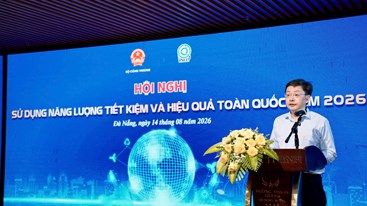 Conference on Energy Efficiency and Conservation in 2026
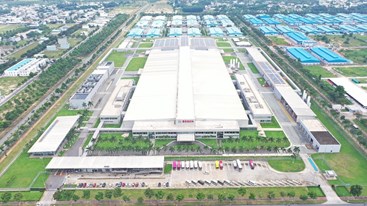 Bosch Vietnam Optimizes Energy to Advance Sustainable Manufacturing
 Consultation on the Draft of the Vietnam Energy Efficiency Fund Establishment
 Contract Award Notice - Support the development of energy management systems and capacity building (Package C2.2.11)
 Contract Award Notice - Review and update for current Energy Efficiency Benchmarking for 2 Sub-Industrial sectors
 Contract Award Notice - Notice for Contracts award for Finalize VNEEF (Vietnam National Energy Efficiency Fund) model (Package C2.2.14)