Imagine a do-it-yourself, neighborhood farm that provides sustainably grown food using renewable resources and recycled production equipment.
Imagine a do-it-yourself, neighborhood farm that provides sustainably grown food using renewable resources and recycled production equipment. Such a farm actually exists. First Fruits Farms located in Germantown, Maryland, is a prototype farm developing a robotic farming system that it hopes to be able to replicate to grow healthy food in neighborhoods across the nation.
First Fruit Farms is featured on Kickstarter, where it is trying to harvest $25,000 in funding by Feb. 24 to help complete its initial pilot project. The farm recycles motors, engines and other materials to develop a series of greenhouse robots that “anyone can replicate with simple tools and access to their local dump.” The farm says that if enough funding is raised, it can built a greens transplanter, greens harvester and greens autoseeder.
But it’s not just greens the farm hopes to grow. The group has plans to use their robot gardening techniques to grow an assortment of vegetables and on the horizon maybe even robot-managed fish tanks, creating “an eco-friendly, closed loop system.” Using geothermal cooling and evaporation systems, the farm plans to develop machine-controlled tomato and vine crops. Rain catchment cisterns are planned for the farm along with storm-water injectors for excess runoff.
The farm employs hydroponics, using rain water purified with solar UV, to feed the plants. The hydroponics system is a recirculating system, so there’s no water runoff. The farm says that using hydroponic techniques allows it to avoid many plant diseases and grow food without the use of pesticides. Additional renewable systems used on the farm include an anaerobic digester that uses methane and organic fertilizer for production and a compost greenhouse heating system. Using a compost heating system not only reuses food and yard waste but cuts out the heating costs associated with greenhouse growing.
First Fruits says that it will give at least 10 percent of its first round of production, otherwise known as its “first fruits,” to help feed those in need. The farm will donate the harvest to local families through Manna Foods in Gaithersburg, Md., and other local food banks that can handle perishable foods.
Eventually, the farm even hopes to offer virtual Internet farming for disabled workers and community gardeners. “After our farm is up and running, we will be putting these systems in schools, rooftops, neighborhoods and inner city food deserts.”
C2.2.12: Develop tools for analyzing the energy efficiency of sub-projects and assess the current state of the market for energy-saving investment loans
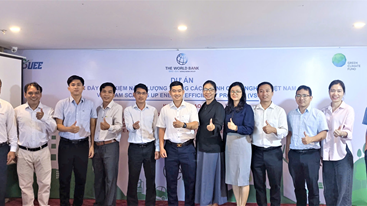
Capacity training program for local government officials in the field of energy efficiency and conservation under the framework of the VSUEE Project held in Da Nang from October 29-31, 2025
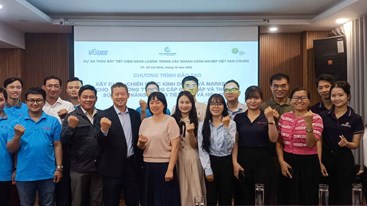
On the morning of October 27, 2025, the training program "Strengthening sales and marketing capacity for energy efficiency equipment and solution suppliers" was held in Ho Chi Minh City.
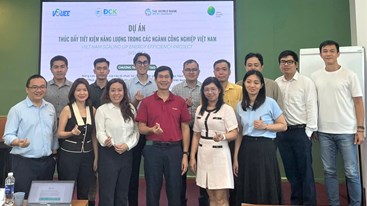
Following the training program in Hanoi, the VSUEE Project organized capacity-building training for participating financial institutions of the project in Ho Chi Minh City
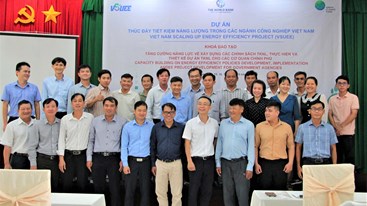
The training program, designed to enhance the capacity of energy management officers from local government agencies within the framework of the VSUEE Project, was organized in Can Tho.
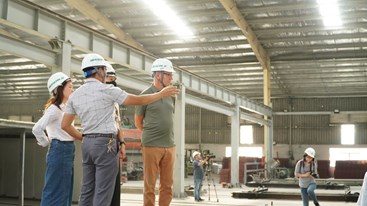
On October 9, 2025, within the framework of Component 3 of the Vietnam - Denmark Energy Partnership Program for the period 2020 - 2025 (DEPP3), the Ministry of Industry and Trade, in collaboration with the Danish Energy Agency and the Embassy of Denmark in Viet Nam, organized a site visit for a delegation of journalists and reporters from 20 media agencies.