Wednesday, 14/10/2026 | 22:45 GMT+7

Russia has become the latest company to join hands with India to help the latter achieve its massive solar power targets.
Russia has become the latest company to join hands with India to help the latter achieve its massive solar power targets.
The Solar Energy Corporation of India (SECI) and Russian Energy Agency (REA) have recently signed a memorandum of understanding (MoU) to set up large scale solar photovoltaic (PV) projects in India between 2016 to 2022.
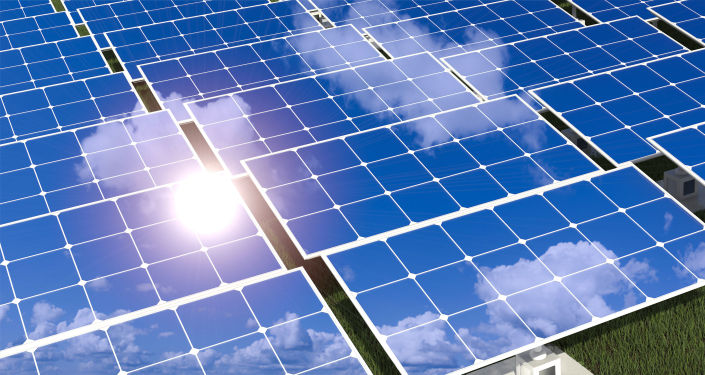
Under the terms of the agreement, initially a 500 MW pilot solar PV project will be developed. Both agencies have agreed to devise a roadmap for the development of solar projects and establishment of equipment manufacturing facilities in India.
REA will offer its ‘state-of-the-art’ advanced technologies and low cost financing, while SECI will assist in securing relevant approvals and clearances for the development of solar projects and manufacturing facilities. A working group will be established to drive and plan the next steps forward.
This collaboration would help to boost India’s flagship ‘Make in India’ program which was launched last year with an aim to establish India as worldwide manufacturing hub. According to the Ministry, India currently has an installed manufacturing capacity of 1,386 MW of solar cells and 2,756 MW of solar modules. However, there is no facility in the country that manufactures polysilicon ingots and wafers.
The total solar power installed capacity in India has crossed 5 GW; including 4.7 GW of utility-scale solar and 525 MW of rooftop solar power capacity.
Clean Technica









 Polytex Pioneers Energy Efficiency in the Textile and Dyeing Industry
 Vietnam ETE & Greenergy Expo 2026: Promoting Green Transition and Energy Efficiency
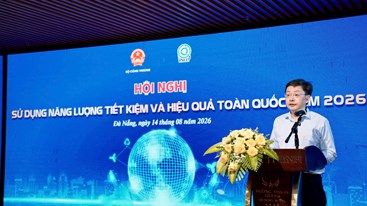 Conference on Energy Efficiency and Conservation in 2026
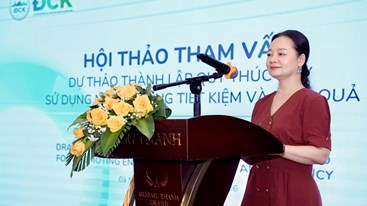 Consultation on the Draft of the Vietnam Energy Efficiency Fund Establishment
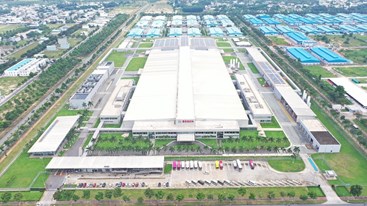 Bosch Vietnam Optimizes Energy to Advance Sustainable Manufacturing
 Contract Award Notice - Support the development of energy management systems and capacity building (Package C2.2.11)
 Contract Award Notice - Review and update for current Energy Efficiency Benchmarking for 2 Sub-Industrial sectors