Saturday, 17/10/2026 | 02:32 GMT+7

Today’s announcement takes the total raised to $8 billion.
A group of eight banks and investors pledged $7 billion to join Bank of America Corp.’s initiative that plans to raise at least $10 billion for investments in clean energy and sustainable development.
HSBC Holdings Plc, Credit Agricole SA, AllianceBernstein Holding LP, Babson Capital Management LLC and Mirova, a unit of Natixis SA, are among those to join the Catalytic Finance Initiative, according to a joint statement by the banks Wednesday.
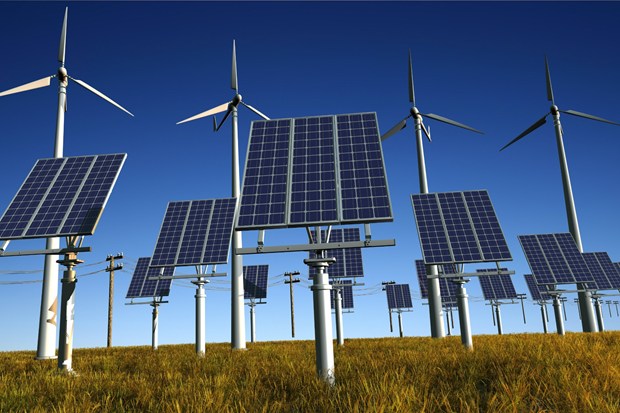
Bank of America created the initiative in 2014 to stimulate at least $10 billion of new investment in clean energy projects through improving financing structures that could reduce the risk of investing in low carbon infrastructure. Today’s announcement takes the total raised to $8 billion, according to a spokesman for HSBC.
“Financial innovation and capital play a critical role in the transition to a low carbon economy,” the banks and investors said. The European Investment Bank, and IFC, a unit of the World Bank, also joined the project today, according to the statement.
“By providing $8 billion in commitments, we can help to advance new investment opportunities in clean energy, as well as other sustainable development goals and achieve the necessary scale for a positive impact on climate change.”
Renewableenergyworld.com











 Polytex Pioneers Energy Efficiency in the Textile and Dyeing Industry
 Conference on Energy Efficiency and Conservation in 2026
 Consultation on the Draft of the Vietnam Energy Efficiency Fund Establishment
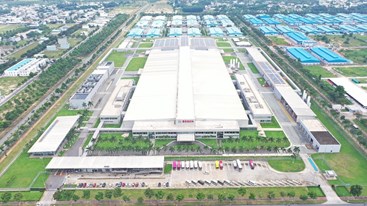 Bosch Vietnam Optimizes Energy to Advance Sustainable Manufacturing
 Contract Award Notice - Support the development of energy management systems and capacity building (Package C2.2.11)
 Contract Award Notice - Review and update for current Energy Efficiency Benchmarking for 2 Sub-Industrial sectors
 Contract Award Notice - Notice for Contracts award for Finalize VNEEF (Vietnam National Energy Efficiency Fund) model (Package C2.2.14)