-

The Vietnam Academy of Sciences and Technology (VAST) said that under the cooperation with the Institute of Applied Chemistry under the Russia Science Center, the Institute of Chemistry of Natural Substances under VAST has produced alcohol with ethanol concentration at 99.98 percent and the total content of organic impurities at less than 16ppm, without using chemical agents.
-

The project entitled, “Studying, Designing and Manufacturing Large-Diameter, Non-Rotary Pipe-Connection Automatic Welding Equipment Systems” was checked and accepted on September 11 in Hanoi. Dr Hoang Van Chau from the National Research Institute of Mechanical Engineering is the director of the project with the technology for manufacture of pressure pipelines for small and medium-sized hydropower projects.
-

Vattenfall's Thanet farm set to open as National Grid confirms wind-generated electricity has hit a new peak. The world's largest offshore windfarm, which cost over £750m to build, is poised to open off the coast of Kent, with 100 turbines producing enough electricity to supply heat and light for 200,000 homes.
-

The Swiss manufacturer Trunz Water Systems and a California-based reverse osmosis company, Spectra Watermakers have developed a new eco-friendly water purifier designed for use in disaster stricken areas where conventional energy sources are unavailable or too expensive. The new system, called the Solar Container, is capable of generating more than 8,000 gallons of potable water per day and is powered by renewable wind and solar energy.
-

Researchers from Korea are working on a new technology that can power your cellphone with sound. They have turned zinc oxide (the main ingredient of calamine lotion) into a tiny material that converts sound waves into energy through piezoelectricity.
-

The University of Cambridge has come up with a low cost organic solar cell that opens up some intriguing new possibilities in solar energy design. Although the Cambridge team is focused on bringing large scale photovoltaic devices to the market, the new technology could also lend itself to a smaller canvas, yielding such products as solar-energy generating umbrellas and canopies. For that matter, even small objects like plastic cups and straws could some day double as mini solar power generators.
-

Massive fit-out works both above and below ground will begin in the next six months as landowners move to upgrade their property portfolios. This will add to the already burgeoning construction on at least five big sites in Sydney's central business district.
-

The legendary competition between the branches of the U.S. armed forces has taken on a sustainable twist. Take portable solar power, for example. The Marines just introduced a portable solar power system this spring, and a few weeks later the Air Force kicked in with a portable solar system of its own.
-

Researchers around the world are trying to find new ways to reduce the time required to recharge the electric cars’ onboard batteries. Now, a group of fourteen students from the University of Karlsruhe in Germany have come up with a prototype electric car that is powered by electricity but unlike other electric vehicles, it doesn’t need a recharge.
-

MIT rsearchers have created tiny solar cells that can repair themselves after damage from the sunlight they're designed to process. The team was inspired by the way plants constantly break down their light-capturing molecules and reassemble them from scratch, so that the basic structures that capture the sun's energyare regularly renewed.
-

An MIT team has managed what amounts to artificial photosynthesis, using a modified virus and sunlight to split water into hydrogen and oxygen atoms. The hydrogen can then be stored and used to generate electricity using a fuel cell, or to make liquid fuels for cars and trucks.
-

A new hybrid gas-wind turbine called SmartGen has been designed to work on low winds based on a system that turns the turbine with compressed air from a compressor running on biogas. The Colorado company that introduces this concept is expecting to create wind turbines that generate turbines even when there is almost no wind.
-

The announcement of these pioneering commercial commitments was made recently at a meeting of the Chattanooga Area Advisory Board for the EV Project at EPB. There will be 37 such Blink™ smart charging stations deployed in the metropolitan area at publicly accessible sites designated through the “EV Micro-Climate process.”
-

According to Can Tho Energy Conservation Center, after six months of implementing energy efficiency projects and programs, many businesses in the city have had a change in awareness and actively participated in the implementation of energy saving measures. Since the beginning of the year, Can Tho City has saved over 9.5 million kWh of power.
-

At the 25th European Photovoltaic Solar Energy Conference (Valencia, Spain), Imec presents several large-area silicon solar cells with a conversion efficiency above 19%.
-

Watch out everybody, turbines are growing. According to the 2009 Wind Technologies Market Report (WTMR) released this August by the US Department of Energy, a turbine’s average nameplate capacity (the maximum output a turbine can produce), hub height (distance from the ground to the spot where the blades converge), and rotor diameter (diameter of the circle traced by the blades as they rotate) have all increased during the past year.
-

Cooperation on nuclear energy with Russia has a significant meaning, expressing the trust and strategic partnership defined between Vietnam and Russia. This was stated by Prime Minister Nguyen Tan Dung on receiving the General Director of Rosatom State Nuclear Energy Corporation, Sergei V. Kirienko, in Hanoi on September 3.
-

Along with the development and renovation of the country, Hai Phong has been constantly renovating. Currently in the area, there are hundreds of large enterprises operating in such sectors as shipbuilding, cement manufacturing, steel production, etc with thousands of small and medium enterprises. The strong growth of businesses has brought about the increasing demand for energy.
-
SmartGen, loại tuabin kết hợp giữa gió và biogas, được thiết kế để hoạt động trong điều kiện gió thổi yếu dựa trên một hệ thống giúp cho tuabin dùng khí nén chạy bằng biogas.Công ty tại Colorado đưa ra ý tưởng này với mong muốn tạo ra loại tuabin gió có thế hoạt động ngay cả khi không có gió.
-

Sử dụng công nghệ lưới điện thông minh của General Electric (GE), Thổ Nhĩ Kỳ có kế hoạch kết nối với lưới điện của EU, mở ra cơ hội về năng lượng tái chế và kinh tế cho tất các bên liên quan.



.png?w=367&h=206&mode=crop) ROEI - C2.2.15: Develop a framework for proposing new projects financed by the GCF
ROEI - C2.2.15: Develop a framework for proposing new projects financed by the GCF
 Contract Award Notice - Develop tools for analyzing the energy efficiency of sub-projects and assess the current state of the market for energy-saving investment loans (C2.2.12)
 Contract Award Notice - Support the development of energy management systems and capacity building (Package C2.2.11)
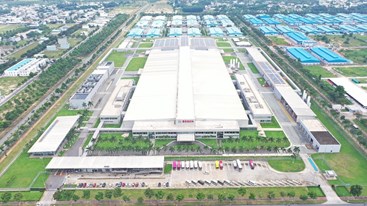 Bosch Vietnam Optimizes Energy to Advance Sustainable Manufacturing
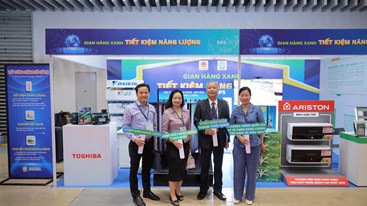 Vietnam ETE & Greenergy Expo 2026: Promoting Green Transition and Energy Efficiency
 Contract Award Notice - Develop/Upgrade MRV Systems for Selected Industrial Sectors – Package C2.1.26
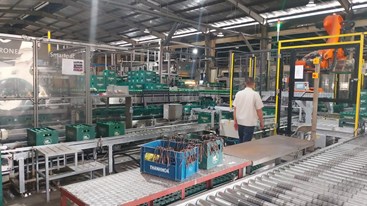 Hanoi – Thanh Hoa Beer Optimizes Energy Efficiency in Production