Thursday, 01/10/2026 | 10:00 GMT+7

Researchers from Korea are working on a new technology that can power your cellphone with sound. They have turned zinc oxide (the main ingredient of calamine lotion) into a tiny material that converts sound waves into energy through piezoelectricity.
Researchers from Korea are working on a new technology that can power your cellphone with sound. They have turned zinc oxide (the main ingredient of calamine lotion) into a tiny material that converts sound waves into energy through piezoelectricity.
This way, the research team could create panels that can charge a cell phone from a conversation or provide electricity to the nation’s electric power grid produced by the noise of passing vehicles.
“Just as speakers transform electric signals into sound, the opposite process — of turning sound into a source of electrical power — is possible,” said Young Jun Park and Sang-Woo Kim, the two corresponding authors of a new article in the journal Advanced Materials.

Young Jun Park, Sang-Woo Kim and their colleges were able to generate electricity by using a layer of zinc oxide nanowires sandwiched between two electrodes. According to them, the sound waves produced by the current piezoelectric prototype generated about 50 millivolts of electricity, but the problem is that a normal cellphone requires a few volts to operate.
“But the real question though is whether there is enough ambient noise to act as a power source as for a cell phone,” said McAlpine. A user probably wouldn’t want to stand next to a passing train or to participate at a a rock concert to power their cell phone.
Being just a concept, the Korean scientists are convinced they will obtain higher power output in the near future. They just wanted to show people that sound waves are a different kind of power source that can be harnessed.
greenoptimistic.com











 Contract Award Notice - Develop tools for analyzing the energy efficiency of sub-projects and assess the current state of the market for energy-saving investment loans (C2.2.12)
 Contract Award Notice - Support the development of energy management systems and capacity building (Package C2.2.11)
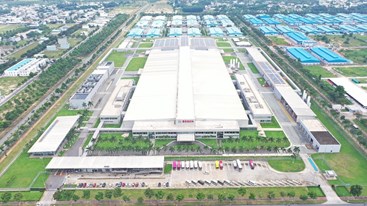 Bosch Vietnam Optimizes Energy to Advance Sustainable Manufacturing
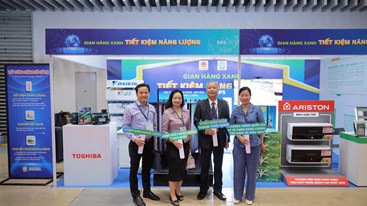 Vietnam ETE & Greenergy Expo 2026: Promoting Green Transition and Energy Efficiency
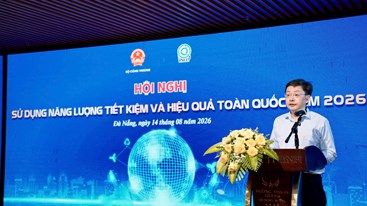 Conference on Energy Efficiency and Conservation in 2026
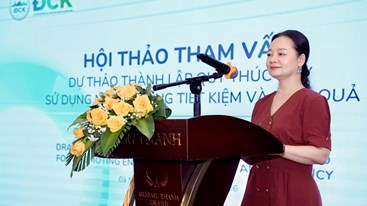 Consultation on the Draft of the Vietnam Energy Efficiency Fund Establishment
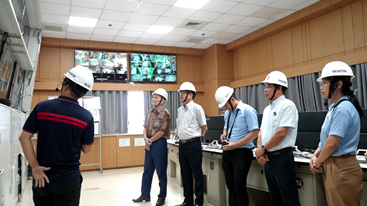 Polytex Pioneers Energy Efficiency in the Textile and Dyeing Industry