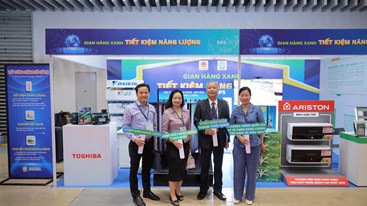
The workshop was one of the key technical activities within the framework of the 2025 Energy-Efficient Equipment and Green Transition Exhibition Fair.
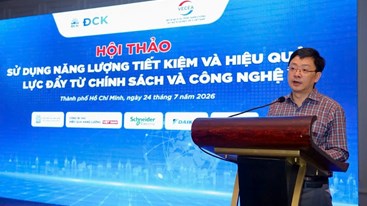
Ms. Nguyen Thi Lam Giang, Director of Innovation, Green Transition, and Industry Promotion Agency, delivered the opening remarks.
Speaking at the workshop, Ms. Nguyen Thi Lam Giang emphasized that energy efficiency is not only an economic solution but also an essential pillar of the national development strategy, closely linked to the goals of green growth and sustainable development.
Technology is considered the key and the driving force to overcome energy and environmental challenges. Modern technological systems and equipment not only help monitor, manage, and optimize energy consumption but also create new operational models for production and business. Technologies—from smart energy management systems and high-efficiency equipment to IoT/AI solutions—enable optimization of energy use. Beyond cost savings, these technologies help enterprises meet environmental, ESG, and emissions criteria; enhance operational efficiency; promote green and sustainable production models; and comply with international standards. This is an inevitable trend, and businesses that act early will gain sustainable competitive advantages.
The workshop provided insights into global and domestic energy efficiency technology trends.
The workshop aimed to create a platform for government agencies, enterprises, experts, scientists, and international partners to share information, disseminate knowledge, introduce and update cutting-edge technologies, share practical experiences, and propose solutions suitable for Vietnam.
“Through presentations, the workshop provides a comprehensive overview of energy efficiency technology trends in Vietnam and worldwide, while suggesting policy mechanisms to support enterprises in enhancing energy efficiency practices,” Ms. Giang noted.
Dr. Hoang Anh, Faculty of Electrical Engineering, School of Electrical and Electronic Engineering, Hanoi University of Science and Technology, shares energy-saving technology trends.
Dr. Hoang Anh, Faculty of Electrical Engineering, School of Electrical and Electronic Engineering, Hanoi University of Science and Technology, shared that electricity demand in 2023 exceeded 270 billion kWh and is forecast to reach 400–450 billion kWh by 2030. Major energy-consuming sectors include: heavy industry (steel, cement, chemicals); urban and building sectors (air conditioning, lighting, elevators); and transportation (road transport and logistics).
Energy efficiency technology trends in industry include: Digital technologies (IoT, AI/ML, EMS/SCADA); High-efficiency equipment (IE3–IE4 motors, high-efficiency boilers/burners); Optimization of thermal–cooling–compressed air systems (high IEER chillers, smart control); Integration of renewable energy and storage; Smart lighting (LED, sensor-based control).
Energy efficiency trends in urban and construction settings include: Smart cities/smart buildings; Green buildings and materials; Smart grids; Transport electrification; High-efficiency systems; Distributed renewable energy and BESS.
Mr. Nguyen Trong Hau, Vietnam Technology Solutions Joint Stock Company.
Mr. Hau presented on IoT–AI applications in monitoring and optimizing energy systems. According to him, IoT–AI energy management systems enable: continuous data collection (per second, minute, hour); visual data analytics; detection of abnormal energy consumption periods; analysis by hour, day, month, year to support peak load response and DR programs.
Thus, IoT–AI is a pillar of digital energy transformation, delivering comprehensive benefits (economic, operational, safety, environmental); reducing costs; improving equipment efficiency; minimizing failures; forming data foundations for Smart Factory/Smart Building; and helping enterprises gain competitive advantages.
Dr. Nguyen Thanh Trung - Head of Energy and Environment Professional Group, Faculty of Environmental Engineering, University of Construction.
Dr. Nguyen Thanh Trung, Head of the Energy and Environment Research Group, Faculty of Environmental Engineering, National University of Civil Engineering, stated that to improve energy efficiency, shopping malls and manufacturing facilities should prioritize: using high-efficiency chillers with variable-speed drives (compressors – pumps – fans); controlling air leakage to reduce loss and system overload; applying demand-based smart control for fresh air and ventilation; recovering heat for hot water; implementing continuous measurement and monitoring to maintain performance and detect abnormalities.
Mr. Nguyen Van Long – Vice President of the Vietnam Energy Efficiency and Conservation Science and Technology Association (VECEA) shared that the Law on Energy Efficiency and Conservation (2010) was a milestone in introducing Vietnam to the efficient energy model. Dozens of guiding documents—including Decrees, Decisions, Circulars, Directives, Regulations, and Standards—have since been issued.
Mr. Nguyen Van Long – Vice President of the Vietnam Energy Efficiency and Conservation Science and Technology Association (VECEA).
In terms of communication, Earth Hour campaigns have attracted millions of participants; 120,000 households have joined the “Energy-Saving Family” program; 4,500 media articles have been published; and over 80 in-depth TV reports on energy-saving solutions have been aired on local broadcasters.
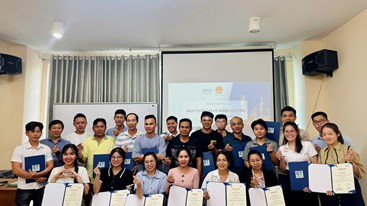
Until now, more than 9,500 households have installed rooftop solar systems; over 300 training classes and workshops on electricity saving have been held; 1,200 enterprises have conducted energy audits; over 5,000 managers and auditors have been trained and certified.
The Ministry of Industry and Trade has implemented energy labeling for 19 product categories, with more than 20,000 labeled products on the market. Approximately 45 million incandescent bulbs have been removed, air conditioner efficiency has increased by 13% annually, and around 100 million kWh are saved per year.
“Energy efficiency and conservation law has institutionalized the consistent orientations of the Party and Government, identifying energy efficiency as a top-priority policy that plays a vital role in ensuring energy security, environmental protection, and economic development aligned with a regulated market economy and international integration,” Mr. Long emphasized.
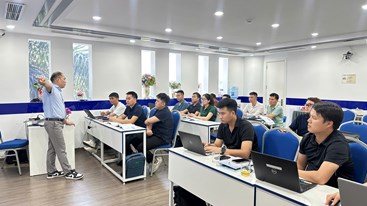
At the workshop, delegates discussed, shared feedback, and raised questions on topics related to energy-efficient technologies. Their insights, along with real-world models of high-efficiency energy solutions from enterprises, will help the Ministry of Industry and Trade formulate and propose suitable policies and mechanisms, contributing meaningfully to Vietnam’s journey toward energy efficiency and green transition.
Innovation, Green Transition and Industry Promotion Agency (MOIT).








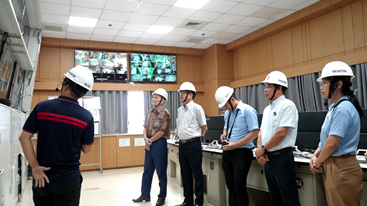 Polytex Pioneers Energy Efficiency in the Textile and Dyeing Industry
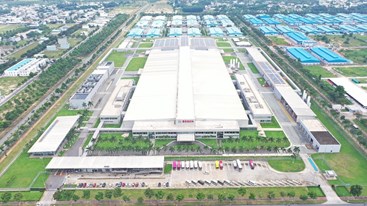 Bosch Vietnam Optimizes Energy to Advance Sustainable Manufacturing
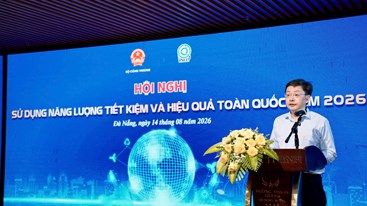 Conference on Energy Efficiency and Conservation in 2026
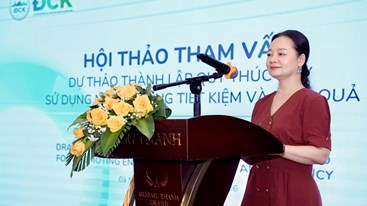 Consultation on the Draft of the Vietnam Energy Efficiency Fund Establishment
 Contract Award Notice - Review and update for current Energy Efficiency Benchmarking for 2 Sub-Industrial sectors