-

The vehicle that has been Dubbed Superbus, is as long as a normal bus and has the same height as a conventional SUV, being capable to carry about 23 passengers. According to the designers, the new electric bus is a “future vision of sustainable public transport.” It also features an aerodynamic design to create a sustainable, fast and comfortable mode of public transport.
-

The Renault DEZIR, or the desire of any new-age, science-fiction addict, hot-blooded obsessed rock star (or less) is the masterpiece of Renault’s design team and one of the best car designs (in terms of sexiness) I have ever seen. Renault DeZir occupies a central piece at this year’s Paris auto show, with all the other sports cars fading into anonymity (ok, well, perhaps Jaguar’s new masterpiece or Citroen’s Survolt will keep up).
-

According to the Danish climate commission, the country will gets its electricity from wind farms, developing an energy network entirely free of fossil fuels by 2050. The committee also said that biomass and wind energy could meet the bulk of the country’s energy requirements.
-

Beacon Power, a major player in flywheel energy storage, is now working with U.S. Department of Energy’s Advanced Research Projects Agency – Energy (ARPA-E) on the development of a next-generation of flywheel storage. The new flywheel storage system is expected to be able to store 4 times as much energy as present flywheels, and at one-eighth the per kilowatt-hour cost.
-

Utilizing what we have in a wiser way could lead us to something worth it. As the famous line goes, “everything has its purpose” no matter how small or big it is. It also includes waste products such the awful pet poop, specifically dog poop. In Cambridge, Massachusetts, a dog park hasn’t been considering these dog poop a waste at all. In fact, in has turned out to be a very useful.
-

A very large solar solar-powered yacht called Planet Solar has set out on a 31,000 mile trip around the globe. It is estimated it will maintain an average speed of 7.5 knots per hour. At that speed it should take about 160 days to travel around the planet.
-

Solar cells currently used are mostly bulky and made from silicon and other non-recyclable materials, hence they’re not as green as they should be. Mimicking nature might be a solution to this problem. More exactly, North Carolina State University researchers have prototyped a water-based solar cell, mimicking the functioning of a leaf, to produce electricity.
-

Vietnam National Coal - Mineral Industries Group (TKV), together with foreign partners, is researching the technology to exploit coals in the Red River coal basin. Currently, the Group is carrying out the procedures for additional exploration licenses in the area of 85.4 km2 in Khoai Chau, Hung Yen province. This location has been preliminarily explored and carefully searched.
-

On September 26th, Thai An Hydropower Joint Stock Company inaugurated Thai An Hydropower Plant - one of 15 key projects to celebrate the 15th Party Congress of Ha Giang province. Thai An Hydropower Plant is built in Thai An commune (Quan Ba district) and Thuan Hoa commune (Vi Xuyen district). The plant has the capacity of 82MW, with the total investment of more than VND2,000 billion, According to Mr. Nguyen Quang Dao, Chairman of the Board, General Director of Thai An Hydropower JSC.
-

But a dimmer living room and risk of eye-strain may be the least of our worries. In the rush to get us using greener, more energy-efficient light bulbs, authorities here have forgotten to engage in any public information campaign about their health risks.
-

Chris Huhne threatened to get heavy-handed with gas and electricity providers on Tuesday, warning that he would step in if the industry failed to tell customers about price rises.The energy secretary hit out at providers who “put up their prices without telling you for three months”.
-

According to the Pedegopress release , “The announced battery-fuel cell hybrid system is compatible with all existing Pedego bicycles and batteries. For every 1.5 lbs. of weight a rider carries, an additional 700 watt-hours of energy is available (compared to ~350 watt-hours for an ultra-high performance lithium-polymer battery at a weight of 7 lbs.).
-

Các học viên Việt Nam tham gia khóa tập huấn về TKNL tại Nhật Bản (ECVN7) bắt đầu chương trình tham quan thực tập tại Công ty Cổ phần Sumikin Management, thuộc Kashima, tỉnh Chiba của nước Nhật. Sumikin Management là một công ty con của Công ty Sumitomo Metals (SMI) – doanh nghiệp sản xuất thép lớn hàng đầu tại Nhật Bản.
-

Anywhere people are walking dogs -- and throwing away dog poop -- can be a source of heat and light by introducing a methane digester into the equation. The first-ever Park Spark project was installed in Cambridge, Mass., on Tudor Street, between Sidney Street and Brookline Street, a few blocks from MIT.
-

With a stalled Green energy movement that seems to have convinced few people that it can actually replace our dependence on fossil fuels, Tom Rand thinks it's time to move the goal posts. An engineer who is also a venture capitalist who puts his money where his mouth is, his challenge is simple: America can either pioneer green energy as an investment that will pay off for centuries to come, or wind up paying someone else for the same solutions down the road.
-

The inventor says his device can cut the energy use by 25%. Moreover, it can prove itself healthy for those who suffer from asthma, allergies, of whatever age or sex. CleanAir supposedly removes particles, viruses, ozone, bacteria, organic solvents, hydrocarbons and cigarette smoke from the air.
-

“Nếu chúng ta có thể làm sạch không khí, chúng ta có thể sử dụng nó ở nhiệt độ tốt nhất”, giáo sư Matthew Johnson của trường Đại học Copenhagen, người phát minh ra thiết bị “Làm sạch không khí”, thiết bị hoạt động giống như một chiếc máy vừa hút ẩm, vừa làm mát, vừa làm ấm và làm sạch, giải thích.
-

Within two years, three White Sands Missile Range employees have saved more than 4,000 miles of use on their vehicles by riding their bicycles to and from work at least twice a week. Shane Cunico, Phil Simpson and Kurt Austin, who all work at Army Research Laboratory at WSMR, have been riding their bicycles together to work for the last 18 months.
-

Engineering researchers from Tufts University, the University of Wisconsin-Madison and Harvard University have demonstrated the low-temperature efficacy of an atomically dispersed platinum catalyst, which could be suitable for on-board hydrogen production in fuel-cell-powered vehicles of the future.
-

A team of Ukranian and American scientists have discovered that by using structures called ferroelectric nanowires, they can generate electricity from a temperature difference. This concept is now new, but rather uses different approaches and materials. It can harvest energy by using the temperature difference between materials and/or ambients.



.png?w=367&h=206&mode=crop) ROEI - C2.2.15: Develop a framework for proposing new projects financed by the GCF
ROEI - C2.2.15: Develop a framework for proposing new projects financed by the GCF
 Contract Award Notice - Develop tools for analyzing the energy efficiency of sub-projects and assess the current state of the market for energy-saving investment loans (C2.2.12)
 Contract Award Notice - Support the development of energy management systems and capacity building (Package C2.2.11)
 Bosch Vietnam Optimizes Energy to Advance Sustainable Manufacturing
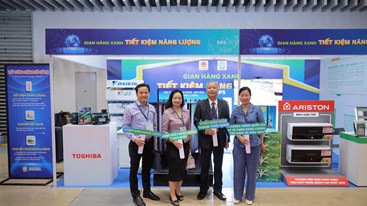 Vietnam ETE & Greenergy Expo 2026: Promoting Green Transition and Energy Efficiency
 Contract Award Notice - Develop/Upgrade MRV Systems for Selected Industrial Sectors – Package C2.1.26
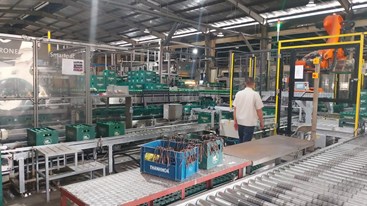 Hanoi – Thanh Hoa Beer Optimizes Energy Efficiency in Production