Sunday, 18/10/2026 | 12:53 GMT+7

One day, man-made buildings will mimic the human body in the relationship with the exterior. Penn State University researchers are about to study and implement a model that uses the sensitivity and flexibility of human cells to build “skins” that will give buildings the possibility to self-adapt to the exterior, to regulate their energy use according to changes in the environment.
One day, man-made buildings will mimic the human body in the relationship with the exterior. Penn State University researchers are about to study and implement a model that uses the sensitivity and flexibility of human cells to build “skins” that will give buildings the possibility to self-adapt to the exterior, to regulate their energy use according to changes in the environment.
The project is called “Energy Minimization via Multi-Scalar Architectures: From Cell Contractility to Sensing Materials to Adaptive Building Skins.”

The scientists have even received a $2 million grant from the U.S. government (NSF’s Office of Emerging Frontiers in Research and Innovation) and in four years they are expected to yield some results such as passive materials, sensors and imagers that will be able to be integrated into responsive building skins at architectural scales. All of these will mimic the way cells alter their extracellular matrices, and thus their surrounding environment, with minimal energy through a combination of physical forces and chemical transactions.
“Through analyzing several of the body’s functions — how human pulmonary artery vascular smooth muscle cells contract or relax, for example — we will attempt to transfer this fine-scale design ecology to the macro-scale design of adaptive building skins,” said Shu Yang, one of the researchers leading a lab in the Department of Materials Science and Engineering at Penn. “Our hope is that buildings may one day respond to environmental factors like heat, humidity and light and respond to them most efficiently.”
Making several disciplines to fusion, this project will involve biochemists, studying cellular nano- and micro- mechanics, designers who will learn how cells deal with and modify substrate geometry and engineers, who will use how to materials respond at nano and micro- scales to develop sensors. All of them will work closely, in a modular, step-by-step fashion.
A similar project, recently awarded by the WWF with the presence in the Top 5 clean tech gamechangers for this year, plans to build the City of Justice in Madrid, Spain, and to finish construction works by 2011. It will also use self-regulating mechanisms to keep the building’s energy efficiency at its peak.
greenoptimistic.com










 Polytex Pioneers Energy Efficiency in the Textile and Dyeing Industry
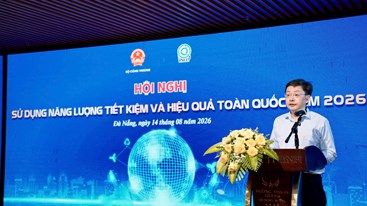 Conference on Energy Efficiency and Conservation in 2026
 Consultation on the Draft of the Vietnam Energy Efficiency Fund Establishment
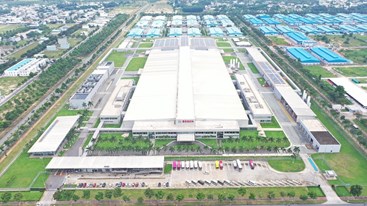 Bosch Vietnam Optimizes Energy to Advance Sustainable Manufacturing
 Contract Award Notice - Support the development of energy management systems and capacity building (Package C2.2.11)
 Contract Award Notice - Review and update for current Energy Efficiency Benchmarking for 2 Sub-Industrial sectors
 Contract Award Notice - Notice for Contracts award for Finalize VNEEF (Vietnam National Energy Efficiency Fund) model (Package C2.2.14)