


Saturday, 24/10/2026 | 08:53 GMT+7

The new nano-ceramics would be key components in the next generation of capacitors. Like batteries, capacitors store energy, but there the resemblance ends. Batteries are designed to collect energy over a relatively long period of time, then release it at a low, constant rate. Capacitors charge and release large amounts of power very quickly. The basic principle has been around since the 18th century, but until recently one roadblock has been how to reduce them down to an efficient size.
Researchers at Rensselaer Polytechnic Institute in New York have been tapped for a $2 million study on the use of new nanoengineered ceramic materials to store energy, particularly from wind turbines and solar arrays. The four-year study could crack open the energy “bottleneck” inherent in wind and solar power, which arises from the variable nature of wind and sunlight. A next-generation energy storage is needed to smooth out the bumps, and ironically the solution could lie in ceramics, rooted in one of the most ancient technologies in human history.

Capacitors vs. Batteries for Wind and Solar Storage
The new nano-ceramics would be key components in the next generation of capacitors. Like batteries, capacitors store energy, but there the resemblance ends. Batteries are designed to collect energy over a relatively long period of time, then release it at a low, constant rate. Capacitors charge and release large amounts of power very quickly. The basic principle has been around since the 18th century, but until recently one roadblock has been how to reduce them down to an efficient size.
Next-Generation Capacitors
The Rennsselaer study will work with thin layers of a new composite made of glass and ferroelectric powder (nanopowder, of course!). The glass is alkali-free and low melting, which enables the capacitor to handle high electric fields. The result is a smaller, lighter, long lasting (basically, forever) and more efficient device that could find a use in conventional energy storage as well as for intermittent sources such as wind and solar.
Ceramics and Sustainability
Storing energy from the source is just one of many uses for ceramics in the new green future. Next-generation capacitors could play a role in developing more efficient electric vehicles and many other devices. At Georgia Tech, researchers are developing a new high tech ceramic for low cost solid oxide fuel cells. Ceramics are also being used to develop new non toxic coatings to prevent metal surfaces from rusting, and to develop the next generation of chemical free water filters.
cleantechnica.com










 Polytex Pioneers Energy Efficiency in the Textile and Dyeing Industry
 Conference on Energy Efficiency and Conservation in 2026
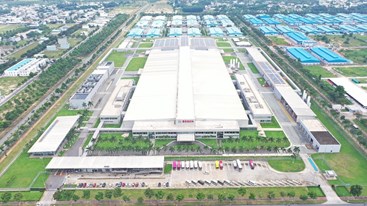 Bosch Vietnam Optimizes Energy to Advance Sustainable Manufacturing
 Consultation on the Draft of the Vietnam Energy Efficiency Fund Establishment
 Contract Award Notice - Notice for Contracts award for Finalize VNEEF (Vietnam National Energy Efficiency Fund) model (Package C2.2.14)
 Contract Award Notice - Review and update for current Energy Efficiency Benchmarking for 2 Sub-Industrial sectors
 Policies, Technology and Finance Driving Energy Efficiency in the Industrial Sector