

Tuesday, 27/10/2026 | 09:12 GMT+7

Under a memorandum of understanding signed by Minister for Innovation, Industry, Science and Research Kim Carr in Berlin last week the ASI and Germany’s Deutches Zentrum für Luft und Raumfahrt (DLR) will collaborate to accelerate technologies aimed at enabling solar energy to become a sustainable energy source globally.
The Australian Solar Institute and Germany’s national research centre for aeronautics and space are to share resources in developing solar technologies.
Under a memorandum of understanding signed by Minister for Innovation, Industry, Science and Research Kim Carr in Berlin last week the ASI and Germany’s Deutches Zentrum für Luft und Raumfahrt (DLR) will collaborate to accelerate technologies aimed at enabling solar energy to become a sustainable energy source globally.

The ASI is part of the Government’s $5 billion Clean Energy Initiative, with $150 million committed to supporting its activities, and has a prior MOU with Germany’s Fraunhofer Institute, which focuses on solar photovoltaic technologies.
“Like Australia, Germany is seeking to move to lower its emissions and transition to cleaner energy sources and it makes sense to pool our resources and by doing so accelerate the pace of technology development and reduce costs,” Senator Carr said.
The ASI and DLR have prioritised high temperature concentrated solar power modelling and high temperature receiver performance and analysis research, while other collaborative goals include bilateral educational scholarships and research personnel exchanges.
dynamicexport.com.au









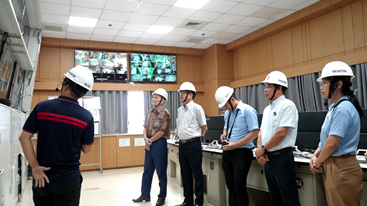 Polytex Pioneers Energy Efficiency in the Textile and Dyeing Industry
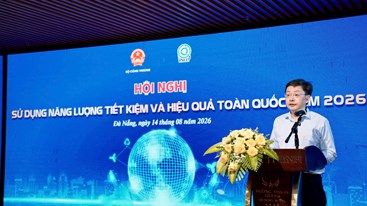 Conference on Energy Efficiency and Conservation in 2026
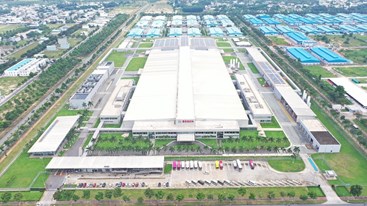 Bosch Vietnam Optimizes Energy to Advance Sustainable Manufacturing
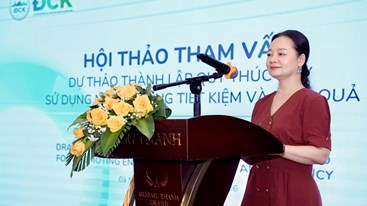 Consultation on the Draft of the Vietnam Energy Efficiency Fund Establishment
 Contract Award Notice - Notice for Contracts award for Finalize VNEEF (Vietnam National Energy Efficiency Fund) model (Package C2.2.14)
 Contract Award Notice - Review and update for current Energy Efficiency Benchmarking for 2 Sub-Industrial sectors
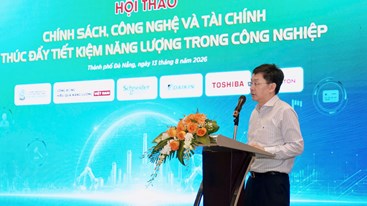 Policies, Technology and Finance Driving Energy Efficiency in the Industrial Sector