Thursday, 15/10/2026 | 14:04 GMT+7

To combat this problem, a team of Penn State researchers is developing more cost-effective ways to prolong battery life.
 Rahn, along with mechanical engineering research assistants Ying Shi and Christopher Ferone, cycled a lead-acid battery for three months in the same way it would be used in a locomotive. They used a process called electroimpedance spectroscopy and full charge/discharge to identify the main aging mechanisms. Through this, the researchers identified sulfation in one of the six battery cells. They then designed a charging algorithm that could charge the battery and reduce sulfation, but was also able to stop charging before other forms of degradation occurred. The algorithm successfully revived the dead cell and increased the overall capacity. The researchers, who report their results in the current issue of the Journal of Power Sources, then compared the battery to a new battery.










 Polytex Pioneers Energy Efficiency in the Textile and Dyeing Industry
 Vietnam ETE & Greenergy Expo 2026: Promoting Green Transition and Energy Efficiency
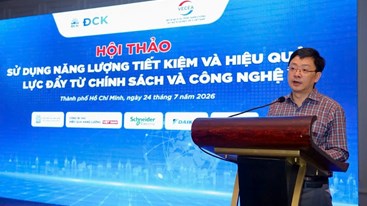
 Conference on Energy Efficiency and Conservation in 2026
 Consultation on the Draft of the Vietnam Energy Efficiency Fund Establishment
 Contract Award Notice - Support the development of energy management systems and capacity building (Package C2.2.11)
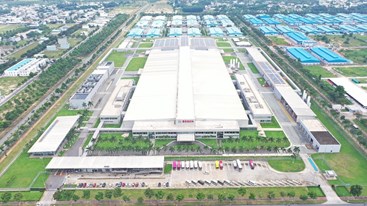 Bosch Vietnam Optimizes Energy to Advance Sustainable Manufacturing
 Contract Award Notice - Review and update for current Energy Efficiency Benchmarking for 2 Sub-Industrial sectors