Wednesday, 21/10/2026 | 05:53 GMT+7

State and local governments have recently sought measures to increase efficiency for municipal buildings, which can reap benefits both financial and environmental.
State and local governments have recently sought measures to increase efficiency for municipal buildings, which can reap benefits both financial and environmental. While some jurisdictions have opted for efficiency from the get-go by constructing new buildings in accordance with the Leadership in Energy and Environmental Design, or LEED, standard, others have looked to retrofit existing buildings with cost-saving and environmentally sound measures.
One of the latter cities is the District of Columbia, which recently announced it will be implementing BuildingIQ’s cloud-based heating, ventilation and air conditioning (HVAC) management solution in eight buildings.
The partnership, facilitated by a Department of Energy grant program, will deliver on the District’s commitment to lower energy consumption, save taxpayer money and reduce greenhouse gas emissions. BuildingIQ will work with the DC’s Department of General Services, New City Energy, and the Lawrence Berkeley National Lab to deliver annual savings of $600,000 and generate more than $1,000,000 in free cash flow over the term of the partnership. As a DOE program participant, DGS will also receive numerous cost share benefits, the city said.

BuildingIQ’s Predictive Energy Optimization platform is capable of automatically developing a model for individual buildings that predicts energy consumption, cost and comfort based on building characteristics, weather forecasts, energy pricing as well as signals from the utility. Additionally, BuildingIQ’s software is capable of making real-time adjustments to each building, directly adjusting heating, ventilation, and air condition system parameters that can reduce heating and cooling costs by as much as 25 percent. This automated, cloud-based solution requires no manual interaction, thus freeing up labor hours from building staff and engineers.
The cloud-based technology will be used at hospitals, education facilities and commercial office spaces managed by DGS across its portfolio of District-owned facilities.
“We’re excited to make BuildingIQ’s platform part of our climate-driven energy strategy,” said DGS' Mark Chambers. “The technology will not only maximize operating efficiency and reduce energy costs, but will also provide the city with a valuable revenue stream, through demand response, that will go a long way toward ensuring the comfort, safety and security of District residents and employees.”
Truong Duy










 Polytex Pioneers Energy Efficiency in the Textile and Dyeing Industry
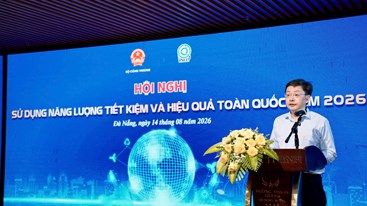 Conference on Energy Efficiency and Conservation in 2026
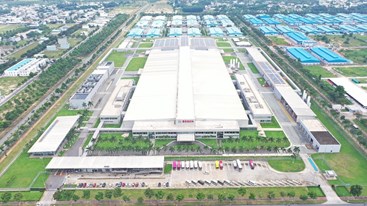 Bosch Vietnam Optimizes Energy to Advance Sustainable Manufacturing
 Consultation on the Draft of the Vietnam Energy Efficiency Fund Establishment
 Contract Award Notice - Support the development of energy management systems and capacity building (Package C2.2.11)
 Contract Award Notice - Review and update for current Energy Efficiency Benchmarking for 2 Sub-Industrial sectors
 Contract Award Notice - Notice for Contracts award for Finalize VNEEF (Vietnam National Energy Efficiency Fund) model (Package C2.2.14)