Monday, 28/09/2026 | 10:04 GMT+7

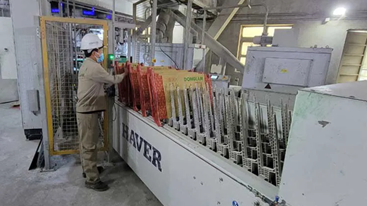
In a market-friendly scenario, Nanosolar claims to be able to produce electricity at 5-6 cents/kilowatt hour almost as cheap as power from coal and at about one-third the cost of other solar power. Nanosolar claims: Nanosolar claims mass production of solar power will now become feasible with their differently manufactured solar panels.
In a market-friendly scenario, Nanosolar claims to be able to produce electricity at 5-6 cents/kilowatt hour almost as cheap as power from coal and at about one-third the cost of other solar power. Nanosolar claims: Nanosolar claims mass production of solar power will now become feasible with their differently manufactured solar panels.
Conventional silicon-made solar panels have a stiff competitor
from CIGS semiconductor printed solar panels – composed of copper, gallium,
indium and selenium – which perform as good as conventional solar panels in lab
conditions. An inexpensive printing process makes it ideal for mass production
by an automated facility with robots and other hi-fi equipment.

Solar panels re-invented
The low efficiency which haunted Nanosolar raising the cost of installation of
solar-power arrays and which necessitated more solar panels has been addressed
successfully by Nanosolar. The larger panels they are now using generate more
power; with modifications that cut the cost, the larger panels generate 160
watts as against 70 watts by First Solar.
Power output
According to Martin Roscheisen, Nanosolar’s CEO, in sunny locations, power
plants with these panels could produce electricity at 5-6 cents per kilowatt
hour. Mr. Roscheisen claimed even the 16.4 % energy conversion in sunlight as
against 20% energy conversion in the lab and only 11% of that energy into
electricity by Nanosolar is high enough compared to conventional solar panels.
Raring to go!
Based at Germany and enjoying a huge market thanks to government’s incentives
for the solar cells made of CIGS semiconductor, Nanosolar is ready to storm the
market with producing solar cells twice as fast as the conventional solar-panel
factories. He is ready to give First Solar a run for its money.
Not bankable
But the claimed low costs are attainable only at close-to-capacity operation level which is at best a distant possibility. Because despite all improvements, under the current economic scenario, Nanosolar is finding it tough to find banks willing to back power plants which may be ready to use their solar panels. Now the panels are not yet “bankable;” but Nanosolar is hoping for a better future.











 Contract Award Notice - Develop tools for analyzing the energy efficiency of sub-projects and assess the current state of the market for energy-saving investment loans (C2.2.12)
 Contract Award Notice - Support the development of energy management systems and capacity building (Package C2.2.11)
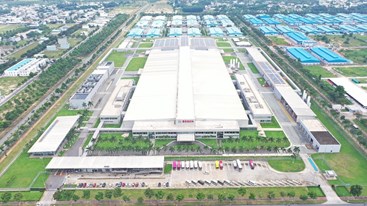 Bosch Vietnam Optimizes Energy to Advance Sustainable Manufacturing
 Vietnam ETE & Greenergy Expo 2026: Promoting Green Transition and Energy Efficiency
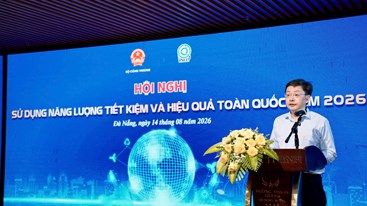 Conference on Energy Efficiency and Conservation in 2026
 Consultation on the Draft of the Vietnam Energy Efficiency Fund Establishment
 Contract Award Notice - Develop/Upgrade MRV Systems for Selected Industrial Sectors – Package C2.1.26