

Friday, 23/10/2026 | 23:53 GMT+7

Being gifted with many active volcanoes, Central America wants to tap them for producing green energy which will cut its dependence on oil imports and also help reduce the CO2 emissions. Because the region is placed above shifting tectonic plates in the Pacific basin, it has great potential for geothermal power produced by heat stored deep in the Earth’s crust.
Being gifted with many active volcanoes, Central America wants to tap them for producing green energy which will cut its dependence on oil imports and also help reduce the CO2 emissions.
Because the region is placed above shifting tectonic plates in the Pacific basin, it has great potential for geothermal power produced by heat stored deep in the Earth’s crust.
It is true that geothermal power plants are expensive to build, but they can provide a long-term, reliable source of energy. Unlike the large hydroelectric dams that could change a country’s topography, geothermal plants are considered more benign to the environment.

The of the Central America’s biggest country, Guatemala, plans to generate 60 percent of its electricity from hydroelectric and geothermal power by the end of 2022. This way, to set up geothermal plants, the government offers tax breaks on equipment and electricity regulators are requiring distributors to buy greater proportions of clean energy.
Israeli-owned Ormat Technologies Inc. already has two operating geothermal plants in Guatemala (for more than three years) and plans to expand but there is a little problem. “There’s a phase where you just have to drill and see. The problem is that you risk a very expensive investment and are not always satisfied with the results,” said Ormat’s representative in Guatemala, Yossi Shilon.
The company’s project is capable to generate 20 MW of geothermal energy, but according to Guatemala officials, the country has the potential to produce more than 1000 MW of clean energy.
Guatemala is not the only country that generates energy from geothermal wells. Costa Rica’s energy needs come from four geothermal plants having the installed capacity of 152 megawatts and the country wants to build another one by the end of January 2011.
Until now, El Salvador has two geothermal plants that are able to generate 160 MW, being more than a fifth of the country’s energy needs. Nicaragua also has 66 MW of capacity in one geothermal plant and plans an increase to 166 MW in the next five years.
greenoptimistic.com








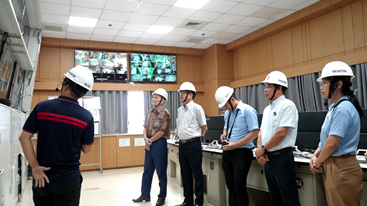 Polytex Pioneers Energy Efficiency in the Textile and Dyeing Industry
 Conference on Energy Efficiency and Conservation in 2026
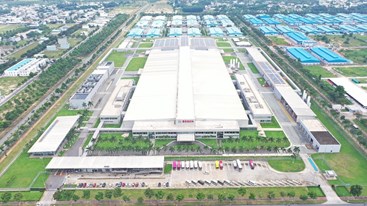 Bosch Vietnam Optimizes Energy to Advance Sustainable Manufacturing
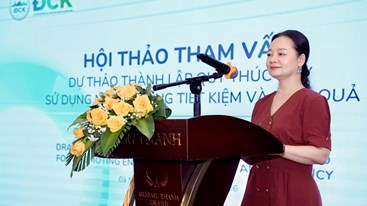 Consultation on the Draft of the Vietnam Energy Efficiency Fund Establishment
 Contract Award Notice - Support the development of energy management systems and capacity building (Package C2.2.11)
 Contract Award Notice - Review and update for current Energy Efficiency Benchmarking for 2 Sub-Industrial sectors
 Contract Award Notice - Notice for Contracts award for Finalize VNEEF (Vietnam National Energy Efficiency Fund) model (Package C2.2.14)