Sunday, 18/10/2026 | 12:52 GMT+7

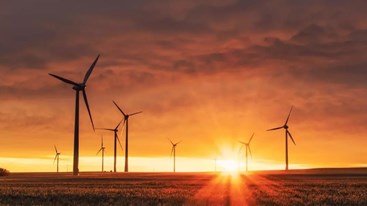
Vertical axis wind turbines have recently been revived by a few innovations made to them by scientists all over the world. Sauer Energy is one of them, and their turbine has a high efficiency because it’s designed to maximize the drag, so the blades are moved more efficiently by the wind.
Sauer’s VAWT features a concave high drag side, which will transfer the wind’s force directly to the rotor shaft, which is directly connected to a generator that converts the energy into electricity. The drag force may be controlled, and the turbine’s torque can be controlled by increasing the blades’ size and distance in mass, rather than vertical height.

The force produced by the volume of the wind is directly applied to the rotational axis of the turbine, thereby extracting maximum power at lower wind speeds.
The company can produce wind turbines that can be scaled up to any needs.
Generally speaking, vertical axis wind turbines are more efficient than horizontal axis ones, and can be put together to form fields in which the turbulence created by some can help others rotate, thus increasing the overall system’s efficiency. Unlike horizontal axis wind turbines, these settings can help efficiency instead of ruining it.
greenoptimistic.com









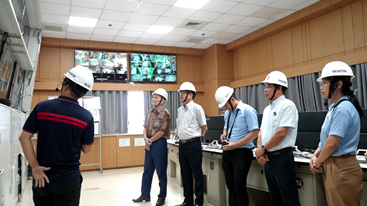 Polytex Pioneers Energy Efficiency in the Textile and Dyeing Industry
 Conference on Energy Efficiency and Conservation in 2026
 Consultation on the Draft of the Vietnam Energy Efficiency Fund Establishment
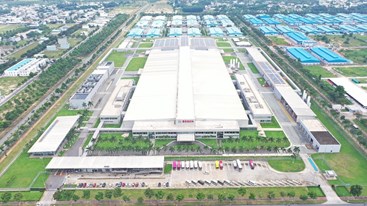 Bosch Vietnam Optimizes Energy to Advance Sustainable Manufacturing
 Contract Award Notice - Support the development of energy management systems and capacity building (Package C2.2.11)
 Contract Award Notice - Review and update for current Energy Efficiency Benchmarking for 2 Sub-Industrial sectors
 Contract Award Notice - Notice for Contracts award for Finalize VNEEF (Vietnam National Energy Efficiency Fund) model (Package C2.2.14)