Thursday, 22/10/2026 | 10:58 GMT+7

The turbines have outperformed company projections in four of the six months since operation began. At their highest output, the turbines provided 16.26 percent of the plant’s power requirements for the month of April.
Just six months after the
installation of two power-producing wind turbines at Honda Transmission Mfg. of
America, Inc. the turbines are producing more electrical power than was anticipated
when the towers went into operation in January.
The wind turbines have exceeded
the projected power output figures by 6.3 percent, and have contributed toward
reducing the carbon dioxide emissions of power production, helping Honda reach
its voluntary goals to reduce the environmental impact of its products and
manufacturing operations by 2020. This includes a 30 percent reduction in CO2
emissions from Honda products, and significant CO2 reductions from the
company’s plants and other operations, compared with year 2000 levels.
The two turbines, standing 260
feet tall with 160-foot blades, were initially projected to produce upward of
10,000 megawatt hours (MWH) of electricity per year, accounting for
approximately 10 percent of the plant’s annual power needs. The turbines have
outperformed company projections in four of the six months since operation
began. At their highest output, the turbines provided 16.26 percent of the
plant’s power requirements for the month of April.

“We are extremely pleased with
the performance of the wind turbines’ production over their first six months,”
said Gary Hand, vice president of Honda Transmission Mfg. of America. “The
turbines’ operation has exceeded the projections established during the project
development.”
The installation of the turbines
makes the Russells Point plant the first major automotive facility in the
United States to receive a substantial amount of its power from on-site wind
turbines. The project was developed and installed by Juhl Energy from Pipestone,
Minnesota. The two turbines are owned by ConEdison Solutions.
To achieve their new
environmental targets, Honda is accelerating its efforts to advance the
environmental performance of its products, and its operations throughout North
America. The wind turbine project is among a number of other initiatives at
Honda plants to reduce energy use and waste from manufacturing operations.
Post-gazette











 Polytex Pioneers Energy Efficiency in the Textile and Dyeing Industry
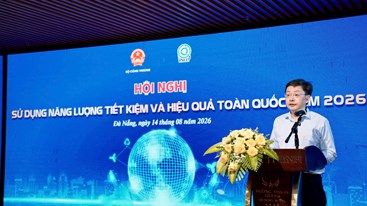 Conference on Energy Efficiency and Conservation in 2026
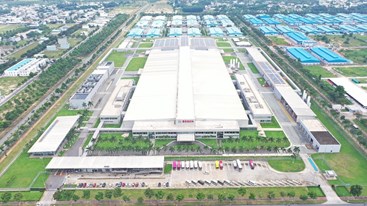 Bosch Vietnam Optimizes Energy to Advance Sustainable Manufacturing
 Consultation on the Draft of the Vietnam Energy Efficiency Fund Establishment
 Contract Award Notice - Support the development of energy management systems and capacity building (Package C2.2.11)
 Contract Award Notice - Review and update for current Energy Efficiency Benchmarking for 2 Sub-Industrial sectors
 Contract Award Notice - Notice for Contracts award for Finalize VNEEF (Vietnam National Energy Efficiency Fund) model (Package C2.2.14)