

Sunday, 25/10/2026 | 15:03 GMT+7

The DDFlyTrain research project, conducted by Ricardo, Artemis Intelligent Power (a group company of Mitsubishi Heavy) and Bombardier Transportation, (earlier post) has projects a fuel savings of around 10% based on the use of high speed flywheel brake recovery technology retrofitted to Diesel Multiple Unit (DMU) rolling stock. This order of saving means that the technology has a potential return on investment (ROI) of inside five years.
The DDFlyTrain research project, conducted by Ricardo, Artemis Intelligent Power (a group company of Mitsubishi Heavy) and Bombardier Transportation, (earlier post) has projects a fuel savings of around 10% based on the use of high speed flywheel brake recovery technology retrofitted to Diesel Multiple Unit (DMU) rolling stock. This order of saving means that the technology has a potential return on investment (ROI) of inside five years.
A flywheel-based energy recovery system could reduce fuel consumption on DMUs by up 10%, according to the findings of a research project carried out by Ricardo, Artemis Intelligent Power, and Bombardier.
The DDFlyTrain project sought to demonstrate the feasibility, operational fuel and energy savings, and economic investment case for the use of high-speed flywheel energy storage on DMUs. The hybrid solution is based on Ricardo’s TorqStor high-speed flywheel energy storage system and Artemis’ Digital Displacement hydraulic pump-motor transmission.
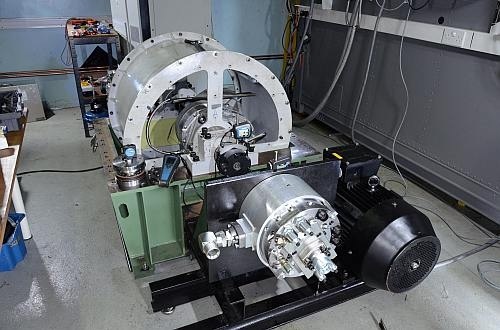
The project was launched in 2013 and was led by Artemis with funding from Innovate UK and the Rail Safety and Standards Board (RSSB). After extensive simulation based on field service data, DDflyTrain designed and produced a proof-of-concept test rig to demonstrate the viability and performance of the technology. An initial integration exercise to incorporate the hardware and software into a Bombardier Turbostar DMU has also been completed.
flywheel techWhen starting, the efficiency of a typical DMU transmission, which uses a torque converter, can be as low as 30%. According to Ricardo, a significant improvement in fuel consumption is possible if energy normally dissipated through braking can be reused to augment acceleration from a standing start during the period of poor transmission.
DDFlyTrain calculates that with a fuel saving of around 10%, a return-on-investment in the flywheel system should be possible within five years.
Ricardo says the technology could also have applications on dc electrified lines in southern England, where network power capacity constraints can place restrictions on the number of trains allowed to operate in some areas. Here the use of flywheels could reduce current demand on the power grid as a train starts, thereby increasing the effective capacity of the electrification system.
Anh Tuan












 Polytex Pioneers Energy Efficiency in the Textile and Dyeing Industry
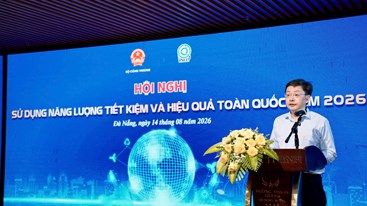 Conference on Energy Efficiency and Conservation in 2026
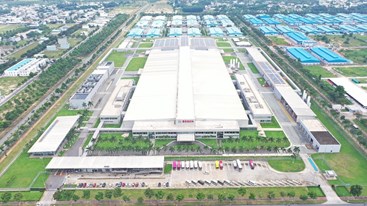 Bosch Vietnam Optimizes Energy to Advance Sustainable Manufacturing
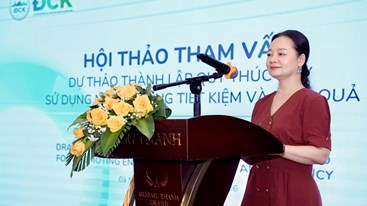 Consultation on the Draft of the Vietnam Energy Efficiency Fund Establishment
 Contract Award Notice - Notice for Contracts award for Finalize VNEEF (Vietnam National Energy Efficiency Fund) model (Package C2.2.14)
 Contract Award Notice - Review and update for current Energy Efficiency Benchmarking for 2 Sub-Industrial sectors
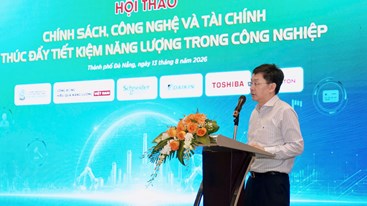 Policies, Technology and Finance Driving Energy Efficiency in the Industrial Sector