Thursday, 15/10/2026 | 00:59 GMT+7

While the cost of solar power has dropped significantly from the early 2000s, there is still plenty of room for the technology to become cheaper, making it even more attractive as a substitute for fossil fuels.
Currently, the cost of the land to build solar installations on and the labor required are the most expensive parts of a solar project. The panels themselves only account for about 20 percent of the cost, but if the solar panels had a much greater energy output, there could be fewer of them generating the same amount of energy, meaning less land required and fewer labor hours.
Researchers at the University of California Riverside think they've developed a technology that achieves just that and could lead to much less expensive solar power in the future.
The scientists have developed a coating for solar panels that allows them to use the infrared portion of the light spectrum that usually passes right through solar cells without being converted into electricity, essentially wasted energy. They say the new material effectively reshapes the solar spectrum so that it better matches the photovoltaic materials in the solar cells. The infrared portion is then absorbed and used, boosting the conversion efficiency by at least 30 percent.
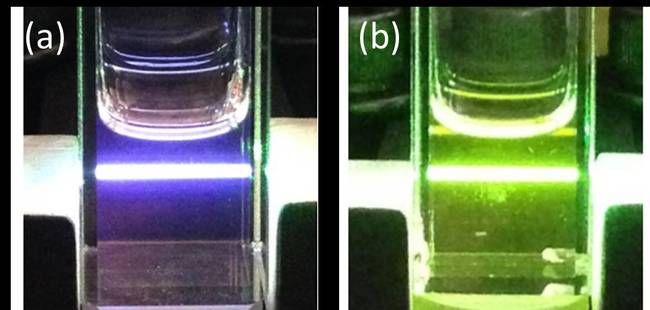
The coating includes cadmium selenide or lead selenide semiconductor nanocrystals combined with organic molecules. The resulting material does what they call "upconverting" photons so that they are readily absorbed by the solar cells.
“The key to this research is the hybrid composite material – combining inorganic semiconductor nanoparticles with organic compounds. Organic compounds cannot absorb in the infrared but are good at combining two lower energy photons to a higher energy photon. By using a hybrid material, the inorganic component absorbs two photons and passes their energy on to the organic component for combination. The organic compounds then produce one high-energy photon. Put simply, the inorganics in the composite material take light in; the organics get light out,” said Christopher Bardeen, a professor of chemistry at the university and one of the lead researchers.
Besides making solar panels better, this material could also be used to improve things like biological imaging, data storage and organic light-emitting diodes.
Mai Linh









 Polytex Pioneers Energy Efficiency in the Textile and Dyeing Industry
 Vietnam ETE & Greenergy Expo 2026: Promoting Green Transition and Energy Efficiency
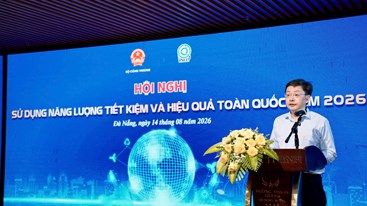 Conference on Energy Efficiency and Conservation in 2026
 Consultation on the Draft of the Vietnam Energy Efficiency Fund Establishment
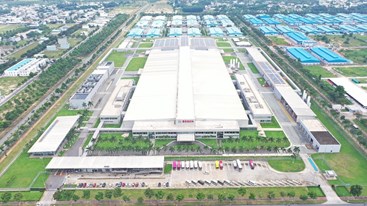 Bosch Vietnam Optimizes Energy to Advance Sustainable Manufacturing
 Contract Award Notice - Support the development of energy management systems and capacity building (Package C2.2.11)
 Contract Award Notice - Review and update for current Energy Efficiency Benchmarking for 2 Sub-Industrial sectors