Wednesday, 14/10/2026 | 16:51 GMT+7

Vietnam is building its own 2050 Calculator which will allow anyone with an internet connection to explore how Vietnam can pursue low carbon growth over the coming decades whilst providing enough energy to meet the county’s needs. 2050 Calculator was developed by the Department of Energy and Climate Change to model the UK. China and India have already tailored their own models with supports from the UK.
The 2050 Calculator is an open source model of energy and emissions that can be used to identify a range of physically possible scenarios for the future. This could be with the aim of reducing emissions to tackle climate change, improving air quality, or reducing dependence on fuel imports. It was initially built by the UK government, but has since been adapted by China, India, South Africa, Japan, South Korea and Belgium. MOIT in Vietnam is now working to develop a Vietnamese version.
A calculator can answer questions like:
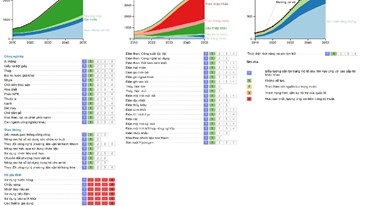
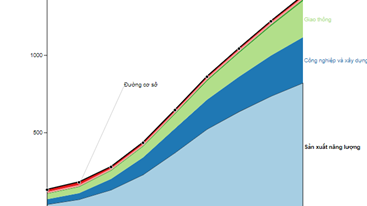
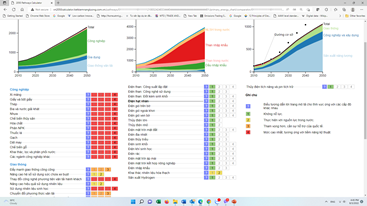
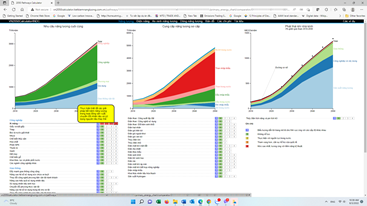
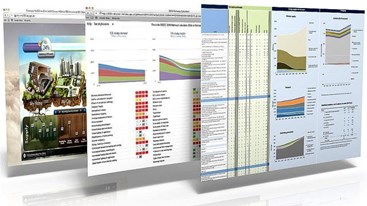
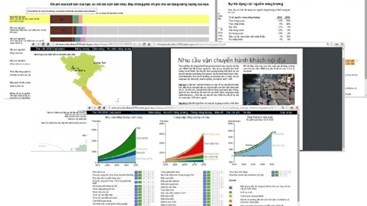
Users control the calculator by making choices using a number of “levers” (usually between 30 and 50). These levers make a change in either the supply or demand of energy in a particular sector, for example building nuclear power stations, or reducing the distance people travel by car. The combination of these choices creates a “pathway”, and the calculator then displays the implications of the pathway over time (for example in terms of energy demand, emissions and land use). And these are visualised in an internet interface, making the results more open and easy to understand:

Vietnam is building its own 2050 Calculator, an open-source tool, which will allow anyone with an internet connection to explore how Vietnam can pursue low carbon growth over the coming decades whilst providing enough energy to meet the county’s needs. 2050 Calculator was developed by the Department of Energy and Climate Change to model the UK. China and India have already tailored their own models with supports from the UK.
The Ministry of Trade and Industry (MOIT) and cross-sector experts in Vietnam will work closely with the UK’s Department of Energy and Climate Change (DECC) over the coming year and a version of the Vietnam 2050 Calculator is planned to be completed in November 2014. DECC is providing nearly £138,000 from its International Climate Fund (ICF) to support MOIT as well as training and support throughout the project. The goal is to facilitate a discussion across Vietnam on the low carbon development options available, and to use the results of this work to inform the decisions of policy makers.
Commenting on this UK financial and technical support, the British Ambassador to Hanoi, Dr Antony Stokes, said: “The 2050 Calculator has won many awards in the UK for its ability to engage policy makers and the public around our challenge to reduce our greenhouse gas emissions. We’re delighted to be able to share this work with the Vietnamese government using UK funds to promote low carbon growth.”
Nguyen Van Thanh, Deputy Director General, Industrial Safety Techniques and Environment Agency, MOIT said: “The Industrial Safety Techniques and Environment Agency, MOIT will be the focal point for building the Vietnam 2050 Calculator. But this is going to be a collaborative process with teams across government and stakeholders to make sure we include all possible options available to the country. We look forward to presenting an open source version of the Vietnam 2050 Calculator in 2014, and hope it will make a significant contribution our national debate on green growth and climate change response.”
Notes to Editors:
DECC website: https://www.gov.uk/2050-pathways-analysis
UK 2050 Calculator: http://2050-calculator-tool.decc.gov.uk/
UK simple version: http://my2050.decc.gov.uk/
India 2047 Calculator: http://indiaenergy.gov.in
China 2050 Calculator: http://2050pathway-en.chinaenergyoutlook.org
Contact persons:
Le Bich. Climate Change Attache, British Embassy in Hanoi. Tel: 84-4 3936 0500 ext 2307. Email: le.bich@fco.gov.uk
and/or
Nguyen Song Ngoc.Project Coordinator. Mobile: 84-904 280 827. Email:song.ngoc@hotmail.com



.jpg?w=367&h=206&mode=crop)

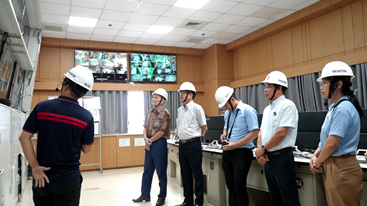 Polytex Pioneers Energy Efficiency in the Textile and Dyeing Industry
 Vietnam ETE & Greenergy Expo 2026: Promoting Green Transition and Energy Efficiency
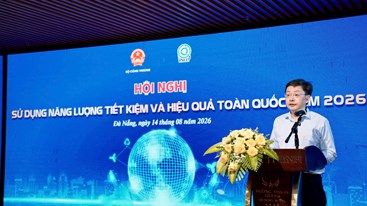 Conference on Energy Efficiency and Conservation in 2026
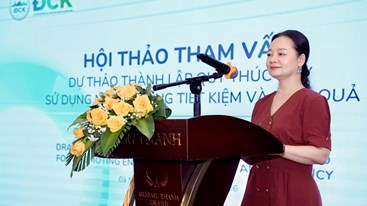 Consultation on the Draft of the Vietnam Energy Efficiency Fund Establishment
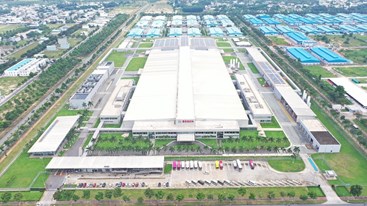 Bosch Vietnam Optimizes Energy to Advance Sustainable Manufacturing
 Contract Award Notice - Support the development of energy management systems and capacity building (Package C2.2.11)
 Contract Award Notice - Review and update for current Energy Efficiency Benchmarking for 2 Sub-Industrial sectors