-

As an agriculture-based country, Vietnam has great potential to develop biogas in the animal husbandry sector. Statistics show that every year, cattle and poultry herds in Vietnam discharge about 73 million tonnes of droppings. Each tonne of muck can cause 0.24 tonne of carbon dioxide (CO2) equivalent, which means 73 million tonnes of animal droppings will cause 17.52 million tonnes of CO2, seriously polluting the environment.
-

After it is collected, waste plastic will be crushed down and burned at the temperature of 350 degrees centigrade under the condition of oxygen shortage with steam supplement to obtain crude oil. Crude oil will then be treated to obtain petrol and diesel oil.
-

Millions of heart patients worldwide have benefited from the implantable cardiac defibrillators powered by Takeuchi's silver vanadium oxide battery. With funding from the National Institutes of Health, she is developing new cathode materials for improved implantable cardiac defibrillator batteries, with her latest advances on this project recently published in the Journal of Power Sources.
-

While South Africa introduced a generous feed-in tariff of ZAR1.25/kWh (EUR0.134/kWh) for wind power last year (Windpower Monthly, May 2009), the system is not yet in place for independent power producers to sign power purchase agreements with state utility Eskom.
-

The project developer, the Dong Xuan Joint Stock Company, is responsible for carrying the project pursuant to regulations enacted by the Hanoi People's Committee. The tramcars must strictly adhere to existing state laws on road transport. The project review meeting will be held periodically every six months to draw valuable experiences for further implementation.
-

The Vietnam project ‘Building four-chamber conveyor-type ceramic brick furnaces using rice husk gasification technology’ will be honored the 2009 Energy Globe Award in a ceremony to be held on June 3, 2010 in Rwanda.
-

The international drivers for energy efficiency are based in cost savings, suggesting that the sluggish economy could be a driver for companies to grab low-hanging fruit to help their bottom line. While energy management is important in every country, some emerging economies outstripped Europe and the U.S. when it came to how high they ranked.
-

Olympic Delivery Authority weighs up solar and biomass options after pulling plans for onsite wind turbine. The developer of London's Olympics Park has returned to the drawing board to find a suitable renewable energy system after this week scrapping high profile plans to install a wind turbine at the Stratford site.
-

The chairman of the National Assembly’s Science, Technology and Environment Committee Prof. and Dr. of Sc. Dang Vu Minh, Deputy Minister of Industry and Trade Dr. Do Huu Hao, Deputy Minister of Science and Technology Dr. Le Dinh Tien and the head of the Vietnam Nuclear Energy Institute Dr. Vuong Huu Tan all attended the exhibition.
-

The draft version of the Law on Energy Efficiency and Conservation has dedicated a chapter to describe the responsibility of industrial production facilities in economical and efficient use of energy. This indicates the essential role of the industrial sector in Vietnam efforts to achieve the national target on energy efficiency and conservation.
-

Electricity is a powerful tool for building modern societies and plays a critical role in eradicating poverty and boosting economies. Yet, according to U.N. estimates, 1.5 billion people—nearly a quarter of the world's population—live without access to reliable power.
-

A team at Sandia National Laboratories in Albuquerque, New Mexico, is developing a technique to create some of the ingredients for synthetic fuels from carbon-containing gases. Their cerium-oxide-based system can convert CO2 into carbon monoxide, and can also turn water into hydrogen.
-

Talk about natural resources—it turns out that just about any kind of plant or animal waste, and many kinds of garbage, can be turned into biofuels or other sources of clean energy for cars, trucks, or industry. Here are some of the least expected possibilities being tested.
-

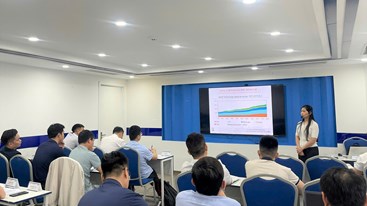
In the framework of the second International Exhibition on Energy Efficiency and Environment (Entech Hanoi 2010), the Hanoi Industry and Trade Department and the Hanoi Energy Conservation Center recently organized a seminar to discuss solutions for energy efficiency in buildings.
-

The wind industry is trying to find a solution to the problem by working with environmental groups, federal regulators, and other interested parties. They are trying to develop methods of measuring and mitigating wind energy’s effect on birds. The Fuller Wind Turbine offers hope to bird lovers and environmentalists.
-

Under the leadership of Yiannis Levendis, distinguished professor of mechanical and industrial engineering, a team of undergraduate and graduate engineering students developed a waste combustor, which breaks down non-biodegradable plastics to create an alternative source of fuel.
-

Construction Industry in Viet Nam has been growing quickly in recent years, with growth rate of 12 – 16% per year. This quick growth, however, means an uncontrollably increasing use of energy and natural resources in construction. Statistics show that there are about 1,000 buildings consuming more than 1 million kWh per year. Such enormous energy waste could be greatly reduced (20% to 30%) under an energy efficiency plan in construction design.
-

EU’s ‘Clean Sky’ – the 1-6 billion euro research project – with 86 participating partners from 16 nations – has goals like developing unique application-specific technologies and evaluation and advancement of the entire aeronautic system.
-

The Japanese giant said it would invest seven billion yen (76 million dollars) by March 2012 in facilities in its domestic production centres to test how to maintain stable power from fluctuating renewable energies.
-

During the construction of Vung Tau Post Hotel, the installation of solar-powered water boilers and lighting system was not taken into account. And now after realizing the importance of such devices, it’s already a “fait accompli”. All rooms were designed in architecturally older ideas, hence very difficult to make changes. For the terrace, it is also impossible to install both solar-powered water boilers system and solar-powered lighting system. Without any additional source of power, the company is now paying as much as VND200 million every month for electric bills.