-

Earlier last year, there were news about scientists dreaming of space-based solar panels, which were to capture the Sun’s energy and bring it to the Earth through microwaves, or lasers, and to provide the ultimate energy source for us.
-

Legislators attending this year's Congressional Energy and Energy Efficiency Expo and Forum in Washington, DC, last week were quick to point out the problems with fossil fuel -- from cave-ins at coal mines to the oil spill in the Gulf.
-

Quang invested about 30 million dong to build a 20m3 biogas pit and a 5kW generator running on biogas. After 3 years, the system has well satisfied electricity demand of his family such as: three 1-Hp motors, a refrigerator, a washing-machine, a 1-Hp air-conditioner. Hence, his family saves about 1 million VND on electricity each month.
-

They have been toting a 131-foot-long wind-turbine blade serving as a mobile petition to be signed by all supporters. This is to create awareness that promoting wind power industry will generate new jobs and make US self-sufficient in energy production. Their goal is the Wind-Power 2010 Convention at Dallas where the blade will be on display.
-

The renewable energy power producers would earn renewable energy certificates for every megawatt hour of electricity generated. A central authority would be established which would be responsible for distribution of these certificates. Any entity which has the obligation to purchase power generated from renewable energy sources can buy renewable energy certificates from these power producers to meet their targets.
-

But in the last decade, as the number of people employed in Cambodia’s garment sector has increased from about 25,000 in 2000 to around 300,000 today, he has noticed a steady increase in one particular type of vehicle entering Phnom Penh: heavy-load trucks carrying huge stacks of firewood.
-

Various bodies in construction have set up energy saving systems in buildings under the Research and Cooperation Program in accordance with protocols with other countries, for instance, cooperation with Bulgaria and Russia in saving energy in buildings; cooperation with Germany in saving energy in construction and reducing consequences of climate change.
-

India has expanded its grid-interactive renewable energy by about 2.3 gigawatts (GW) in the year ending 31 March 2010, with the biggest contribution coming from wind power.
The total installed capacity for the financial year 2009/10 reached 16.8GW, according to a statement from the Ministry of New and Renewable Energy.
-

To realize energy saving plan in order to reduce cost of production, the company’s leaders have planned to run concrete crushing machine during off-peak hours, hence consuming less electricity on producing concrete and clinker in comparison with previous targets. The company has also reduced time spent on drying furnace, and burned coal right after solving furnace problem instead of using MFO oil; hence dramatically reducing oil consumption.
-

So, cutting off electricity by zone on a temporary basis to save power is unavoidable. Moreover, from March 1, 2010, the price of electricity has increased by VND948.5 (8.92 percent) per kWh compared with the price of 2009. So each family has to pay a higher electricity bill. For those reasons, it is an urgent need to save power.
-

The Mekong Plastic Joint Stock Company (Trung An Industrial Zone, My Tho city, Tien Giang province) specializes in producing diverse ranges of packaging serving domestic and export markets with an annual revenue of around VND100 billion. Surveys show that the company can save VND245 million each year if it applies energy efficient measures.
-

This month, Bruichladdich - one of eight distilleries to be found on the Scottish isle of Islay -- will take delivery of an anaerobic digester which will start turning their whisky waste into electricity.Mark Reynier, owner of Bruichladdich Distillery, hopes the digester will meet around 80 percent of its electricity needs and save the company up to £120,000 ($175,000) every year.
-

Point Source Power, a startup spun out of research conducted at Lawrence Berkeley National Labs, has devised an economical fuel cell for emerging markets. The one in the picture is built around a container that once held breath mints and will generate two to three watts of power.
-

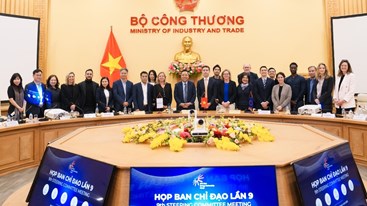
A meeting was held in Hanoi Monday for Vietnamese enterprises and firms from Maryland State, US, to seek trade partnership. The meeting, hosted by the Vietnam Chamber of Commerce and Industry, offered an opportunity for local firms to learn about the US technologies and latest applications in the environmental area.
-

Huynh Kim Tuoc, the director of the Ho Chi Minh City Energy Conservation Center, said, "Industries in Vietnam still consume exorbitant amounts of energy due to inefficiency." Statistics show that the energy efficiency at thermoelectric plants in Vietnam is about 28-32 percent while in developed countries this number is about 40 percent.
-

Through energy audit and the application of some solutions and models of the project “Investigate, assess, propose solutions and develop energy-saving models for a number of schools, hospitals, factories and flower farms of Lam Dong” implemented by Energy Conservation Center of Ho Chi Minh city, more than VND500 million has been saved and a large amount of CO2 emission which causes greenhouse effect has been reduced.
-

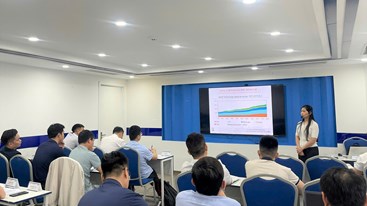
The Institute for Building, Science and Technology (IBST) on May 12th held a scientific seminar on “The experiences in implementing energy saving and efficiency program of the EU and Bulgaria and the application of energy efficiency meter software in Vietnam.” Participants of the workshop included Mr. Vladimir Moskov, commissioner of Bulgarian Embassy in Vietnam, Prof. Dr Nikola Geargiev Kaloyanov, Vice-Chancellor of Technical University of Sofia, project director and some other experts. On Vietnam side are Assoc. Prof. Dr Cao Duy Tien, director of IBST, Assoc. Prof. Dr Nguyen Xuan Chinh, deputy director of IBST concurrently project director, other experts from research institutes and universities and other interested researchers.
-

A retailer shopping centers and supermarkets, Big C welcomes thousands of shoppers every day. Its power expenditure accounts for a proportion as large as 30% of the total outsource service costs. Thus, energy saving activities will bring about practical benefits, helping the retailer meet dual targets: reducing costs to fulfill its mission statement “low prices for every one” to boost its market share, and achieving the national target in energy savings and efficiency together with the whole society.
-

Hydrophobic materials had been discovered, but their properties don’t last that long – not to mention as long as to be put on ships who cruise for weeks/months. The best such material only has a few hours of stability, after which it vanishes. The challenge is to make hydrophobic materials that last at least as water ferns do.
-

Lithium-oxygen (also known as lithium-air) batteries are similar in principle to the lithium-ion batteries that now dominate the field of portable electronics and are a leading contender for electric vehicles. But because lithium-air batteries replace the heavy conventional compounds in such batteries with a carbon-based air electrode and flow of air, the batteries themselves can be much lighter. That's why leading companies, including IBM and General Motors, have committed to major research initiatives on lithium-air technology.