-
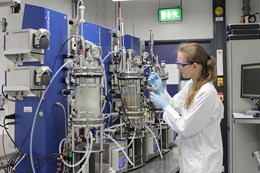
Fraunhofer researchers have developed a new recycling process for this materially unused carbon resource: They successfully produced fuel and specialty chemicals from these exhaust gases on a laboratory scale.
-

A team of researchers, including Kyle Brinkman of Clemson University, developed a material that acts as a superhighway for ions. The material could make batteries more powerful, change how gaseous fuel is turned into liquid fuel and help power plants burn coal and natural gas more efficiently.
-
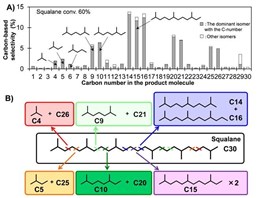
A new method of converting squalene, which is produced by microalgae, to gasoline or jet fuel, has been developed by the research group of Professor Keiichi Tomishige and Dr. Yoshinao Nakagawa from Tohoku University's Department of Applied Chemistry, and Dr. Hideo Watanabe from the University of Tsukuba.
-
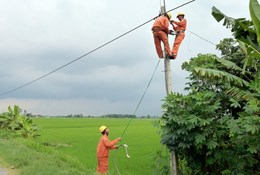
The project has completed the new construction of 156,45km transmission line and renovation of 99,43km of medium voltage line; new construction of 182,51km and renovation of 63,68km low voltage line; construction of 128 substations with a capacity of 4905 kVA and installation of 2,862 electric meters.
-
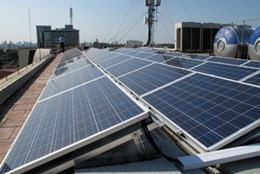
Solar panels (40 pieces) were installed at the school, capable of providing about 30kWh of electricity per day, to meet the essential energy demands for running the essential equipment of the school activities.
-
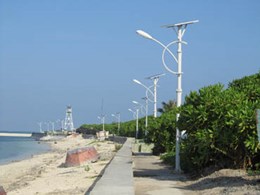
The public lighting system helps reduce 100% of the power consumption, bringing about high economic efficiency and securing urban lighting.
-
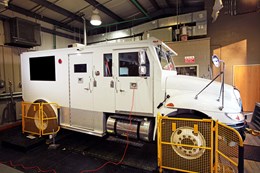
A North Mississippi-based armored vehicle company will soon manufacture a more fuel-efficient product because of improvements developed by a major Mississippi State research organization.
-
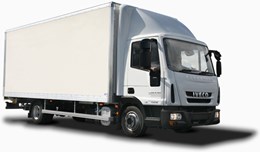
You are driving down the motorway at night when you pass a truck that’s glowing purple. Don’t worry, it isn’t leaking toxic chemicals: it just has a clever way of reducing drag by using plasma.
-
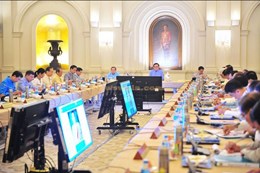
The Energy Policy and Planning Office (EPPO) yesterday approved the Energy Efficiency Plan (EEP) 2015-36, which aims to lower Thailand's energy-intensity rate from 25 per cent as stated in the initial 2010 plan to 30 per cent, saving an estimated Bt8.5 trillion.
-

The Ministry of Energy with support from the ECOWAS Center for Renewable Energy and Energy Efficiency (ECREEE) on 12 August, 2015 opened a two day workshop to validate the National Renewable Energy Action Plan (NREAP) and National Energy Efficiency Action Plan (NEEAP) for the Gambia.
-

The European Commission has hired a consortium of external experts to identify energy saving effects caused by improved resource efficiency. The project recently started and is expected to be completed by May 2016.
-
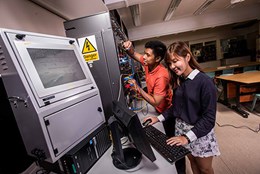
The MOU will enable a comprehensive education in energy efficiency technology and management, complementing classroom teaching and demonstrating the real-world application of energy efficiency.
-
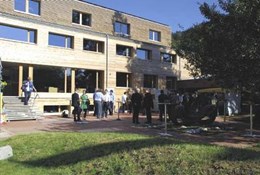
The application of pyrolysis technology in agricultural production, a method that uses thermochemical decomposition of organic material at elevated temperatures in the absence of oxygen.
-
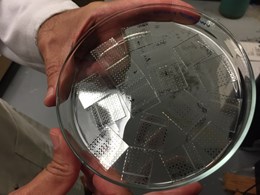
The need for efficient, high-performance materials for electrical energy storage has been growing along with the ever-increasing demand for electrical energy in mobile applications.
-
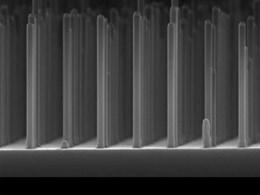
Using the energy of the sun to split water into hydrogen and oxygen gives you access to a completely carbon-free energy source for transportation.
-

Only in the field of energy, green materials can save about 14% of billed electricity used for lighting and air conditioning. In addition, the investment is not too high, with environmentally friendly features, meanwhile the payback period is relatively short .
-

When Anurudh Ganesan was an infant in India, his grandparents had to carry him nearly 10 miles to get vaccinated.
-

A new app that can reportedly cut household energy use by 10% is being rolled out to 200,000 Swedish homes.
-

A new contender for Britain's greenest home has been unveiled in North Yorkshire.
-

A team at the University of Notre Dame have designed an energy-saving military shelter based on the ancient art of origami.