-

A new joint venture research work at Stanford and SLAC National Accelerator Laboratory, supported by Department of Energy and DARPA has come up with a new solar energy conversion process that can potentially double the efficiency of solar cells. Stanford engineers have discovered this new and totally different process to harvest energy from sun.
-

Even though wind energy is a clean and cost-effective source of energy, it does have one slight drawback: no one can control when the wind blows. This occasionally leads to difficulties in matching consumers’ demand for energy with the available supply.
-

In the 1990s, the solar energy technology was introduced into Vietnam through projects funded by the governments of Spanish, Dutch, French and German. Many solar energy projects have been put into application since then, mainly to meet electricity needs of people in remote and rural areas, where the national grid has not reached. Unfortunately, those above projects are only in pilot scale.
-

A group of engineers at Bridgestone America’s Technical Center in Akron, along with students from DeLaSalle School in Kansas City have recently developed a new all-electric car which has been successfully tested on Bridgestone’s Texas Proving Grounds.
-

Before joining the cleaner production component in the industry (CPI), during the production process, Ngoc Lap tea factory used to encounter major environmental problems such as high concentration of dust, noise pollution, and smoke from burning coal, which directly affected the working conditions of employees, worsen living condition in the neighborhoods and schools near the factory. The amount of carbon dioxide emission from the plant is about 2,500 tons per year.
-

Two co-authors Nguyen Trong Kien and Nguyen Van Hoang of Nguyen Hoang Tuy Company (Ho Chi Minh City) have successfully implemented a system for remote control and supervision of public lighting, detection of electrical leak system via SMS. Accordingly, in addition to remote controlling lighting of public lamps, the system is also capable of detecting current leakage status and reporting to the management department for prompt react.
-

Ocean Renewable Power Company (ORPC), an industry leader in tidal, river and deep-water ocean current energy technology and projects, announced today that its Beta Power System, the largest ocean energy "power plant" ever installed in U.S. waters, has successfully generated grid-compatible power from tidal currents at its Cobscook Bay site in Eastport, Maine.
-

One of the largest orchards in Massachusetts has just cut its utility bill 80% with a $1.1 million 220 KW solar power plant. The state of Massachusetts helped Carlson Orchards with grants totaling $595,000 to help in the installation of the 1,050 solar photovoltaic panels.
-

One purpose of developing solar power technology is to support the load for the national grid and enable consumers to use EVN’s electricity at peak hours with price of off-peak hours (price of grid electricity at night is only 500 dong per Kwh, while during peak hour it is about 2000 dong, calculated accumulatively).
-

The Prime Minister has approved a VND3trillion project to train and develop human resources for the atomic energy field from now until 2020.
-

Cassava is widely known as a popular food used for breeding activity and in some other food processing industries. Few people, however, know that cassava is now the main material for producing the E5 bio-gasoline. While preparing for the market introduction of E5 bio-gasoline, Petrol Viet Nam Corporation and PV OIL have already set up a plan to plant cassava to use as raw material for production of clean gasoline.
-

According to the researchers at Edinburgh Napier University, whisky is being used to develop a new biofuel, which could power cars and even airplanes in a few years. They found a new way to produce biofuel from two main byproducts of the whisky distilling process: “draff”, the spent grains and “pot ale”, the liquid from the copper stills.
-

When you think of electric cars, you generally mean two terms in which they exist: autonomy vs charging infrastructure. These two words compete with each other to a certain point, because higher autonomy means less infrastructure needed, hence faster adoption by the market.
-

This has led to the increased production of PV cells not only in Europe but also in Taiwan and china. China alone produces 2GW solar cells annually. In February 2010 the price of electricity using PV panel is $4.27 per watt. Today the price of photovoltaic cells of different companies is different. The General electric solar panel costs $ 228 to $385. This trend would decline with more competition.
-

Intimex Thanh Chuong Tapioca Factory, under Nghe An Intimex branch, was put into operation in 2004. The factory has increased the capacity twice: from 60 to 120 tons per day and from 120 to 180 tons per day.
Its coal consumption and the rate of raw cassava over cassava products used to be much higher compared to other factories in Vietnam which have similar scale. Consumption of the company in 2008: 3.7 million kWh of electricity per year; 2.8 million kilograms of coal; 27,000 kilograms of diesel oil. After joining the Component of Cleaner Production in industry of the Ministry of Industry and Trade, leaders of the company has made several concrete measures in energy efficiency.
-

The first building construction using non-fired building materials in Ha Noi is the Keang Nam 70-storied building. The owner of this project has transported the entire discarded constructional materials and soil from digging the foundation to Hue Quang Commerce and Technology Joint stock company (Hue Quang Company). This company will buy the discarded soil from Keang Nam to produce non-fired eco bricks and sell them back to Keang Nam. This is regarded as the model that sets the trend of using environment friendly materials in Vietnam.
-

In the under developed countries like India and Bangladesh masses ride bicycle rickshaw to carry commuters. This practice has been in use from centuries and this has become their culture now. In India the pedal power industry still accounts for 18 percent of the total industry. India has the largest bicycle industry after china. Along with the energy benefits that pedal power offers, bicycle has proved to be the great ride.
-

An innovative clean energy collaboration between auto manufacturer Ford, utility Detroit Edison and energy storage systems builder Xtreme Power plans to bring to Michigan one of its largest solar energy systems, which will be used to help in the production and usage of electric vehicles. The system will be installed at Ford’s Michigan Assembly Plant.
-

According to statistics, currently, the number of small and medium enterprises (SMEs) of Da Nang accounts for about 90% of total enterprises. Annually, the energy consumption of Da Nang is about 800 million kWh, in which, commercial electricity for production is about 700 million kWh. Besides, in the production process, large amounts of FO and DO oil used are also increasing every year.
-
Ford là cha đẻ của dòng xe điện Focus cũng như các thế hệ xe hỗn hợp điện – xăng khác. Trong dự án hợp tác này, hãng sẽ làm việc với công ty Detroit Edison để lắp đặt một hệ thống tấm thu quang điện công suất 500 KW tại nhà máy nằm ở thành phố Wayne, Michigan.



 Contract Award Notice - Providing technical support, training, and communication on energy efficiency for industrial zones and clusters in Vietnam (Package C2.2.13)
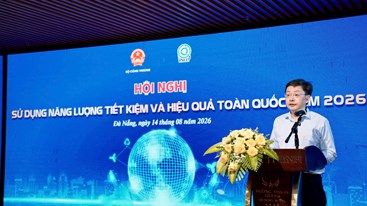 Conference on Energy Efficiency and Conservation in 2026
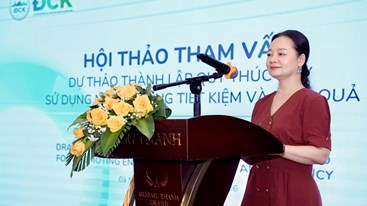 Consultation on the Draft of the Vietnam Energy Efficiency Fund Establishment
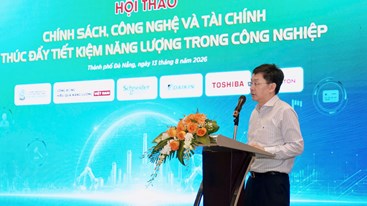 Policies, Technology and Finance Driving Energy Efficiency in the Industrial Sector
 Contract Award Notice - Review and update for current Energy Efficiency Benchmarking for 2 Sub-Industrial sectors
 Contract Award Notice - Notice for Contracts award for Finalize VNEEF (Vietnam National Energy Efficiency Fund) model (Package C2.2.14)
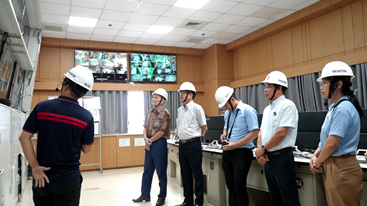 Polytex Pioneers Energy Efficiency in the Textile and Dyeing Industry