-
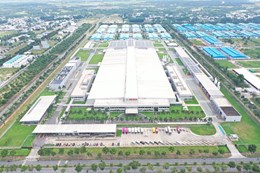
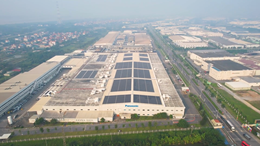
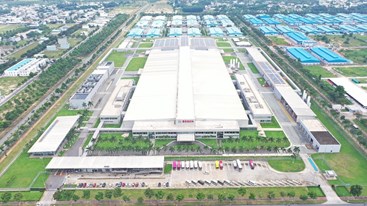
During the 2020–2024 period, the total energy savings achieved by Panasonic Industrial Devices Vietnam Co., Ltd. (PIDVN) reached 31.4%, making it one of the leading models for energy efficiency in industrial production.
-
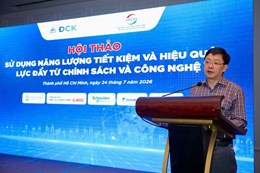
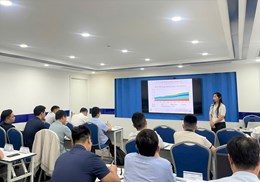
As part of the National Energy Efficiency Programme (VNEEP) for the period of 2019-2030, the Agency for Innovation, Green Transition, and Industry Promotion (Ministry of Industry and Trade), in collaboration with Vietnam Technology Solutions Joint Stock Company (VETS|EnE), is organizing the Energy Manager Training Course in Ho Chi Minh City.
-
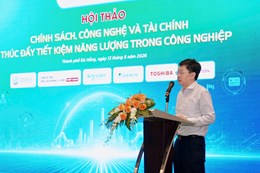
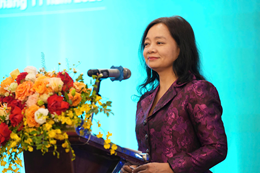
On the afternoon of November 27, the Department of Innovation, Green Transition and Industrial Promotion (Ministry of Industry and Trade) organized the thematic workshop “Energy Efficiency and Conservation Technology”.
-
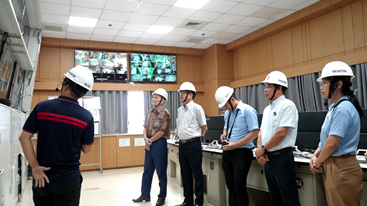
With a series of synchronized solutions from management to technology, Stanley Vietnam has saved millions of kWh of electricity, reduced CO₂ emissions, and reaffirmed its green commitment.
-
Development of Energy Efficiency Technology Catalog under the framework of VSUEE Project.
-
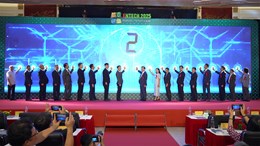
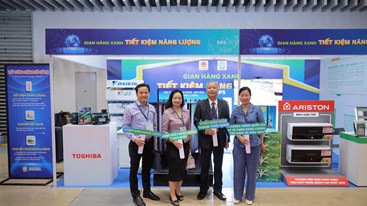
On the morning of June 25, the Hanoi International Exhibition on Environmental and Energy Technology 2025 (ENTECH HANOI 2025) officially opened.
-
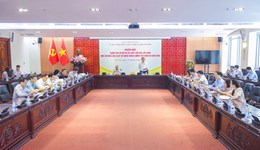
On April 19, 2025, the National Assembly’s Committee on Science, Technology, and Environment held a preliminary review session on the Law on Energy Efficiency and Conservation (EEC Law) Amendment Draft.
-
Maximizing operations and investing in modern, energy-saving technology has helped reduce the energy consumption per unit of product at Canon Vietnam Co., Ltd. by approximately 14.4% in 2023.
-
The Emirates Nuclear Energy Company (ENEC) signed a Strategic Collaboration Agreement (SCA) with ADNOC to research and explore developing innovative energy solutions to enhance energy efficiency in support of the UAE's energy diversification strategy.
-
SMRT Trains has introduced Green CBTC Next Gen technology, achieving an 8% energy savings in train operations as part of its plan to reach net zero emissions by 2050.
-
Vietnam
-
LG Uplus said this test was carried out in collaboration with Infinera and Juniper Networks.
-
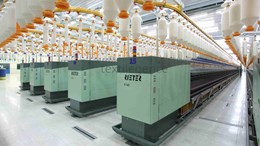
A recent comparison conducted in a Turkish spinning mill shows an 18% lower energy consumption for the compact-spinning machine K 48 compared to the competition. For a machine with 1 824 spindles, this benefit equates to an annual saving of around 12,000 USD per machine. This once again demonstrates Rieter’s strong claim for the energy efficiency of compact-spinning technology. The findings are not only important for the success of Rieter and its customers, but also contribute to a more sustainable and economic future for the textile industry.
-
The novel 3D transistors have been designed using ultrathin semiconductor materials.
-
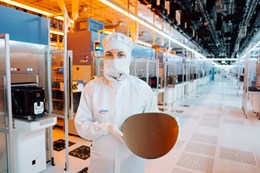
Infineon Technologies AG has unveiled the next milestone in semiconductor manufacturing technology. Infineon has reached a breakthrough in handling and processing the thinnest silicon power wafers ever manufactured, with a thickness of only 20 micrometers and a diameter of 300 millimeters, in a high-scale semiconductor fab.
-
The information and communication technology sector is a major energy consumer, but it also offers the potential for savings... if used properly. Let’s work smarter, writes Pernille Weiss
-
A new program to plan low- and zero-emissions energy technology for the Massachusetts fishing industry is getting nearly $2 million as part of the recently passed federal Omnibus Appropriations Act for 2023.
-
Vietnam's Deputy Prime Minister and Minister of Foreign Affairs Bui Thanh Son expressed hopes of learning from European nations about carbon markets, international integration, and green hydrogen development. He emphasized the need for continued support in funding, technology, and training.
-
A groundbreaking development in massless energy storage has been achieved by a research group at Chalmers University of Technology in Sweden. Their innovative structural battery has the potential to reduce the weight of laptops by half, make mobile phones as thin as credit cards, and boost the driving range of electric cars by up to 70% on a single charge.
-
This technology is expected to pave the way for more efficient and optimized IoT environments.