-

With the theme “Energy and Climate Change”, the 28th ASEAN Ministers of Energy Meeting (AMEM 28) has reflected the determination and spirit of ASEAN members in 2010 and years to come.
-

In the afternoon of 21st July, Senior Officials Meeting on Energy of ASEAN + 3 passed the draft agenda and the content of cooperation of AMEM +3 in preparation for the official opening of the 28th ASEAN Meeting of Energy Ministers, on 22nd July.
-

All the incidents at the new coal-run thermopower plants in northern Vietnam have been resolved and these plants have resumed operation. The rainy season has begun in both the north and the south while the domestic demand for power consumption does not increase and has even fell by 5-7 percent.
-

Thua Thien Hue has a large number of small and medium enterprises (accounting for 95% of the total), many of which have obsolete equipment consuming much energy. Meanwhile 80% of energy used for living and production every year comes from electricity.
-

Ca Mau electric grid was built and completed immediately after the administrative separation with Bac Lieu (November 1996). This grid spreads from primary forests in U Minh Thuong and U Minh Ha to Dam Doi district, Ngoc Hien. Due to sparsely populated condition, electrical loss only exceeds 9% because of naked wire and frost. The efforts of the electricity industry and Ca Mau’s people in saving electricity are quite impressing. During the serious lack of electricity in the dry season, Ca Mau has contributed to the national grid by operating its gas-power-fertilizer plant with capacity 1,500MW. To help Southern Electricity Corporation overcome difficulties, the implementation of energy saving and reduction in Ca Mau is a matter of great importance for all sectors. The output in 2010 is scheduled to reach 670 million kWh. However, due to planned reduction, the first 5 months in 2010 only reached 258.3 million kWh, equals to 38.55% of plans.
-

Deputy Prime Minister asked the Ministry of Industry and Trade to build a biofuel distribution and consumption network in Vietnam, and build and issue Regulations on the use and distribution of Biofuel.
-

Under the direction of Deputy Prime Minister Hoang Trung Hai at Announcement number 343/TB-VPCP dated December 4th 2009 on building an energy saving advocacy program to every province, bringing the program to every ward, commune, block, making energy efficiency an emulation target, a standard in the cultural family evaluation, the Hanoi People’s Committee, in coordination with the Ministry of Industry and Trade, organized the pilot campaign for the 2010 Energy Saving and Efficiency for Households in Hanoi, with the theme “Energy efficiency in every household is saving for you and for future generations”.
-

On June 23rd 2010, the Ministry of Industry and Trade solemnly organized the ceremony of “Honoring the Ambassador Extraordinary and Plenipotentiary of the Kingdom of Denmark in Vietnam for the cause of Industry and Trade”.
-

During the recent heat wave, electricity consumption has increased sharply: on 19th June, 37 million KWh was used, on 20th June, almost 40 million kWh, increasing by nearly 40% over the same period in 2009. According to EVN Hanoi, the sudden growth mainly gathered in daily life consumption. Meanwhile, in other provinces electricity consumption were deeply reduced - 30% over the same period in 2009 because every week, these provinces have electricity outage in 2-3 days.
-

2009 statistics from Ministry of Industry and Trade show that Vietnam’s rate of growth in electricity consumption was 2.45 times greater than GDP growth rate. Consumption in industry – construction sector accounted for about 38%, civil 36.8%, transportation 20%, the rest in service and agriculture.
-

With advantages such as reasonable price, energy efficiency, high luminescence efficiency and high durability, diverse styles, LED (light emitting diode) products are becoming attractive to Vietnamese consumers.
-

The signing of the cooperation contract is part of the 9th meeting of Australia – Vietnam Joint Trade and Economic Cooperation Committee (JTECC), in June in Melbourne, Australia.
Mr Vo Hong Phuc, Minister of Planning and Investment and Mr Simon Crean, Australian Minister of Trade, witnessed the signing.
According to the agreement, ECT, through a joint venture which produces coal with Coldry clean technology in Australia (VCPL), will export 2 million tons of Coldry coal per year to Vietnam starting in 2014 and 20 million tons per year by 2020.
-

Some young fellows stare at a big TV screen and shout noisily as they are watching a World Cup 2010 football match. Some electric fans run at their maximal speed to soothe the ongoing summer heat. The pigsty system behind the house of Tran Van Tam in Phu Trung hamlet, An Phu commune, Cu Chi district, Ho Chi Minh City also gets cooled with home-made ventilation panels. It is unlikely that the area does not benefit from the national power grid and often incurs power outages.
-

Fourteen years ago, the Hanoi Towers at 49 Hai Ba Trung, Hanoi had Air Handling Units (AHUs) installed for the 13-storey tower consisting of office and shopping space, and Inverter Multi Systems installed for the 25-storey apartment tower. At that time, AHUs and Inverter Multi Systems were modern technologies.
-

In Quang Ninh, in May, the average allocated capacity is just 4.4 – 4.5 million kWh per day (not including capacity for cement factories), while the demand is up to 5.5 – 6 million kWh per day. “That businesses take the initiative to invest in energy-saving systems is primarily for their own economic purpose. Moreover, they have contributed much to the society and shared the difficulties with the community. If each hotel, each factory can save a few thousands of kWh, hundreds of families will have electricity to use”, said Mr. Do.
-

On the morning of June 15, 2010, in coordination with the Energy Conservation Office of the Ministry of Industry and Trade, the Infrastructure Department and the Urban Development Department of the Ministry of Construction, and the Vietnam Energy Efficient Public Lighting (VEEPL) project, the Vietnam Urban Lighting Association and the Anh sang & Cuoc song (Light & Life) magazine organized a workshop to discuss the role of the media in ensuring efficient use of energy for lighting purposes.
-

Nuclear power technology is developing and Vietnam must be updated continuously with new technology, especially in the field of waste treatment and material reuse, said Brett Jacobs, the Southeast Asia Programs Manager under the International Energy Agency (IEA)’s Directorate of Global Energy Dialogue, at a meeting with Vietnamese Deputy Minister of Industry and Trade Do Huu Hao.
-

The Energy Efficiency and Conservation Office, the Hanoi Department of Industry and Trade, the Energy Efficiency and Conservation Center will join hands with the Hanoi Women’s Union to host diverse training courses on energy efficiency and conservation for families living in the city’s 10 inner districts from June 23 to July 27, 2010, said the Hanoi Department of Industry and Trade’s leadership in a press meeting on June 16, 2010.
-

Since 2008, the Board of Directors has decided to collaborate with the Energy Efficiency Research and Development Center – ENERTEAM in conducting energy audits at the company headquarter. Results showed that energy conservation potentials at the company are very promising, all solutions proposed required little investment and were easy to implement in practical application.
-

According to the Master plan for Vietnam building material development to 2020, demands for building materials in 2010, 2015, 2020 are correspondingly 25, 32, 42 billion brick equivalent units, in which, the proportions of non-baked material are 10%, 15 – 20% and 30 – 40%, respectively.
-

“Encouraging small and medium businesses in developing countries to use resources effectively" is a pilot program which has been carried out by UNEP to reinforce manufacturing competence of these businesses to implement cleaner production and to use natural resources effectively, in the end, contributing to decreasing production costs, minimizing pollution, improving health and enhancing industrial safety.
-

Held by The World & Vietnam Magazine (Ministry of Foreign Affairs) in cooperation with the Asia Business Forum (ABF), and European Chamber of Commerce in Vietnam (Eurocham), the conference is the largest ever on the issue. It is forecast that Vietnam's economy continues to grow rapidly while the population will reach 100 million by 2020. To meet the demand for electricity, Vietnam's power sector must maintain a growth rate of more than 12% annually.
-

EVN Hanoi has discussed energy saving with its prime customers consuming more than 3 million kwh per year or having capacity of greater than 500kW. Thang Long, Quang Minh and Noi Bai industrial zones agree to EVN Hanoi not to exceed the amounts of consumption stated on electricity supply contracts, avoid overloads and cut from 5 to 10% of its energy consumption demand, equivalent to about 3302.43 to 6603.86 MWh.




 Applying Science and Technology to Improve Energy Efficiency in the Mining Industry
 Vietnam Energy Efficiency Community: Supporting Green Transformation for Enterprises in Tay Ninh
 Dong Lam Cement Promotes Energy Efficiency to Enhance Sustainable Production
 Consultation on the Draft of the Vietnam Energy Efficiency Fund Establishment
 Policies, Technology and Finance Driving Energy Efficiency in the Industrial Sector







.jpg)



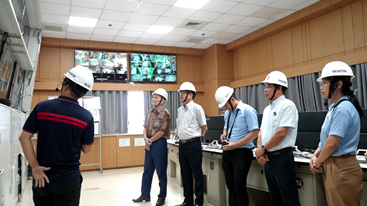 Polytex Pioneers Energy Efficiency in the Textile and Dyeing Industry
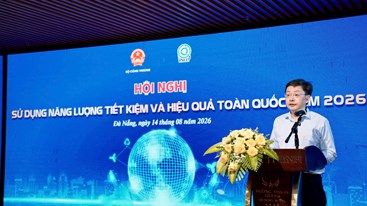 Conference on Energy Efficiency and Conservation in 2026
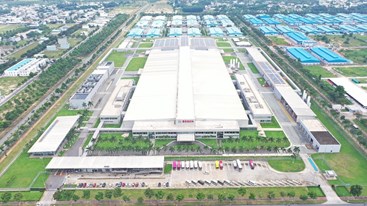 Bosch Vietnam Optimizes Energy to Advance Sustainable Manufacturing
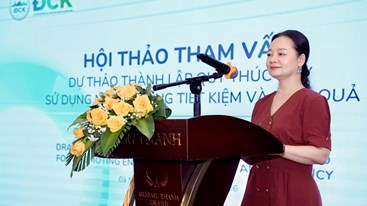 Consultation on the Draft of the Vietnam Energy Efficiency Fund Establishment
 Contract Award Notice - Notice for Contracts award for Finalize VNEEF (Vietnam National Energy Efficiency Fund) model (Package C2.2.14)
 Contract Award Notice - Review and update for current Energy Efficiency Benchmarking for 2 Sub-Industrial sectors