Thursday, 01/10/2026 | 17:03 GMT+7

Mercedes-Benz has already started the production of a small series of 100 Vito E-CELL electric vans and according to the company, another 2,000 units are planned for 2011.The van, targeted for particularly environmentally sensitive areas and for inner-city operations, is based on the long-wheelbase Mercedes-Benz Vito with a typical roof.
Mercedes-Benz has already started the production of a small series of 100 Vito E-CELL electric vans and according to the company, another 2,000 units are planned for 2011.
The van, targeted for particularly environmentally sensitive areas and for inner-city operations, is based on the long-wheelbase Mercedes-Benz Vito with a typical roof.
Due to its long wheelbase (about 3200 mm), the Vito E-Cell has the necessary underbody space for the Li-ion batteries. It is propelled by a permanent synchronous electric motor (with an operating range of 130 km on a single charge) that makes the car to reach a top speed of 80 km/h.

The van’s electric motor is able to generate a peak output of 70 kW and a continuous output of 60 kW. It has the same performance as the modern diesel engines because the full torque is inherently available right from the start in electric motors (maximum torque is 280 Nm).
Thanks to the single-speed transmission created specifically for the Vito E-CELL, the power is transferred to the front wheels.
The 360KWh battery pack is composed of 16 modules with a total of 192 cells. The company has also found a solution to avoid the risk of damage caused by unauthorized persons when the vehicle is parked and unnecessary power losses. Dubbed Watchdog, the safety system deactivates the in-car high voltage network when not in use. By the end of this year, Mercedes-Benz will deliver 100 Vito e-Cells vans to customers.
greenoptimistic.com








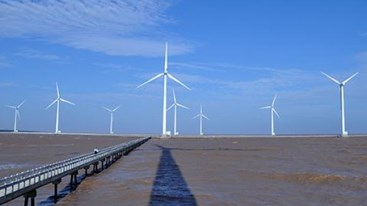

 Contract Award Notice - Develop tools for analyzing the energy efficiency of sub-projects and assess the current state of the market for energy-saving investment loans (C2.2.12)
 Contract Award Notice - Support the development of energy management systems and capacity building (Package C2.2.11)
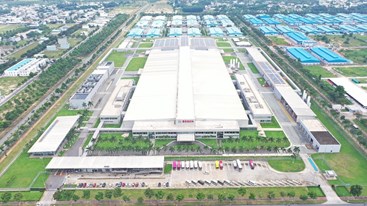 Bosch Vietnam Optimizes Energy to Advance Sustainable Manufacturing
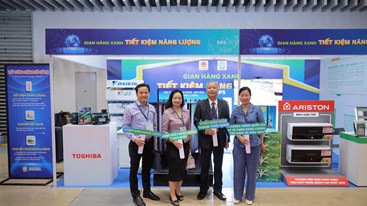 Vietnam ETE & Greenergy Expo 2026: Promoting Green Transition and Energy Efficiency
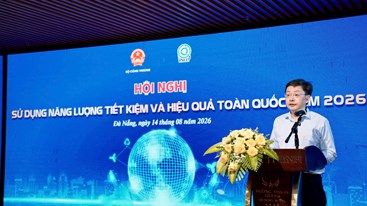 Conference on Energy Efficiency and Conservation in 2026
 Consultation on the Draft of the Vietnam Energy Efficiency Fund Establishment
 Polytex Pioneers Energy Efficiency in the Textile and Dyeing Industry